Fusion Academy Reviews, Pricing & Alternatives (For Physics) in 2026
One-on-one learning sounds perfect — but does the price tag justify it for Physics?
By Ashish PM
| Published on March 2, 2026

Reviewed By Pankaj Kumar
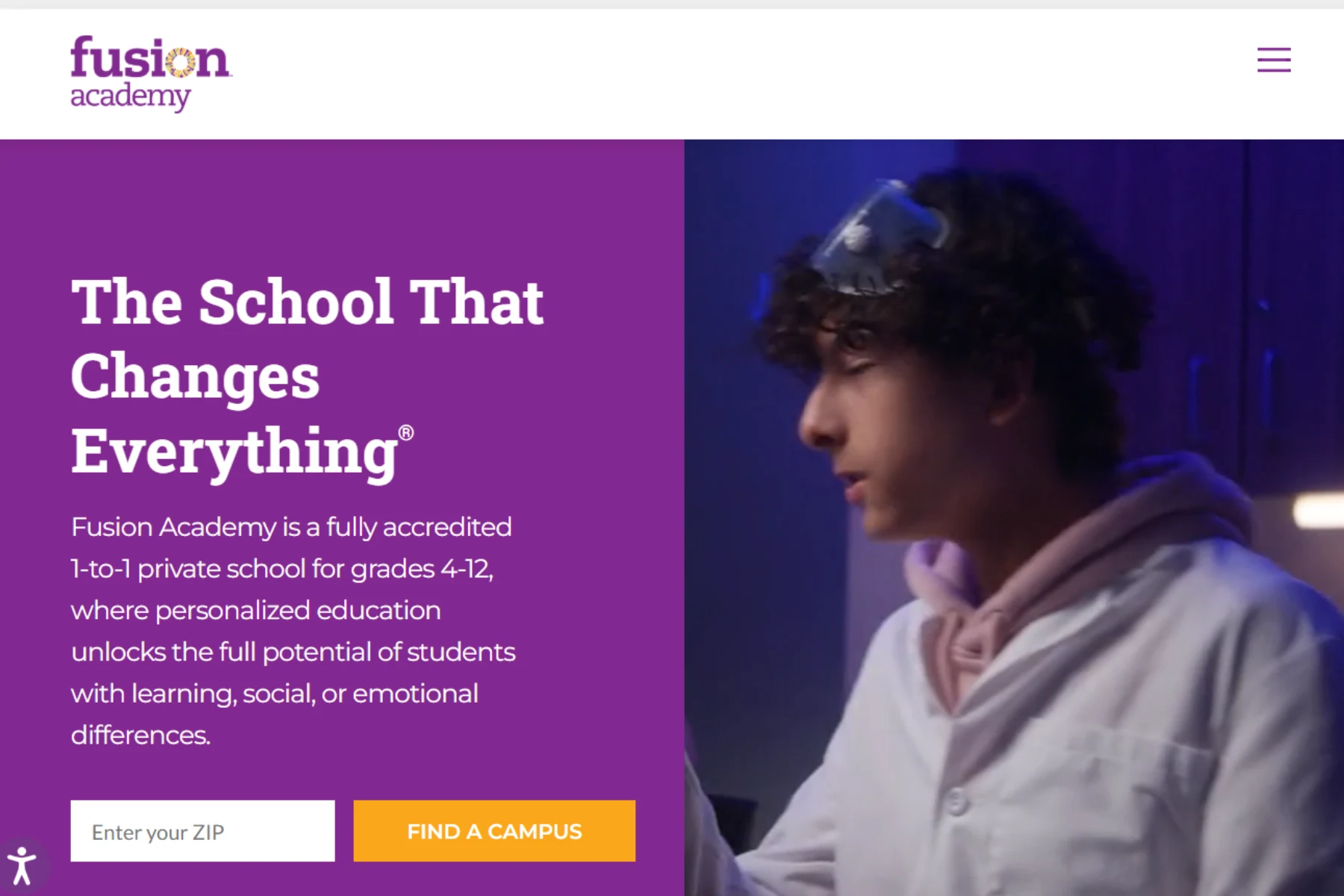
Fusion Academy is a US-based private school network offering one-to-one education for students in grades 4–12, with both physical campuses and a fully online option called Fusion Global Academy. It is widely known for its personalized learning model, where each student works with a single teacher per class.
This article examines Fusion Academy in depth — covering its reviews, pricing, Physics tutor quality, refund policies, and alternatives — so that students and parents comparing online tutoring and private schooling platforms for Physics and related subjects like calculus, engineering mechanics, and math can make a fully informed decision.
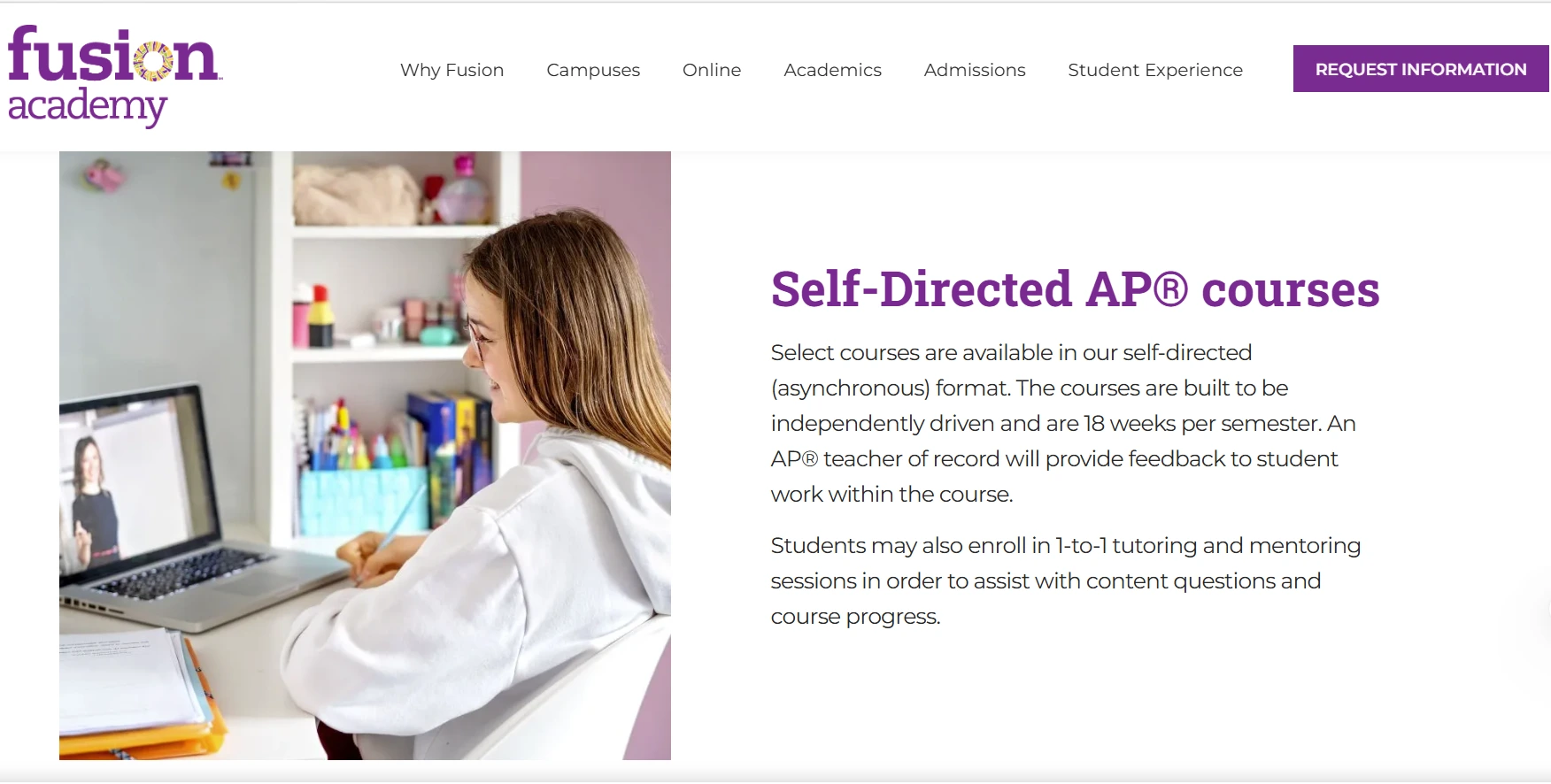
Fusion Academy promotes self-directed (asynchronous) AP® courses with 18-week semesters, teacher feedback, and optional one-on-one tutoring and mentoring.
Reviews & User Feedback for Fusion Academy in 2026
Across major review platforms, Fusion Academy receives strong parent and student feedback, with most praise directed at its one-on-one teaching model, caring staff, and the academic confidence it builds in students. Employee review platforms, however, tell a more mixed story, with recurring concerns about tutor pay, inconsistent hours, and management practices. When it comes to Physics specifically, reviews mention success in math and science subjects, though experiences vary by campus and assigned teacher.
On the Physics and STEM front, several reviewers specifically cite math and science classes — including pre-calculus, algebra, chemistry, and statistics — as areas where the one-on-one model made a meaningful difference. There are no Physics-only focused reviews available on public platforms, but broader STEM subject experiences tend to be positive when a well-matched tutor is assigned.
Trustpilot
Fusion Academy holds a strong 4.7 out of 5 rating on Trustpilot, based on over 1,374 reviews. Parents consistently praise the personalized attention, daily progress reports, and caring teachers. Reviews frequently mention students who previously struggled in traditional schools now thriving academically and socially.
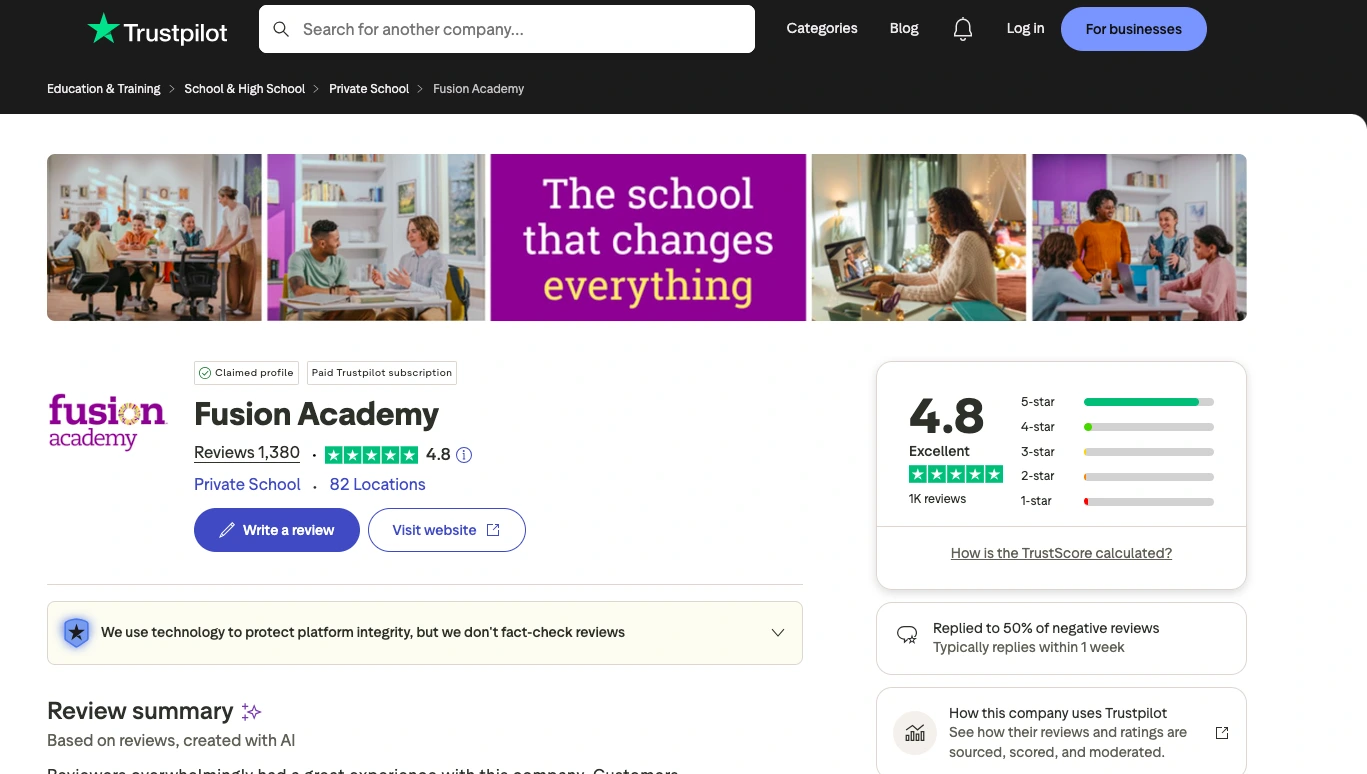
Critical reviews exist too. Some parents report difficulty with refunds on tutoring packages, incompetent tutor assignments, and administrative issues at specific campuses. A minority of reviewers express concerns about value for money given the high price point.
Fusion Global Academy — the online campus — has its own Trustpilot profile with 120+ reviews and similarly high ratings, with parents of international students praising the flexibility and teacher responsiveness.
Glassdoor
On Glassdoor, Fusion Academy has a 3.4 out of 5 rating from over 1,006 employee reviews. Around 59% of employees say they would recommend the company to a friend. Positive reviews highlight the one-on-one teaching format, flexible scheduling, and a mission-driven culture.
Negative reviews are significant, however. Recurring themes include low hourly pay (with no guaranteed hours), high tutor turnover, insufficient prep time, and concerns about profit-driven management. Some former teachers describe a challenging environment where workload expectations outpace compensation. The compensation and benefits sub-rating sits at just 3.0 out of 5.
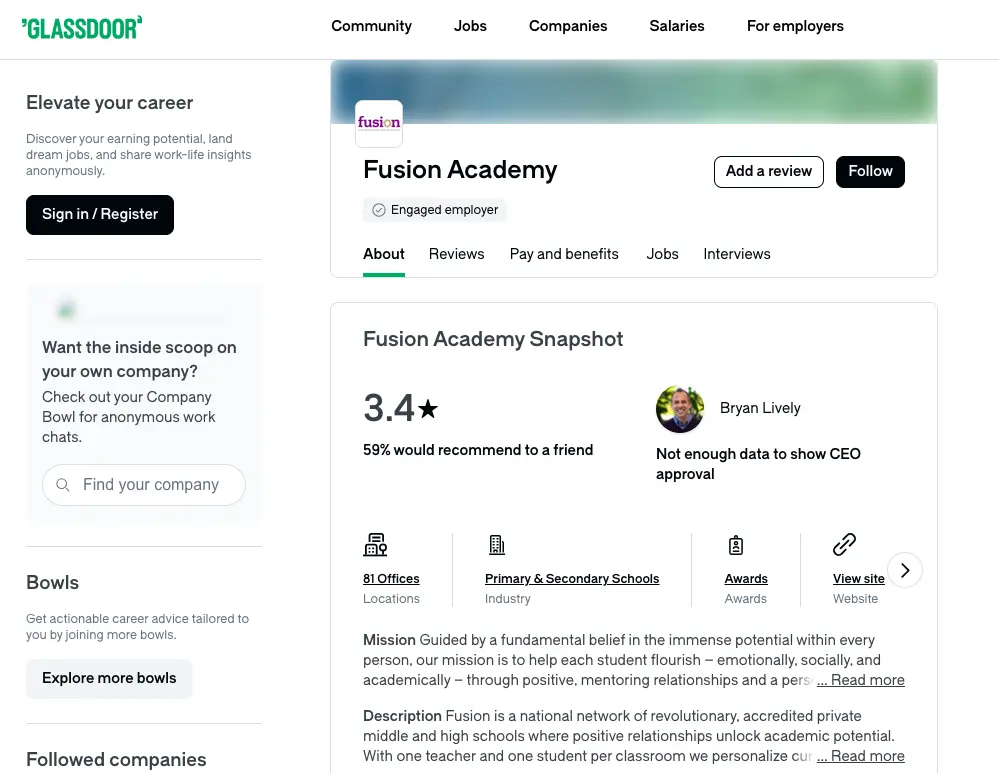
This matters for Physics students. High tutor turnover at any campus means the quality of a Physics or math class can be inconsistent. Parents should inquire specifically about tutor tenure when enrolling in STEM subjects.
Indeed
On Indeed, Fusion Academy has 348+ reviews from current and former employees. The overall picture echoes Glassdoor — positive sentiment about the student-teacher connection and flexible scheduling, tempered by frustrations over income unpredictability and limited growth opportunities.
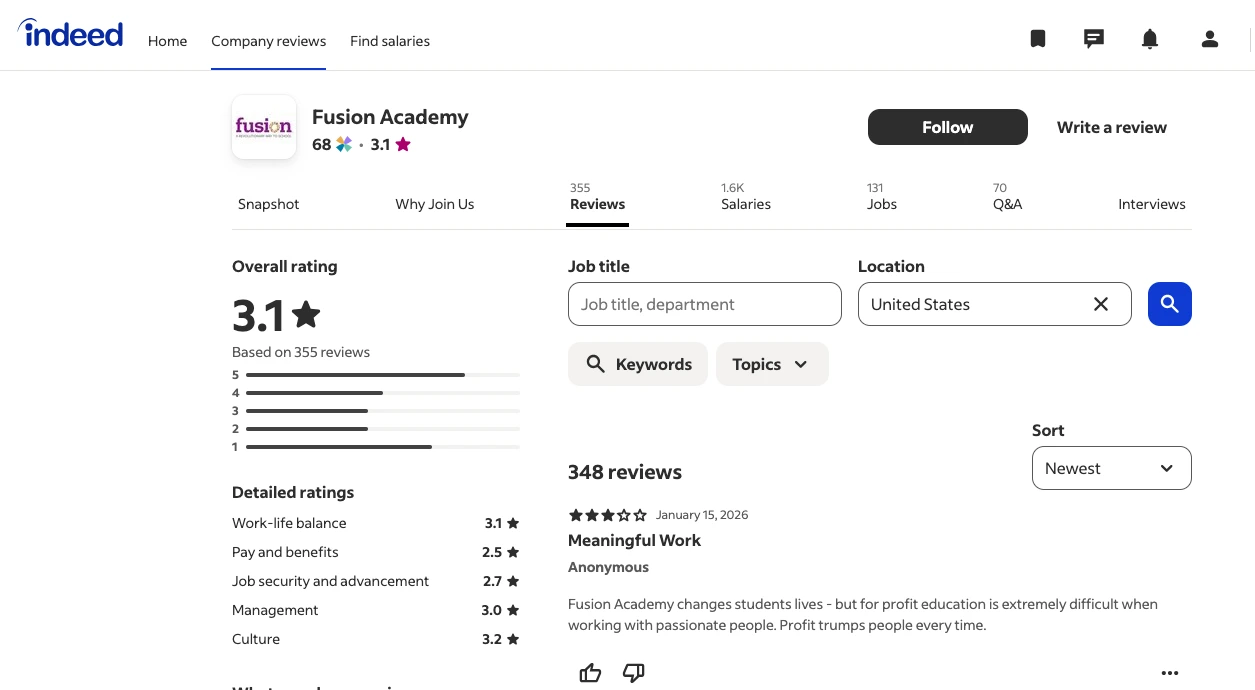
Multiple teachers note that hours depend entirely on student enrollment and can drop unexpectedly. For families, this means that a good tutor they are paired with today may not be available next term. In STEM subjects where continuity of instruction is important, this is worth factoring in.
Is Fusion Academy Legit?
Fusion Academy is nationally accredited by Cognia, which includes NCA CASI, SACS CASI, and NWAC. Individual campuses are also regionally accredited by bodies such as WASC, MSA-CESS, and NEASC. The institution was founded in 1989 and according to its Wikipedia entry, made the Inc. 5000 fastest-growing companies list in 2011.
The school operates as a for-profit institution under Fusion Education Group. It has expanded to over 80 US campuses and serves students globally through Fusion Global Academy. Its graduates have been accepted by top universities, with publicly cited college acceptance rates well above national averages.
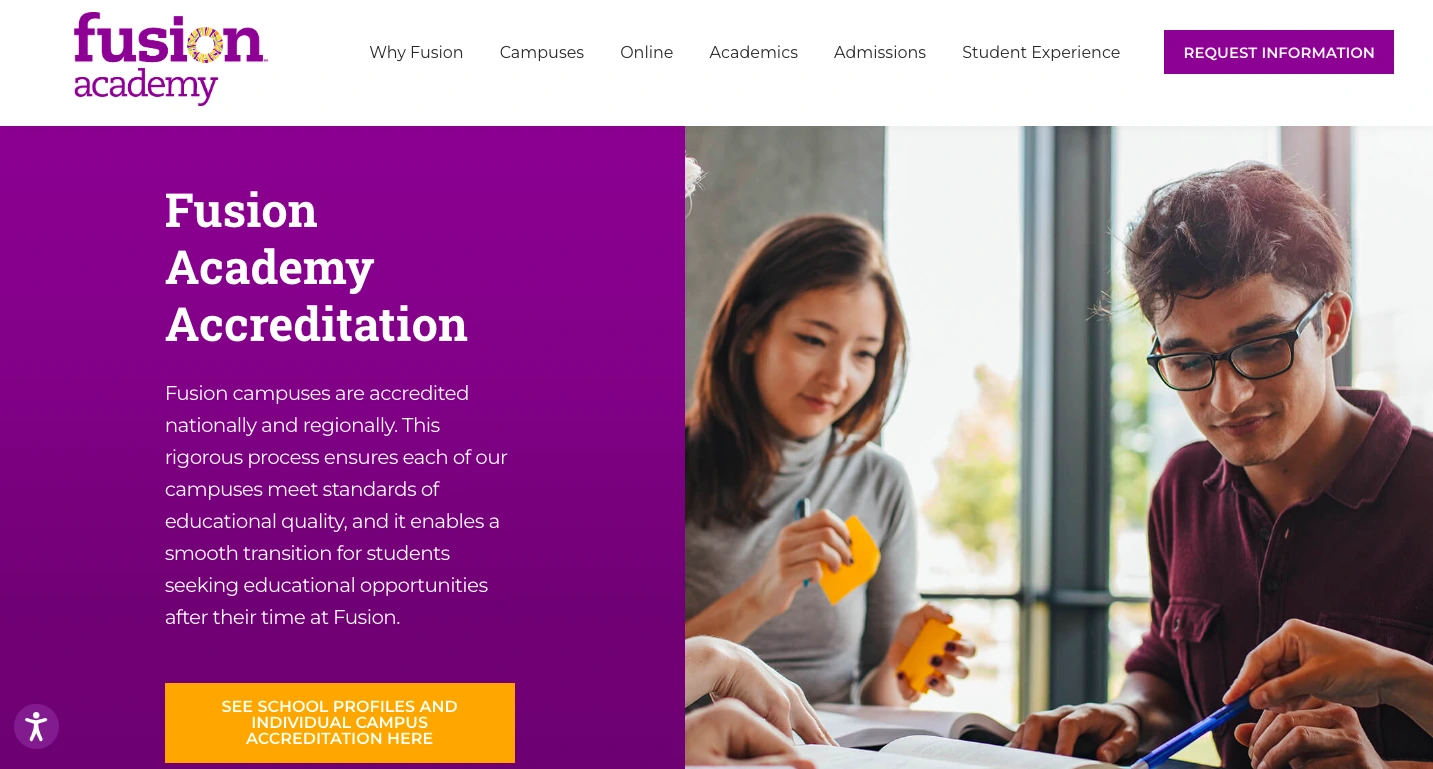
Is Fusion Academy legit?
Yes. Fusion Academy is a fully accredited, for-profit private school that has operated since 1989. With 80+ US campuses, national Cognia accreditation, and thousands of verified parent reviews, Fusion Academy is a legitimate institution — though its very high cost and tutor quality variability warrant careful evaluation before enrolling.
Fusion Academy Pricing, Refunds & Policies in 2026
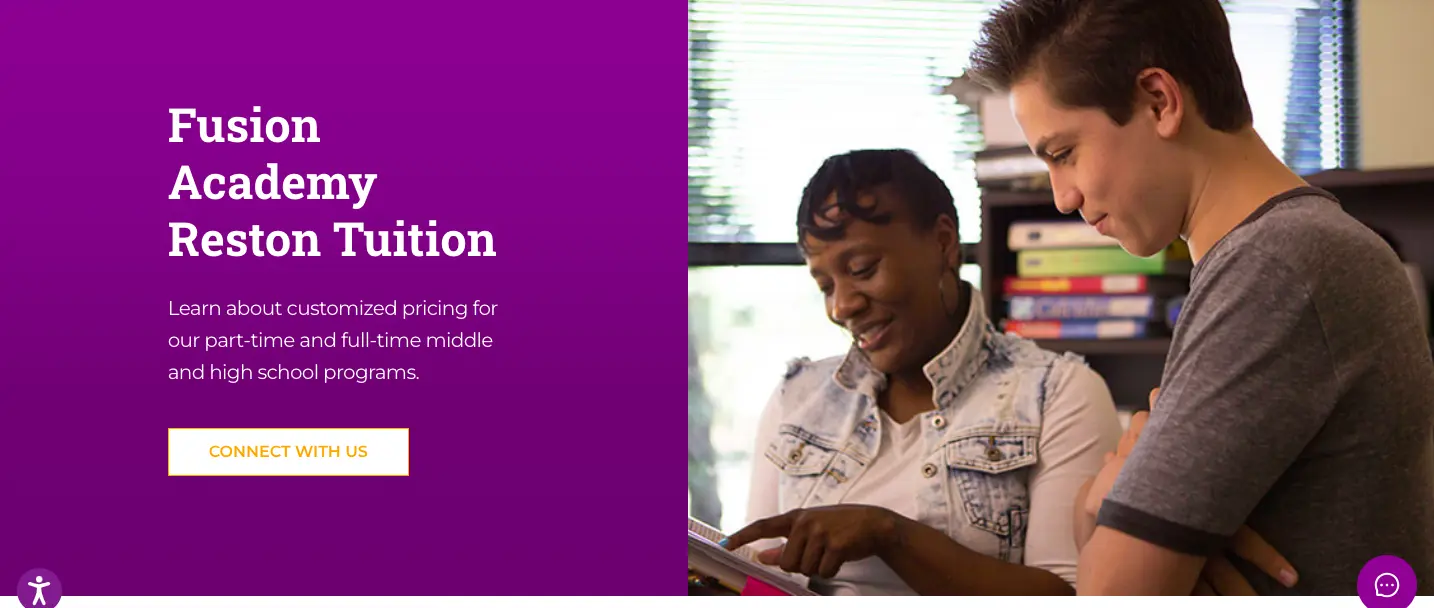
Fusion Academy uses a fully customized, per-course pricing model. Tuition is not published as a flat rate but is instead calculated based on the number and type of classes a student takes per term. According to the official Fusion Academy tuition page, every student’s education plan is unique, and families must contact their local campus for specific quotes.
Based on publicly available campus tuition pages (such as Brooklyn and Reston), individual courses run approximately $4,600–$6,000 per class per term. A typical full-time student takes 12–15 classes per year across three terms, making annual tuition commonly $35,000–$90,000+, depending on location, course level, and schedule. Part-time and tutoring-only options exist at lower cost, though exact pricing is not publicly listed.
User feedback on pricing is consistently mixed. Many parents acknowledge the cost is high but describe it as worthwhile for their child’s progress. Others on forums call the tuition “exorbitant” and point out that families who are not affluent would struggle to sustain enrollment. At least one Trustpilot reviewer complained about being double-charged with no response to refund requests.
Trials: Fusion Academy offers a free trial session for prospective students. Families can request a trial via the Fusion website, after which a representative schedules an introductory one-on-one class. This is a genuine no-cost trial and does not require a commitment to enroll.
Refunds: Fusion Academy’s Parent Promise provides a 30-day full refund guarantee for new full-time students (4 or more classes) in Fall, Winter, or Spring semesters. If a family withdraws all classes within the first 30 calendar days, all tuition paid is refunded. Registration fees are non-refundable. After 30 days, standard contract terms apply and tuition is generally non-refundable. The Parent Promise does not cover Summer semesters.
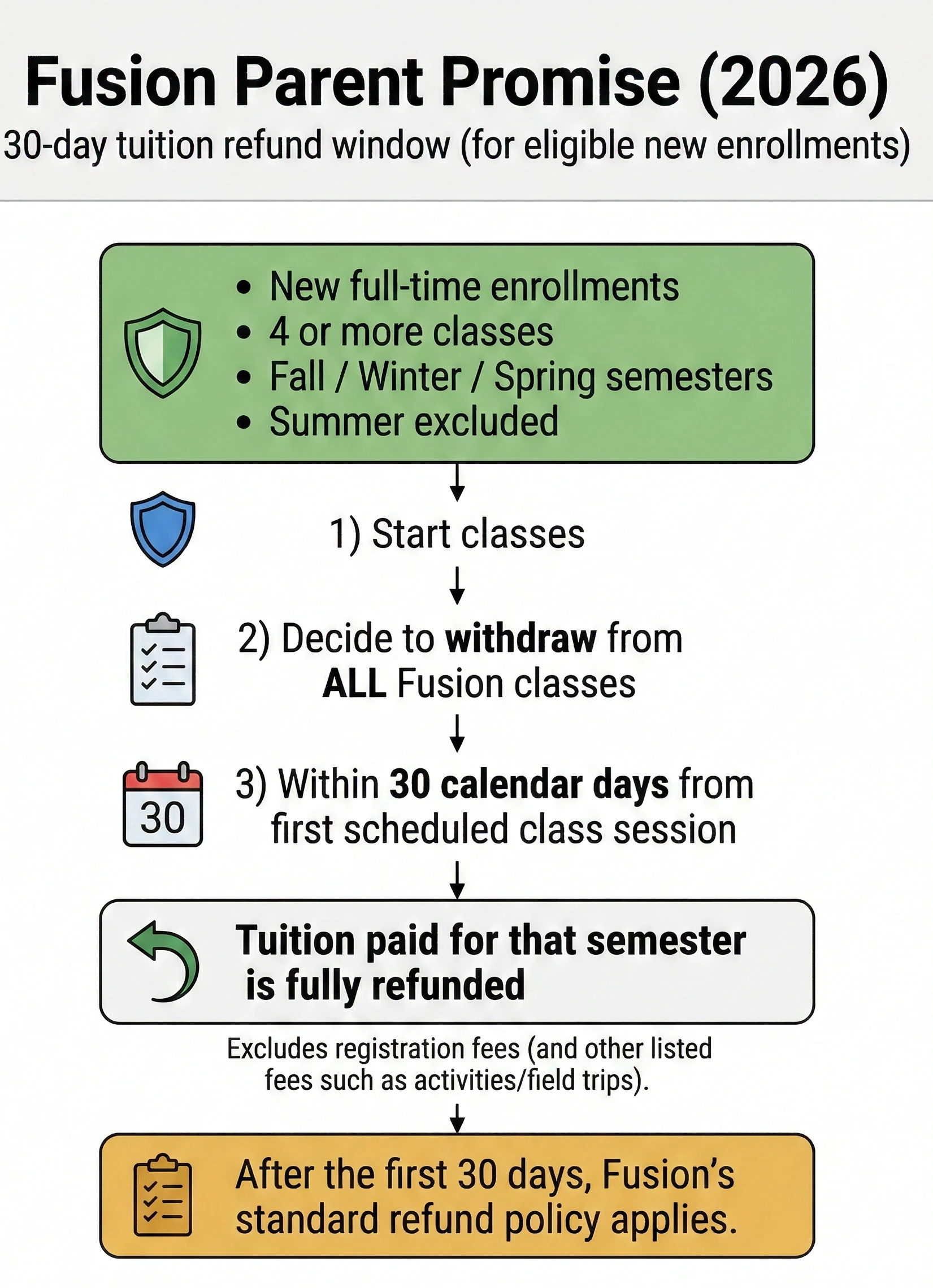
Fusion’s 2026 Parent Promise outlines when new full-time students can withdraw within 30 days and receive a full semester tuition refund, excluding registration and activity fees.
Hidden Fees: Several costs go beyond the base per-course tuition. Registration fees are charged for all students: $1,800 for new full-time students and $200 for part-time enrollment. If a student needs additional time to achieve mastery in a subject — which is baked into Fusion’s model — extra “mastery sessions” may be required. Parents on forums report each mastery session can cost around $130, and two to three extra sessions per class can add up across a year. Honors, Extended, and AP courses also carry higher rates due to additional required class time.
“Our son always got more out of one hour of tutoring than he did out of two full days at school. This model simplifies the whole educational scene — I now drop off a happy kid and pick up a happy kid. That is worth every penny.”
— Verified parent, Trustpilot review, Fusion Academy Alpharetta
Alternatives to Fusion Academy
Fusion Academy is a premium private school, not a subject-specific tutoring service. For students and parents who specifically need Physics, calculus, or engineering mechanics help — rather than a full school replacement — there are several more targeted and affordable options. Below is a breakdown of key alternatives, including online platforms, specialist tutors, and free resources.
My Physics Buddy
My Physics Buddy (MPB) is an online platform offering personalized 1:1 tutoring and homework help in Physics, calculus, and engineering mechanics, serving college and university students globally. Sessions are delivered over an interactive online whiteboard with no long-term subscriptions or contracts — students pay as they go. This makes MPB highly accessible for students who need help at specific points in their course rather than a full-time school.
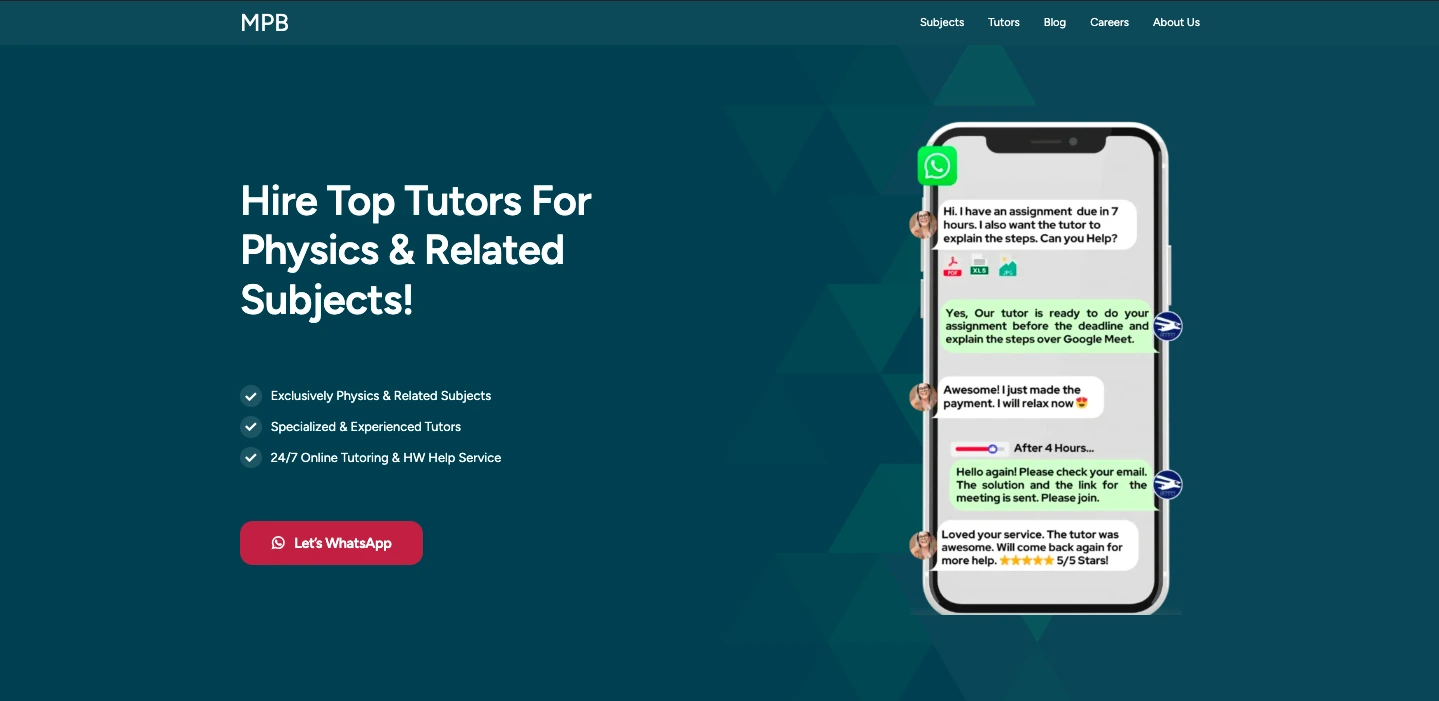
For Physics specifically, My Physics Buddy focuses exclusively on Physics and closely related subjects — a depth of specialization that general tutoring platforms cannot match. Tutors are subject experts with strong problem-solving backgrounds, not generalist teachers covering many subjects at once. This targeted expertise is particularly useful for college-level topics like mechanics, electromagnetism, thermodynamics, and modern physics.
Wyzant
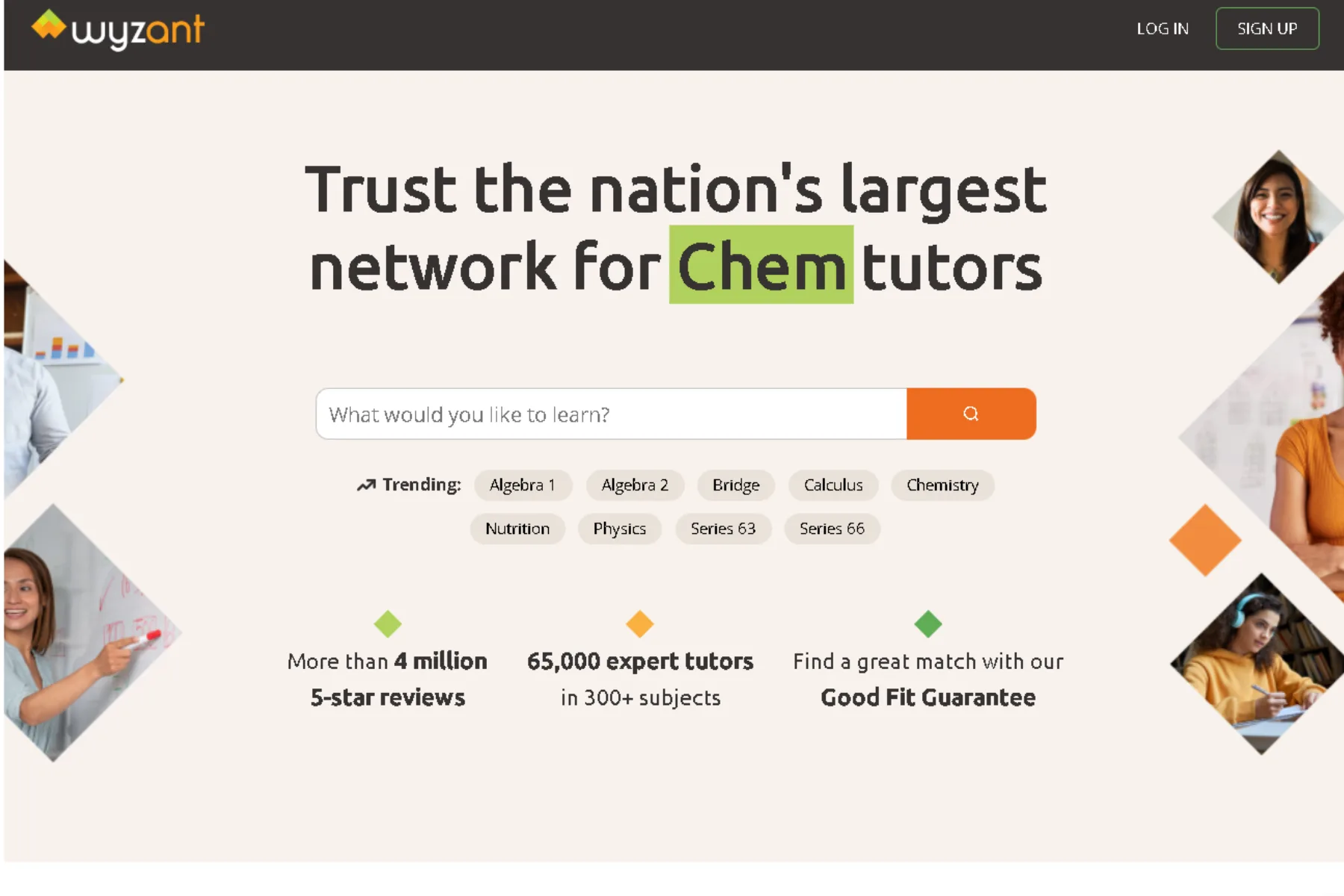
Wyzant is a large US tutoring marketplace with 65,000+ independent tutors covering 300+ subjects, including Physics, calculus, and engineering. Students browse tutor profiles and choose directly, with hourly rates varying from $35 to $65 on average. There is no minimum purchase, so students can book single sessions. The main drawback is quality inconsistency — Wyzant does not employ tutors directly, so standards vary widely. Trustpilot ratings have been low (around 1.7/5), with complaints about billing and tutor reliability.
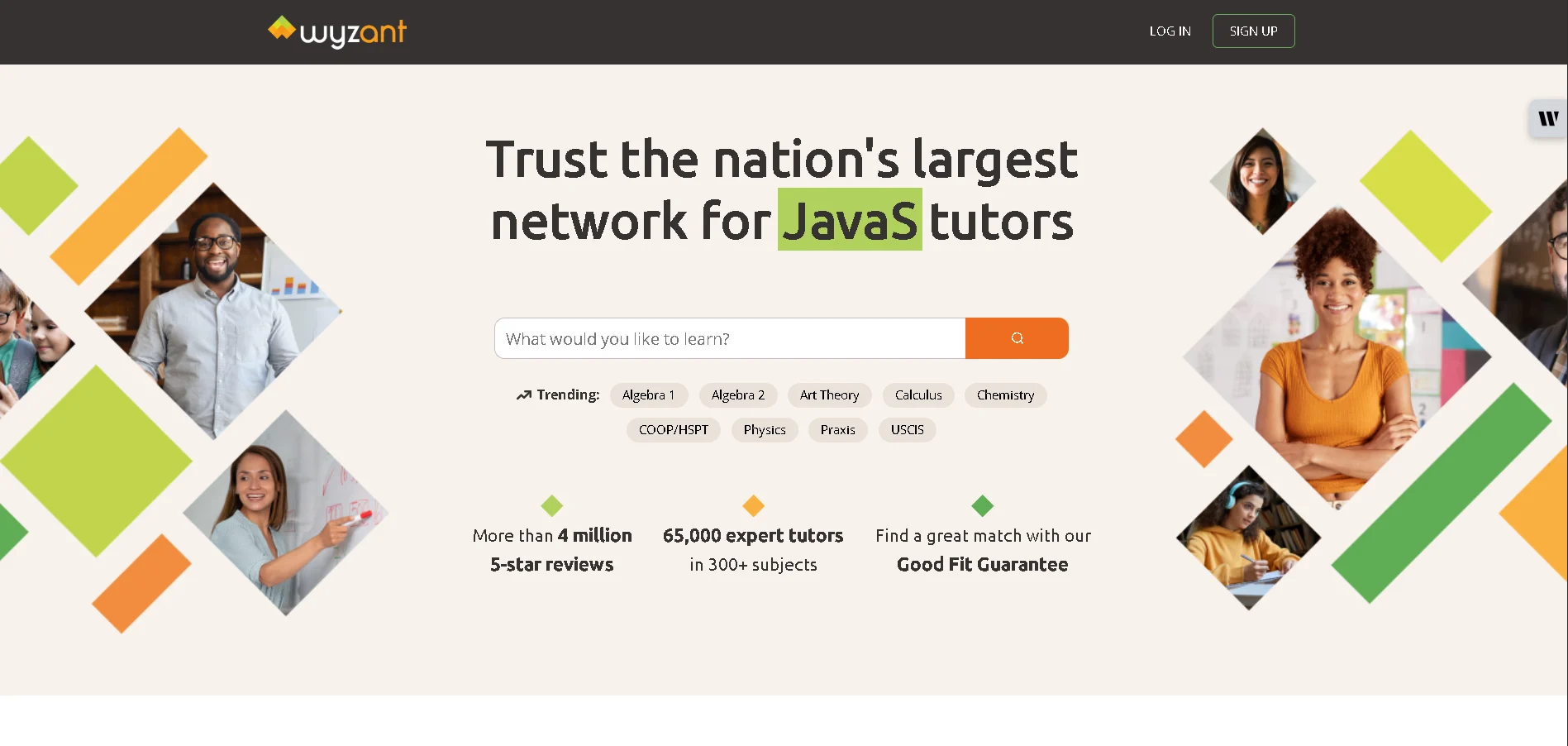
For Physics tutoring, the open marketplace means you can find high-quality Physics PhDs or weaker candidates side-by-side. Due diligence on tutor profiles, reviews, and credentials is essential before booking Physics sessions on Wyzant.
Varsity Tutors
Varsity Tutors is a managed tutoring service that assigns a tutor to students based on matching criteria. It covers 2,500+ subjects including Physics and offers both one-on-one and group class formats. Pricing runs $81–$99 per hour, with minimum packages of 12 hours ($1,140+). It suits students who prefer not to choose their own tutor. The main downside is cost and the lack of tutor choice. Reviews are mixed, though many students report good results in STEM subjects.
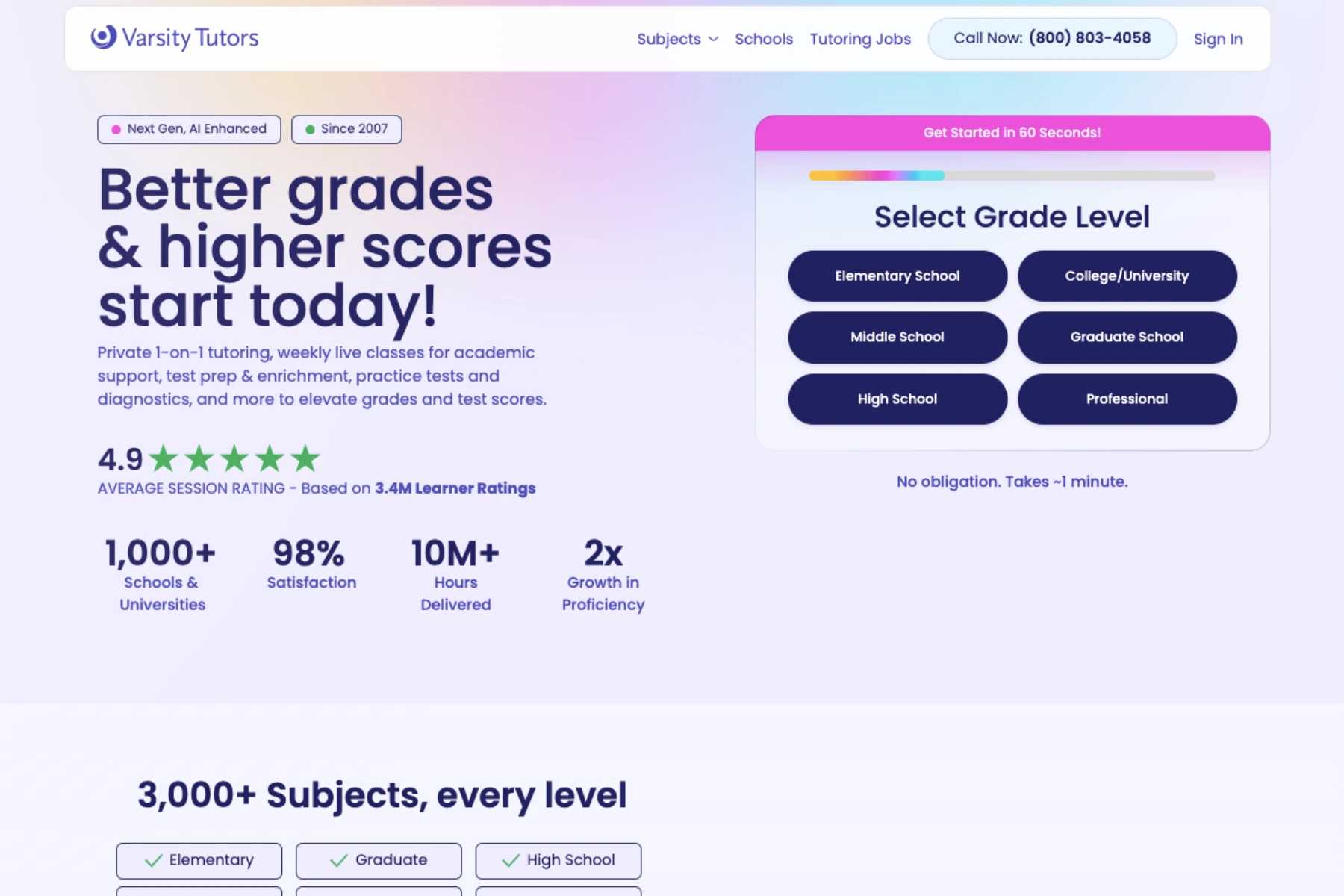
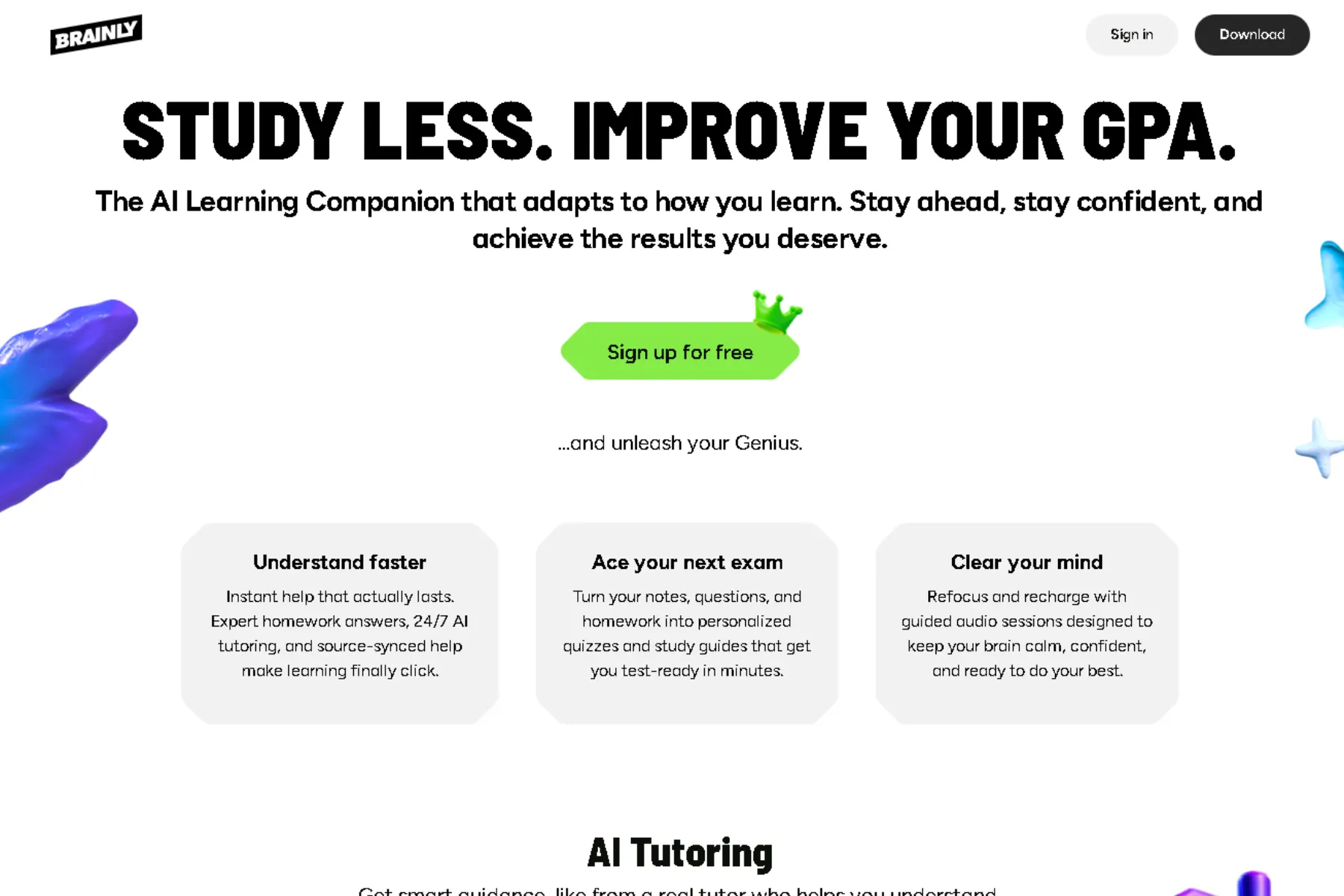
Varsity Tutors offers personalized online tutoring, test preparation, and academic support across elementary, middle school, high school, college, and professional levels.
For Physics in particular, Varsity Tutors’ matching process can pair students with verified Physics-specialist tutors. However, the high price point makes it hard to justify for students who only need targeted Physics support rather than broad academic coaching.
Local Tutors
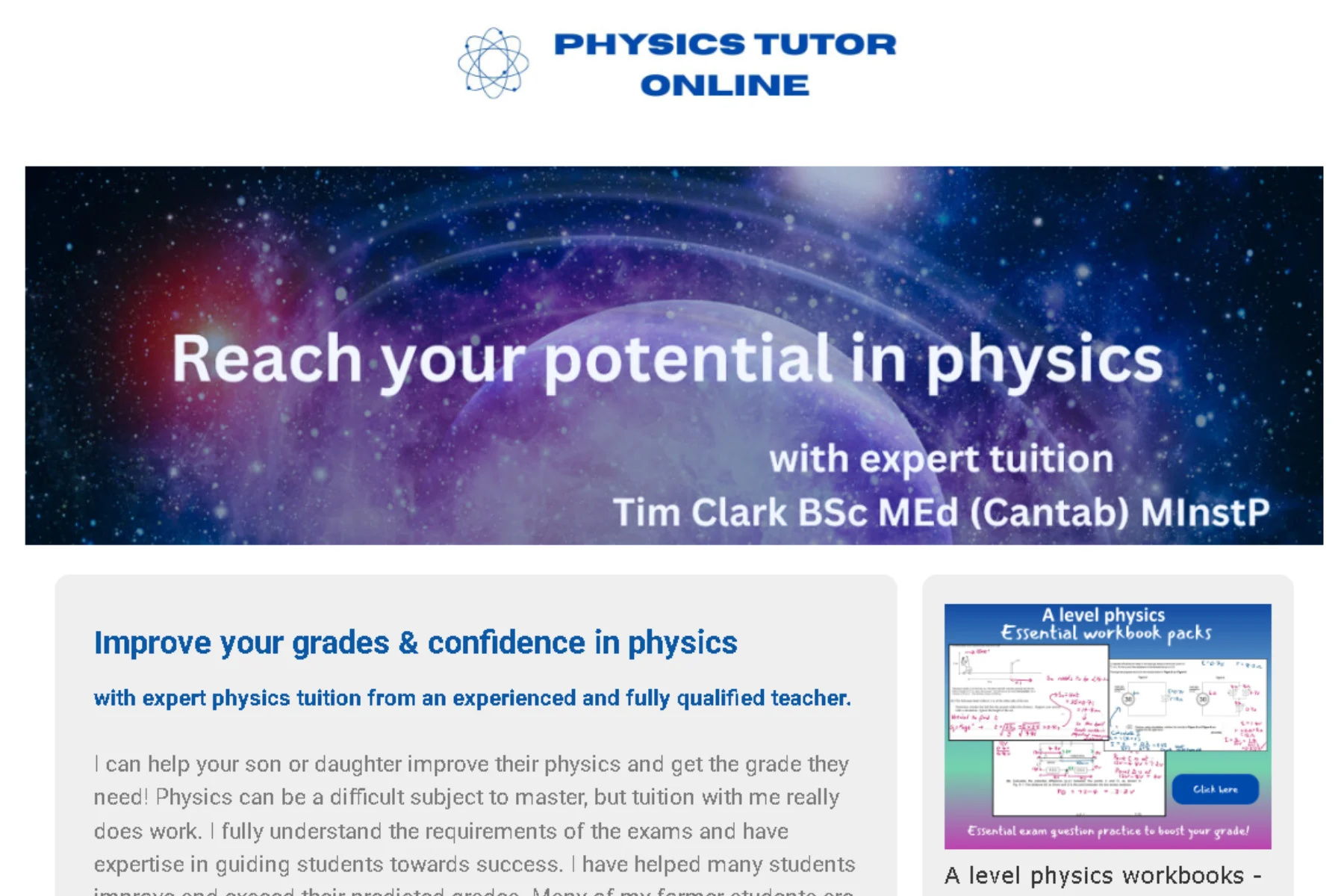
Independent local Physics tutors — found through university bulletin boards, local community boards, or word of mouth — can offer very personalized help at competitive rates, often $30–$60/hour. The pros are direct communication, tailored pacing, and no platform fees. The cons are availability, no quality guarantee, and often no structured curriculum. For college-level Physics, many graduate students and professors offer private tutoring and can be excellent resources.
Khan Academy
Khan Academy (khanacademy.org) provides free, self-paced Physics and calculus courses with videos, exercises, and quizzes. It covers AP Physics 1, AP Physics 2, and introductory college physics well. It is not a tutoring service — there is no live instruction or feedback. But as a free supplement to other learning, it is outstanding. Students who can learn independently from video explanations will find Khan Academy very useful for foundational Physics concepts.
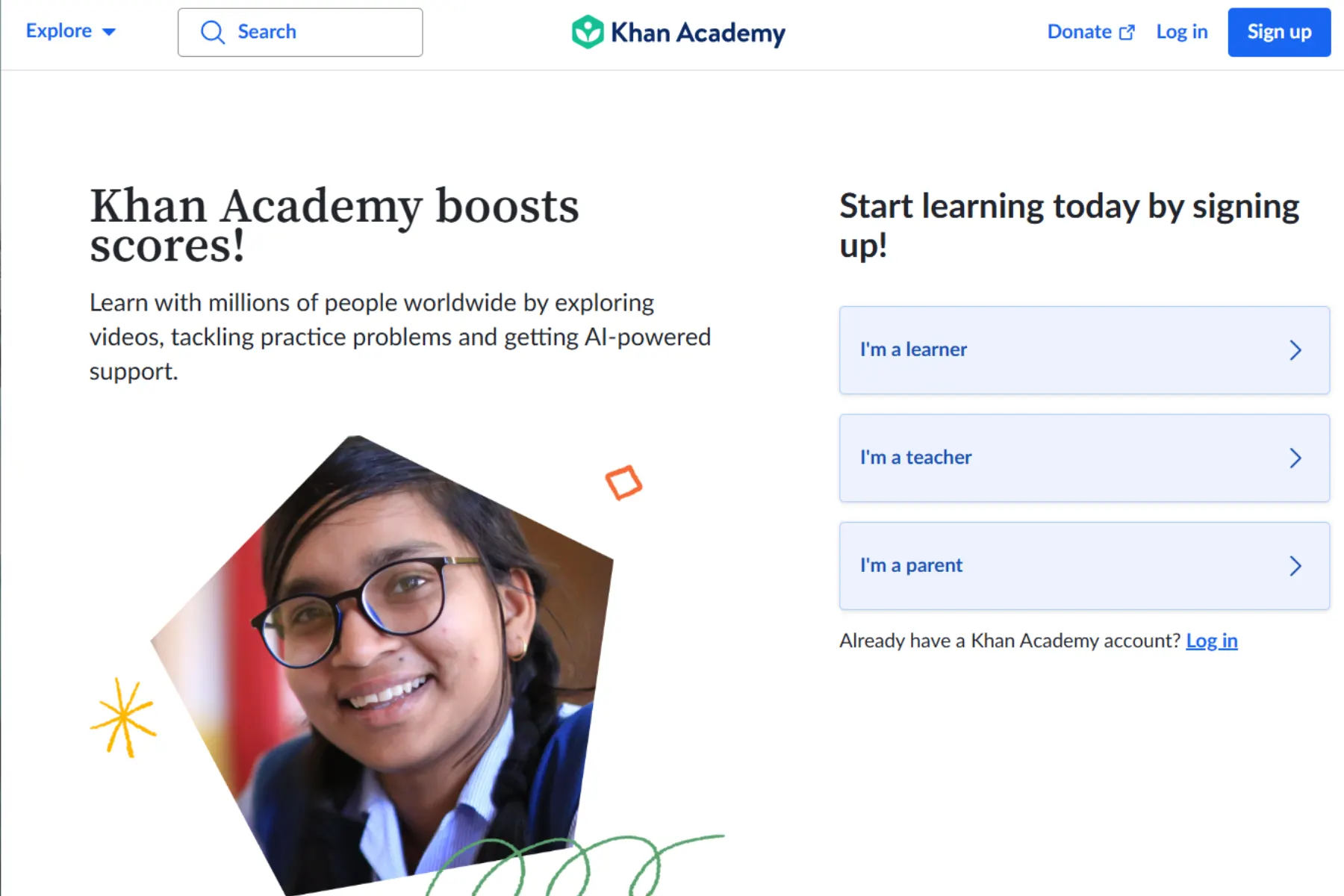
Khan Academy offers free online courses, practice exercises, and AI-powered learning tools for students, teachers, and parents.
College Library and Academic Support Centers
Most colleges and universities offer free tutoring through academic support centers, tutoring labs, or peer tutoring programs. These are zero-cost resources that are underutilized. For Physics, many universities have dedicated physics help rooms staffed by TAs and graduate students. These services are best for students enrolled at institutions with strong support systems and work particularly well for clarifying specific lecture topics and homework questions.
Winners by Category
Quality of Tutors (Physics-Specific): My Physics Buddy — physics-exclusive specialization with subject expert tutors
Pricing: Khan Academy (free); My Physics Buddy for paid 1:1 options (no subscription, pay-as-you-go)
Quality of Customer Care: Fusion Academy — daily parent progress reports and campus-level support
Ease of Use: My Physics Buddy — instant whiteboard access, no long-term commitment required
How It Works
For Students
Prospective students begin by contacting their nearest Fusion Academy campus or reaching out to Fusion Global Academy for the online option. An initial consultation and assessments — including the MAP (Measures of Academic Progress) and Mindprint cognitive assessment — are conducted. These help Fusion understand a student’s strengths, challenges, and learning preferences.
Once enrolled, each student is assigned a personal schedule. Every class is taught one-on-one: one student and one teacher per session. Class length and frequency depend on the subjects selected. After each session, the teacher submits a progress report to parents through the MyFusion parent portal, keeping families informed in real time.
Full-time students also access the Homework Café, a supervised in-campus space where students complete assignments before leaving. For Fusion Global Academy students (fully online), sessions are delivered virtually with the same 1:1 format. Rolling enrollment means students can start at any time of year and build a schedule around their life rather than a fixed academic calendar. In 2026, Fusion has also introduced AI tools to help teachers build more customized course content.
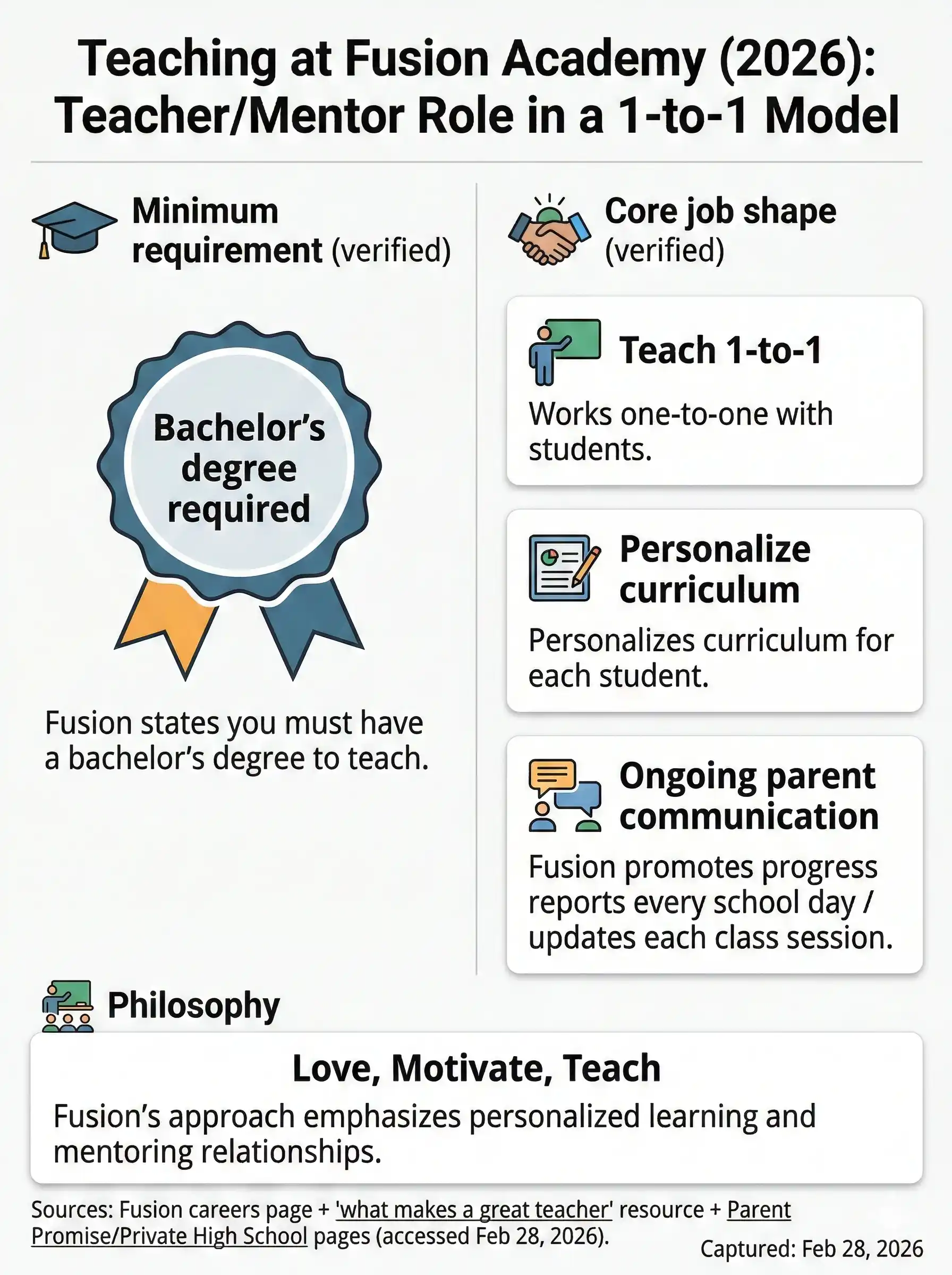
Fusion Academy’s 2026 teaching model highlights a bachelor’s degree requirement and key responsibilities like 1-to-1 instruction, personalized curriculum, and ongoing parent updates.
For Tutors
Teachers at Fusion Academy apply through each campus directly. Candidates need at least a bachelor’s degree and strong subject expertise. Interviews include subject knowledge assessment and a sample lesson. Once hired, teachers are paid hourly and work with students one-on-one across the subjects they are qualified to teach.
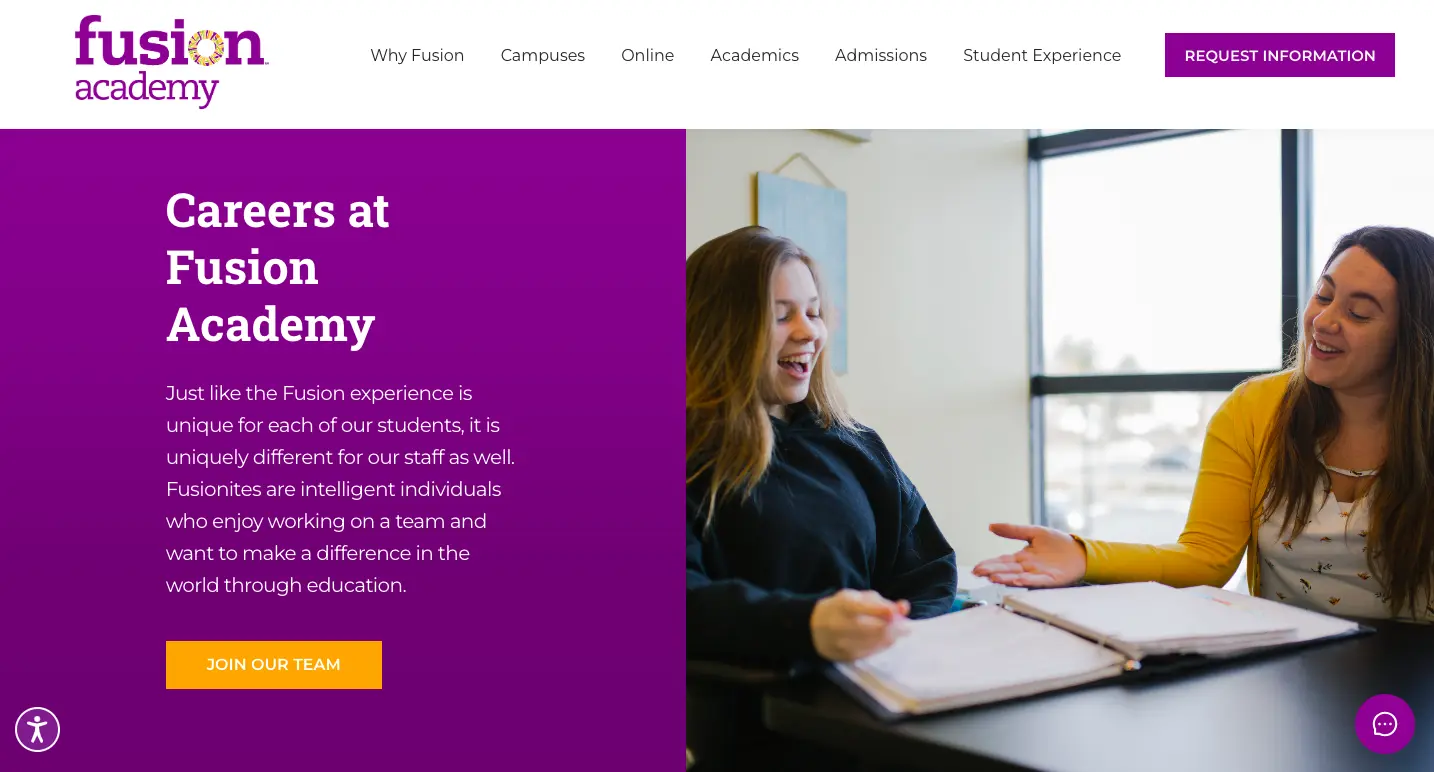
Fusion’s philosophy is “Love, Motivate, Teach” — teachers are expected to act as both educators and mentors. Daily parent reports are a required part of the role. Teachers must also manage lesson prep, attendance records, and grading within the time allocated per session. The work is flexible but not salaried — hours depend on student enrollment, which means income can be unpredictable. Glassdoor and Indeed reviews note that building up to full-time hours can take time at a new campus.
Fusion Academy Company Information
Fusion Academy was founded in 1989 by Michelle Rose Gilman as an after-school tutoring program in Solana Beach, California. Gilman started the program out of frustration with the lack of personalized education options available in her community. The school began offering full-time curriculum in 2001. A second campus opened in Los Angeles in 2009 through the investment vehicle now known as Fusion Education Group. Fusion Academy’s corporate headquarters is based in Grand Rapids, Michigan.
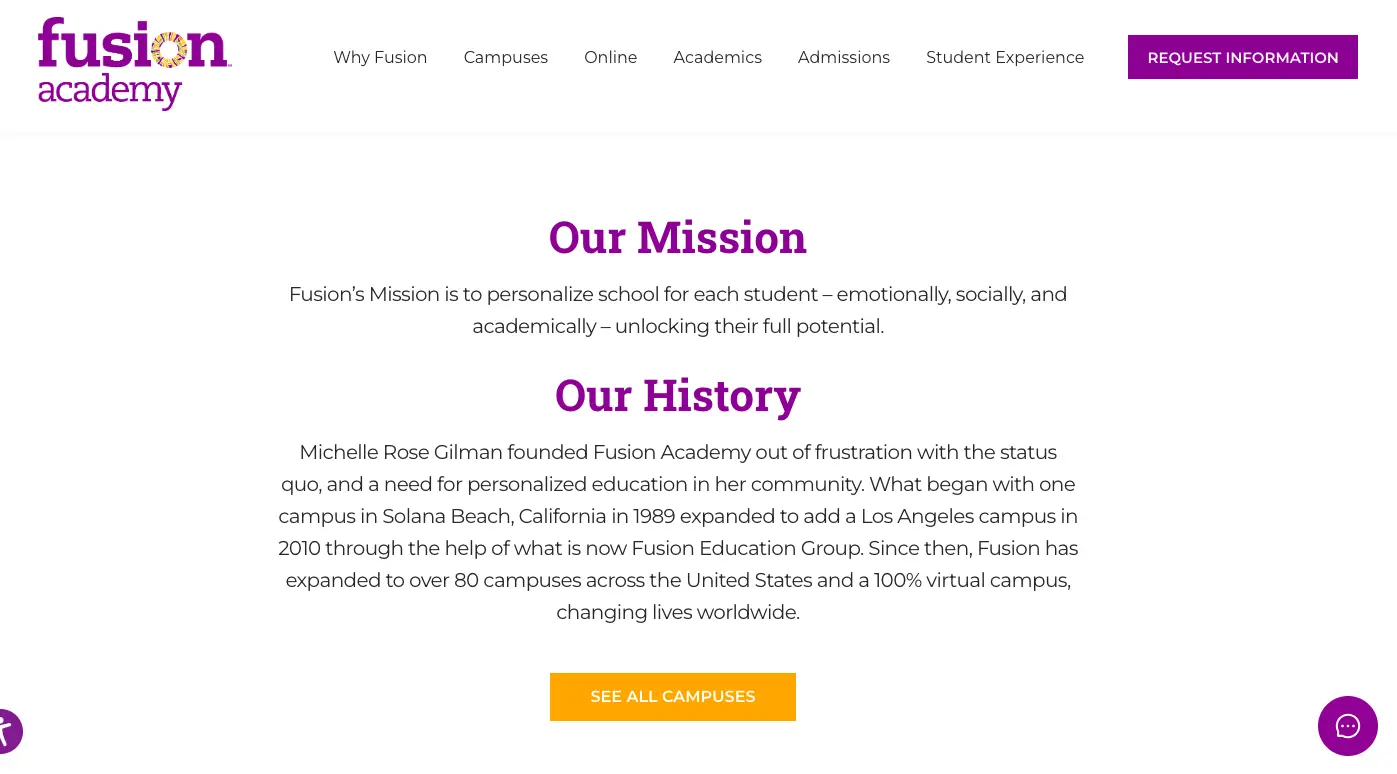
Today, Fusion Academy operates over 80 campuses across the United States, serving students in grades 4–12, and runs Fusion Global Academy as its 100% online school option, serving students in all 50 US states and internationally. In 2019, Fusion Academy acquired Futures Academy, expanding its reach further. Three New York City campuses have successfully unionized, reflecting ongoing teacher advocacy around pay and working conditions. Funding history includes private equity backing from Leeds Equity Partners and others, according to CB Insights.
Fusion is nationally accredited by Cognia (which includes NCA CASI, SACS CASI, and NWAC) and by multiple regional bodies including WASC, MSA-CESS, and NEASC. Graduates are accepted by universities globally.
USP and Drawbacks: Fusion’s core USP is the strictest 1:1 model in private schooling — every class has exactly one student and one teacher, with fully customized curriculum, pace, and scheduling. The primary drawback is cost: at $35,000–$90,000+ per year for full-time enrollment, Fusion is out of reach for most families. Teacher quality varies by campus, and the for-profit nature of the business has drawn criticism from some educators and parents. Customer support quality also varies significantly by campus, with some locations receiving strong praise and others drawing complaints about administrative responsiveness.
Global Reach: Fusion serves students primarily in the US through physical campuses. Fusion Global Academy extends the model internationally for online learners. The platform is not specifically designed for international students outside of the US, however, as it follows US curriculum standards.
“At Fusion, we’ve been the leader in personalized education since 1989. Now, we’re giving our teachers the latest, highest-quality AI tools to help them tailor education to the student in front of them even more effectively.”
— Fusion Academy, official blog on AI in Schools
Future Plans (AI): Fusion Academy has publicly committed to integrating AI tools into its teaching model. According to its own official resource page on AI in schools, Fusion is equipping teachers with AI-driven tools to help create custom slideshows, word problems, and course content more efficiently. Fusion uses Canvas as its Learning Management System, with AI tools layered in to reduce teacher prep time. The company has made clear that AI is intended to support human teaching, not replace it — preserving the relationship-driven model. No public announcements on autonomous AI tutoring features have been made at the time of this writing.
FAQs
Does Fusion Academy offer Physics tutoring specifically?
Fusion Academy is a full private school, not a dedicated Physics tutoring service. It offers Physics as part of its broader science curriculum for grades 4–12, delivered one-on-one. For targeted college-level Physics tutoring, a platform like My Physics Buddy may be better suited.
How much does Fusion Academy cost per year in 2026?
Fusion Academy’s cost varies by campus and schedule. Full-time annual tuition typically ranges from $35,000 to $90,000+, depending on location and course load. Part-time and tutoring-only options exist at lower cost, but exact fees require a direct campus consultation.
Is Fusion Academy worth it compared to cheaper tutoring alternatives?
It depends on the student’s needs. Fusion Academy suits students who need a full private school experience. For Physics-specific help, more affordable platforms — including My Physics Buddy and Khan Academy — may deliver comparable subject-level results at a fraction of the cost.
What is Fusion Academy’s refund policy for new students?
Fusion Academy offers a Parent Promise: a 30-day full tuition refund for new full-time students (4+ classes) in Fall, Winter, or Spring semesters. Registration fees are non-refundable. After 30 days, tuition is generally non-refundable per the enrollment contract.
How does Fusion Academy tutor quality compare to Physics-specialist tutors?
Fusion Academy tutors are generalist educators with at least a bachelor’s degree, teaching across multiple subjects. Physics-specialist platforms like My Physics Buddy focus exclusively on Physics and related STEM subjects, which can mean deeper subject mastery and more targeted problem-solving support for college Physics students.
Conclusion
Fusion Academy is a legitimate, long-established private school offering a genuinely personalized 1:1 education model for grades 4–12. Its Trustpilot ratings are strong, its accreditation is solid, and many families report transformative experiences for their children. However, it is not a Physics tutoring platform — it is a premium school replacement with costs that can reach $90,000 annually. In 2026, the market offers a range of more targeted and affordable alternatives. For students who specifically need Physics, calculus, or engineering mechanics support, subject-specialist services offer better value and deeper expertise without the private school price tag.
This article is based on publicly available data, reviews, and official sources, last verified in 2026. My Physics Buddy is listed as an alternative and reviewed using the same criteria as competitors.
Disclaimer: This article provides general educational guidance only. It is NOT official exam policy, professional academic advice, or guaranteed results. Always verify information with your school, official exam boards (College Board, Cambridge, IB), or qualified professionals before making decisions. Read Full Policies & Disclaimer , Contact Us To Report An Error.

By Ashish PM