Spires Reviews, Pricing & Best Alternatives (For Physics) in 2026
A broad platform with many tutors — but is it the right fit for physics specifically?
By Ashish PM
| Published on March 14, 2026

Reviewed By Pankaj Kumar
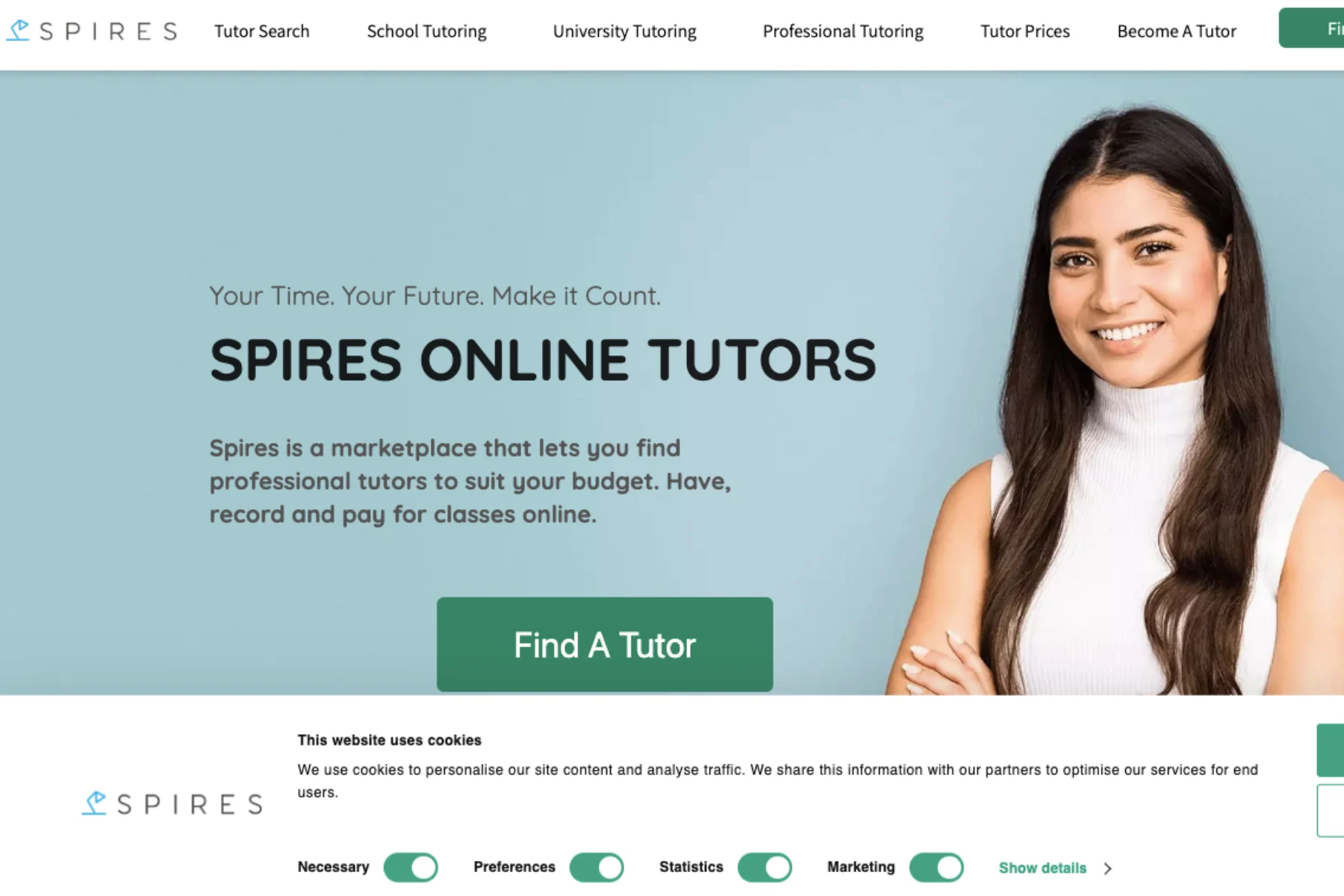
Spires is a UK-based online tutoring marketplace that connects students with verified tutors across more than 400 subjects using a competitive bidding system.
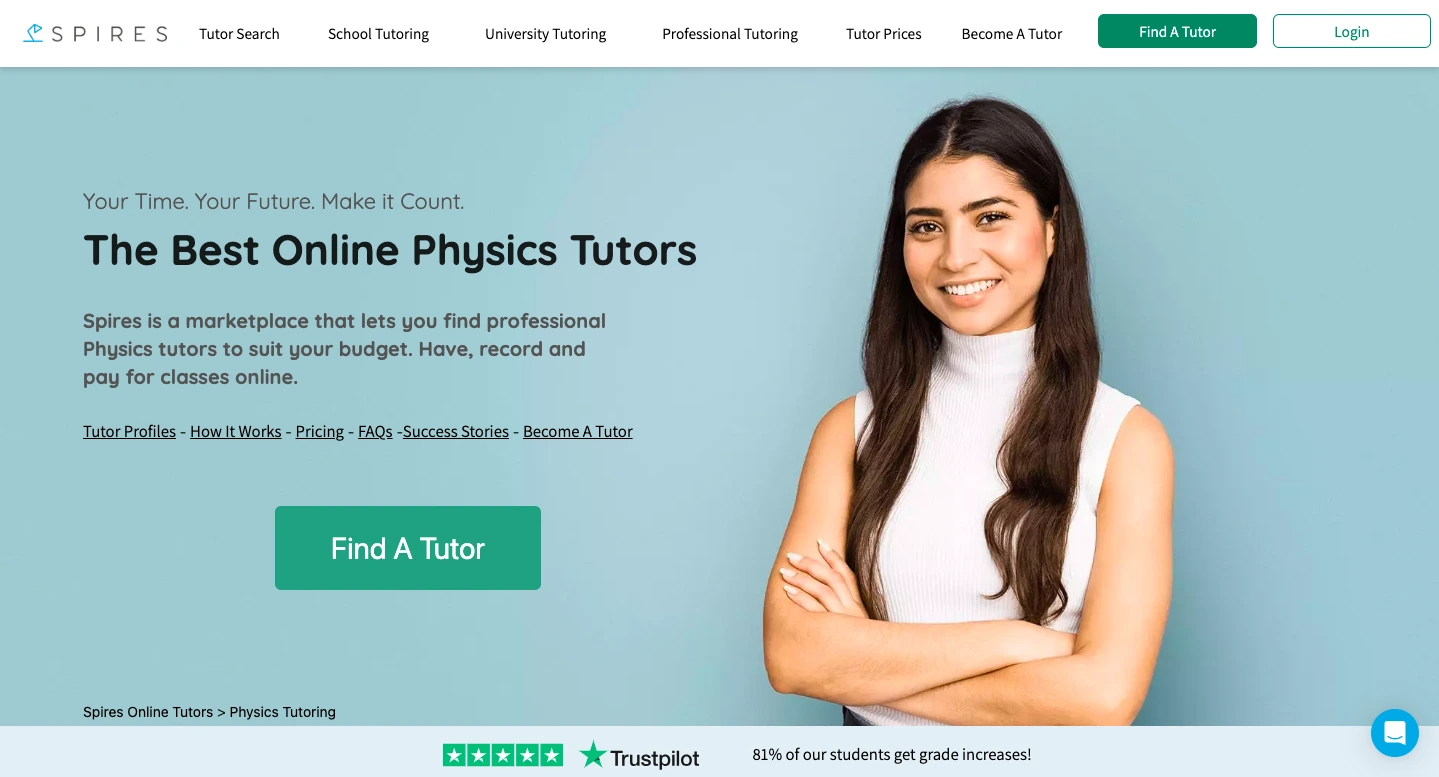
Spires platform page helping students find professional online physics tutors with flexible pricing and recorded lessons.
This article gives students and parents a factual look at Spires — its reviews, pricing, Physics tutor quality, and alternatives — so you can make an informed decision when comparing online tutoring platforms.
Reviews & User Feedback for Spires in 2026
Across major review platforms, Spires collects strong scores. Trustpilot leads with over 1,200 reviews and a 4.7/5 average. Reviews.co.uk shows a 4.86/5 from 64 reviews. Glassdoor provides a tutor-side perspective with a 4.4/5 average from 30 reviews. The overall sentiment is positive, with students praising tutor quality and platform ease-of-use, while tutors flag the high commission rate.
For Physics specifically, verified student testimonials on the Spires website describe tutors who provide clear explanations, worked examples, and responsive follow-up. Co-founder Shahid Lakha himself holds an MSc in Photon Science and a BSc in Physics, and actively tutors Maths, Physics, and Engineering at the university level — which reflects the platform’s Physics-centric credibility.
Trustpilot
Trustpilot shows Spires with a 4.7/5 score from over 1,210 reviews at the time of research. Positive reviewers mention fast tutor matching, high-quality sessions, and a smooth booking process. One parent noted their daughter’s A-Level Maths tutor was among the best they had found.
Negative reviews are relatively rare but mention occasional mismatches between student expectations and tutor style. One reviewer reported a poor experience with a specific tutor who did not adequately understand their problem before charging for a session. Spires’ team is visible in responses and typically follows up on complaints.
For Physics, several reviews mention tutors helping with A-Level and university-level content, with students noting improvements in understanding of structural analysis, mechanics, and STEM modules at the undergraduate level.
Reviews.co.uk
Reviews.co.uk shows 64 verified reviews with an average score of 4.86/5. The platform notes that 61 of those customers rated Spires as “excellent.” Students highlight the clarity of tutor profiles and the ease of setting up and paying for sessions.
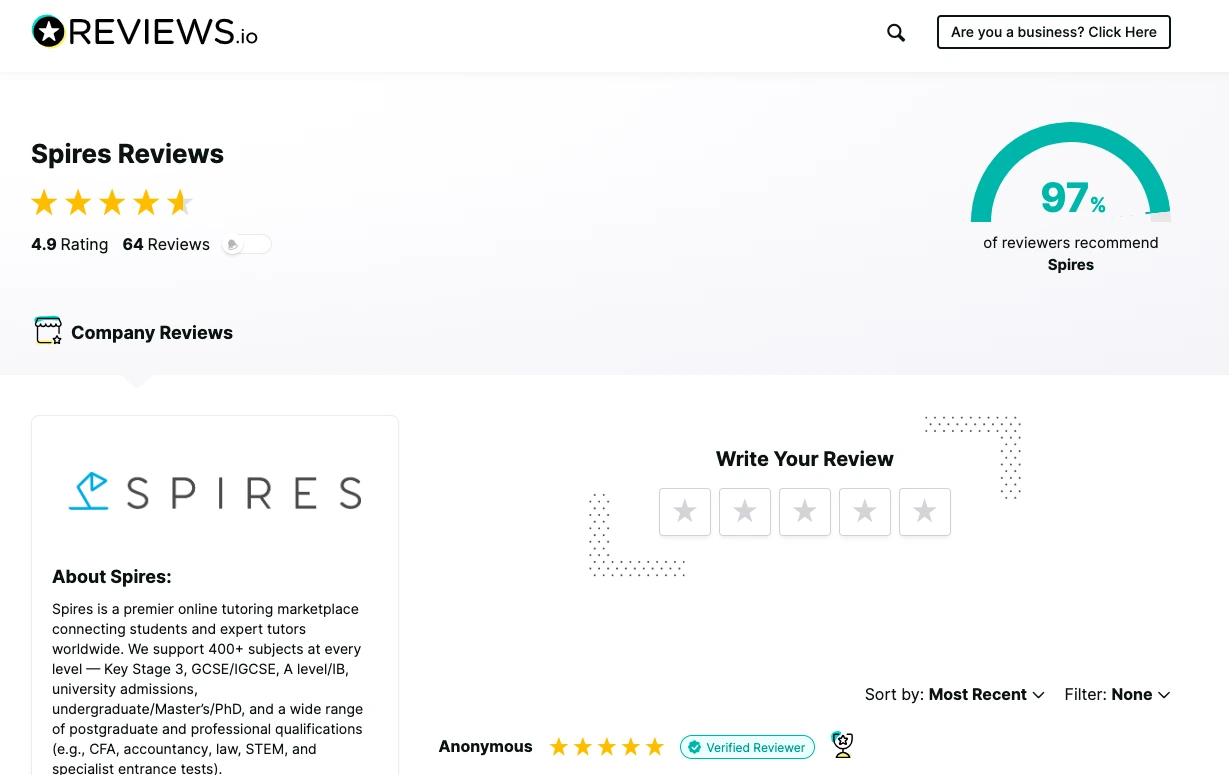
Customer reviews for Spires online tutoring platform highlighting a 4.9-star rating and 97% recommendation rate from students.
One verified reviewer described Spires as “a simple and trustworthy site to use” with “excellent calibre” tutors. Reviews point to the recorded lesson feature as particularly useful for revision. No significant negative patterns are present in this dataset.
Physics-related feedback on this platform is limited in volume but consistently positive, with students mentioning improved understanding of assignment requirements and subject-specific modules.
Glassdoor (Tutor Reviews)
Glassdoor lists 30 tutor reviews with an overall rating of 4.4/5, with 81% willing to recommend Spires as an employer. Tutors praise the platform’s tech infrastructure, timely payments, flexible scheduling, and variety of student jobs across countries and syllabi.
The most consistent criticism is the 35% platform commission, which tutors say is among the highest in the market. Some also flag the bidding system’s 15-bid-per-week cap and an automated ranking system that can penalise tutors who work with short-term students — even when that is not the tutor’s fault.
Physics and STEM tutors on Glassdoor appear to find the platform workable, though competition for specialist jobs is noted. No specific Physics-subject complaints appear in the public reviews.
Is Spires Legit?
Spires has publicly verifiable credentials. It is a two-time winner at the 2024 National Tutoring Awards, organised by The Tutors’ Association. It operates from a registered London address (60 Sheffield Terrace, London W8 7NA) and processes payments via Stripe, a globally regulated payment provider.
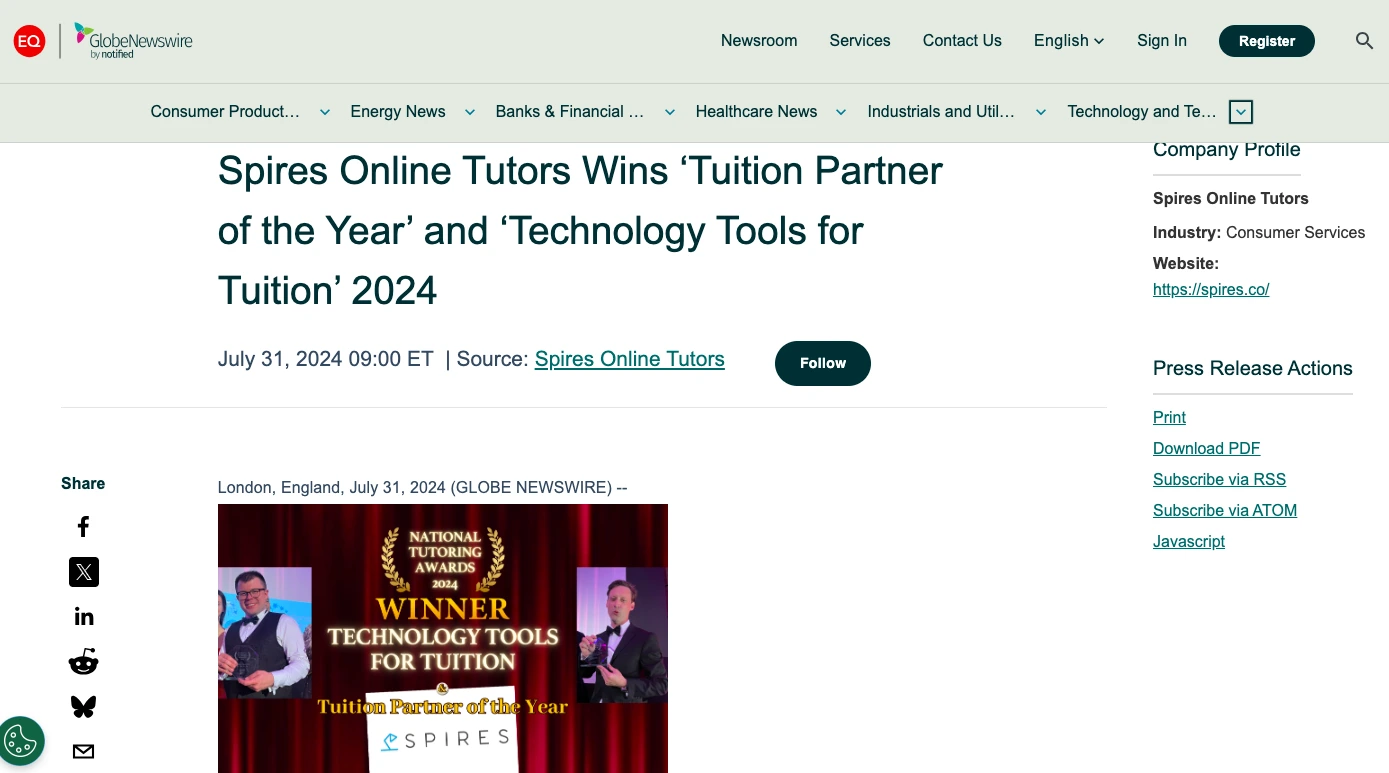
GlobeNewswire press release highlighting Spires Online Tutors winning two awards at the 2024 National Tutoring Awards.
Its 4.7/5 Trustpilot score is maintained across over 1,200 reviews, and a Reddit user in the IB forum explicitly stated that Spires is not a scam and personally recommended it. There is no pattern of fraud or deceptive practices in the publicly available data.
Is Spires legit?
Yes. Spires is a legitimate online tutoring platform backed by verifiable awards, 1,200+ Trustpilot reviews at 4.7/5, a registered London address, and Stripe-based payments. No credible public evidence of fraud or scam activity exists.
Spires Pricing, Refunds & Policies in 2026
Spires does not charge students a fixed subscription fee. Tutors set their own hourly rates, and Spires adds a platform fee starting at 35% on top of the tutor’s rate. This fee is paid by the student. On average, students can expect to pay approximately $40–$100+ per hour, depending on tutor level and subject complexity.
Public feedback on Spires pricing is mixed. Students generally accept the cost as reflective of tutor quality, with many noting that highly qualified tutors with postgraduate degrees justify the rates. However, tutor-side reviews consistently flag the 35% commission as high, and note it was raised from 25% in January 2023. For long-term students, the fee reduces by 1% for every 5 hours on the same job, down to a minimum of 20%, which rewards ongoing relationships.
Trials: Spires does not offer free trial lessons. Tutors are qualified professionals, and the platform policy does not allow free teaching time. However, many individual tutors offer a short introductory call (typically 10–15 minutes) before the first paid session to discuss goals and suitability. This is informal and not guaranteed across all tutors.
Refunds: According to Spires’ Terms of Use and help documentation, refunds are handled by the individual tutor, not the platform. If a student and tutor agree to cancel or reschedule, the tutor can issue a refund, and Spires adjusts its fees accordingly. Spires does not issue automatic platform-level refunds. This places the refund decision in the tutor’s hands, which may vary by individual.
Hidden Fees: Spires states that “all prices are fully inclusive of tax and platform fees.” The 35% commission is disclosed publicly via their help centre. There is no evidence of undisclosed charges in the publicly available data. The platform fee is embedded into the tutor’s quoted student price, so students see one total cost rather than a separate line item, which could be seen as a lack of transparency by some users.
Alternatives to Spires
Spires is a solid option, but it is not the only one. Depending on your budget, subject focus, and learning style, there are several strong alternatives — from niche Physics tutoring platforms to free resources and local options. Here is a practical overview of the key choices available to students and parents today.
My Physics Buddy
My Physics Buddy is an online tutoring platform focused specifically on Physics and closely related subjects like calculus, engineering mechanics, and mathematics. It serves students globally in developed countries, offering personalised 1:1 sessions and homework help.
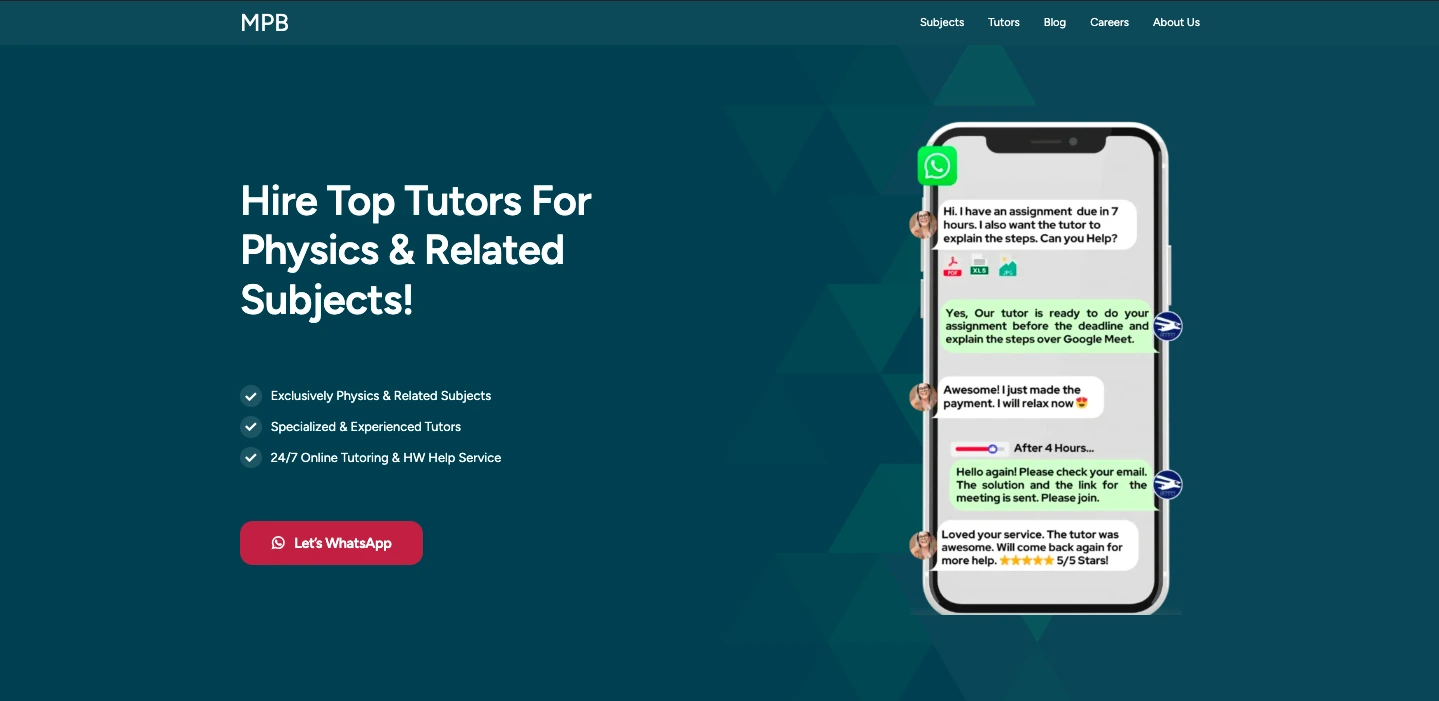
My Physics Buddy platform offering specialized physics tutoring and homework help with instant WhatsApp support.
Unlike Spires, which is a broad marketplace covering 400+ subjects, My Physics Buddy’s narrow subject focus means tutors are specialists — not generalists. This is a key consideration for students dealing with advanced Physics topics, university-level mechanics, or demanding STEM coursework where subject depth matters more than breadth. For students who want a Physics-first experience rather than navigating a large tutoring marketplace, My Physics Buddy is a focused alternative worth evaluating.
Wyzant
Wyzant is a large US-based tutoring marketplace with thousands of tutors across many subjects including Physics, calculus, and engineering. Tutors set their own rates, typically ranging from $40 to $150+ per hour, and students can browse profiles and read reviews before booking.
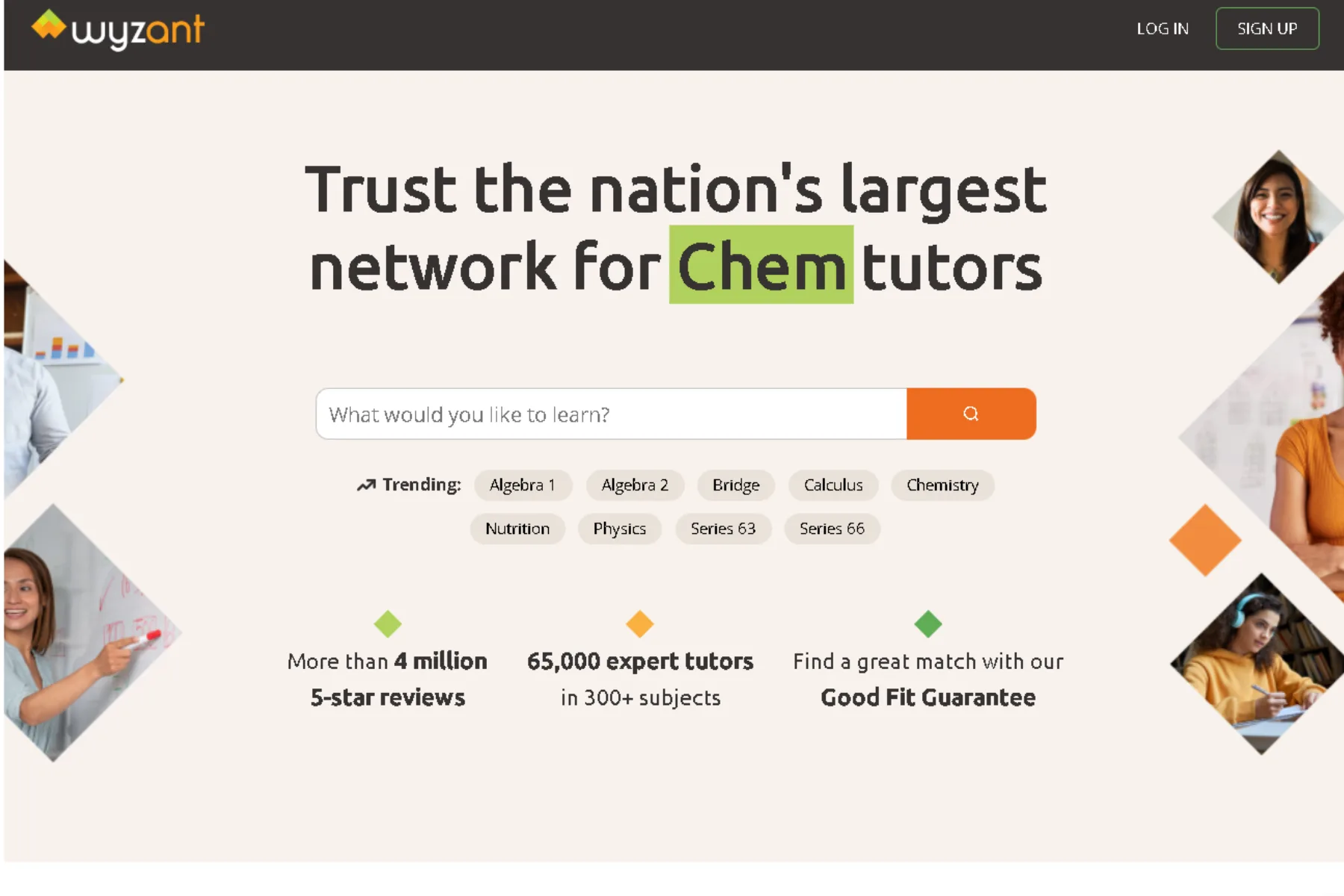
Wyzant’s homepage promotes its tutor network with a subject search bar and trending topics like Physics and Calculus.
Pros include a wide tutor pool, a satisfaction guarantee for first sessions, and no subscription requirement. Cons include variable quality across tutors and a platform commission structure similar to Spires. For Physics tutors, quality varies widely — students should read reviews carefully and vet credentials before committing. It is a good starting point for US-based students who want choice.
Chegg Tutors
Chegg is a well-known student platform that offers on-demand tutoring alongside textbook rentals and homework help tools. Physics tutoring is available, and sessions can often be arranged quickly. Pricing is generally accessible, making it popular with undergraduate students on tighter budgets.
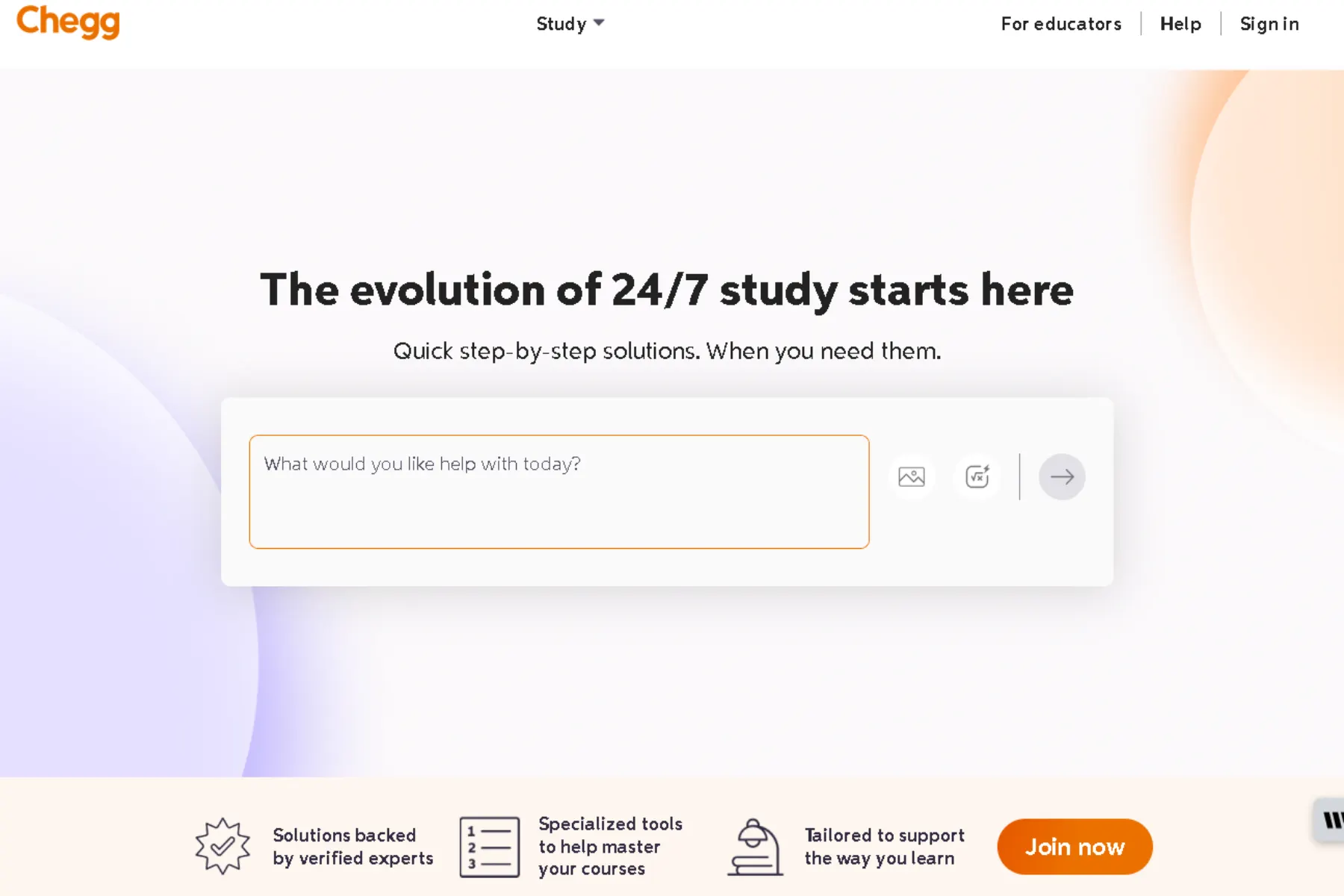
Chegg’s homepage promotes 24/7 study help with step-by-step solutions and a central question search bar.
Pros include wide availability, quick session access, and a familiar brand. Cons include less rigorous tutor vetting than Spires, and Physics-specific depth can be inconsistent depending on the tutor assigned. For routine homework help, Chegg works well. For advanced Physics concepts or exam preparation, a more specialised platform may be more effective.
Khan Academy
Khan Academy is a free, non-profit educational platform with comprehensive video lessons covering Physics, mathematics, calculus, and engineering basics. It is not a tutoring service — there is no live human interaction — but its structured content is excellent for self-paced learning and concept review.
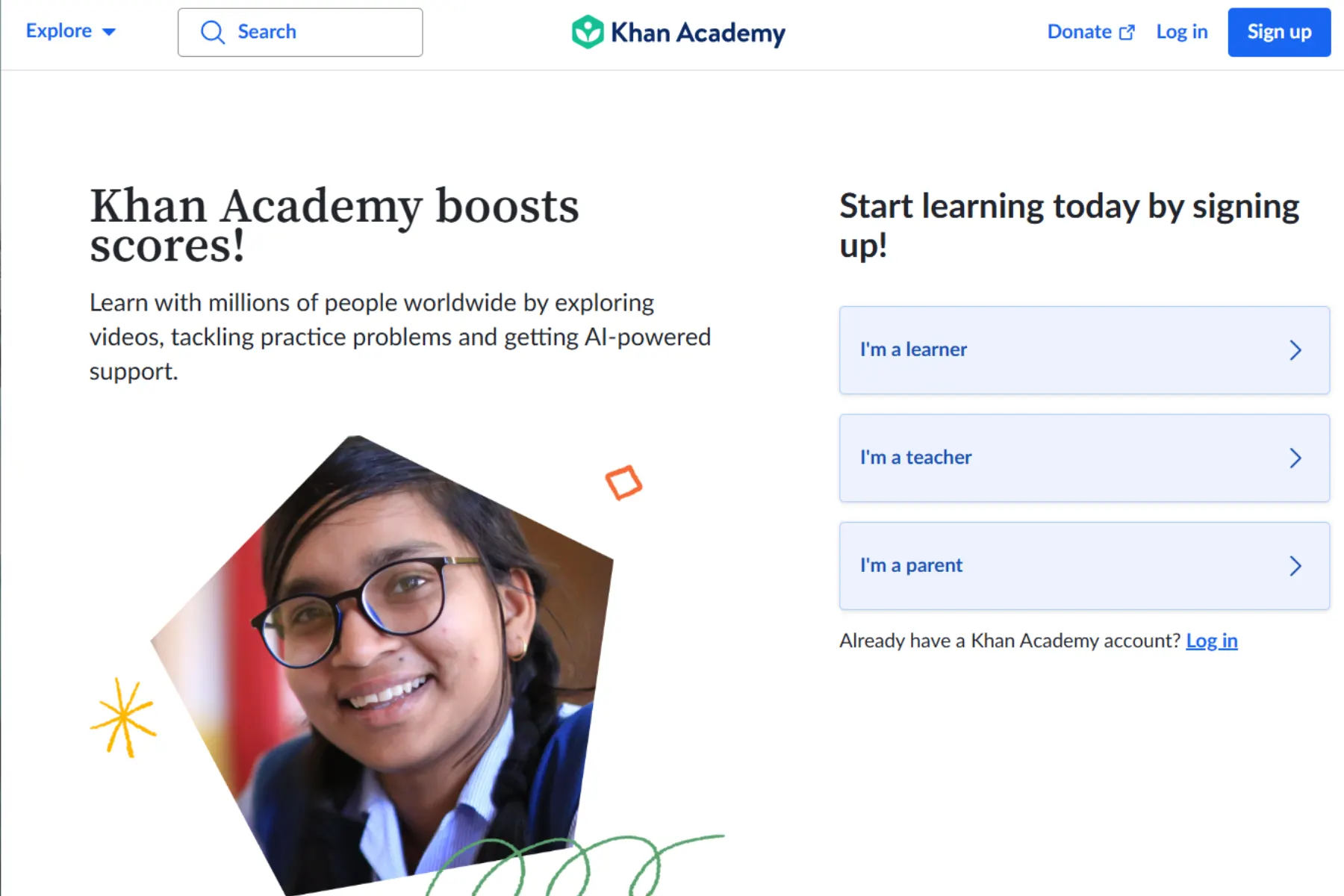
Khan Academy offers free online courses, practice exercises, and AI-powered learning tools for students, teachers, and parents.
Pros: completely free, high quality, well-organised by topic. Cons: no personalised feedback, no real-time help, and not suitable as a replacement for exam-focused tutoring. For Physics students who want to fill knowledge gaps independently, Khan Academy is one of the best free tools available and pairs well with any paid tutoring service.
Coursera
Coursera offers university-level courses in Physics, applied mathematics, and engineering from institutions including Duke, MIT, and Johns Hopkins. Courses are structured with video lectures, assignments, and peer grading. Some are free to audit; certificates require payment.
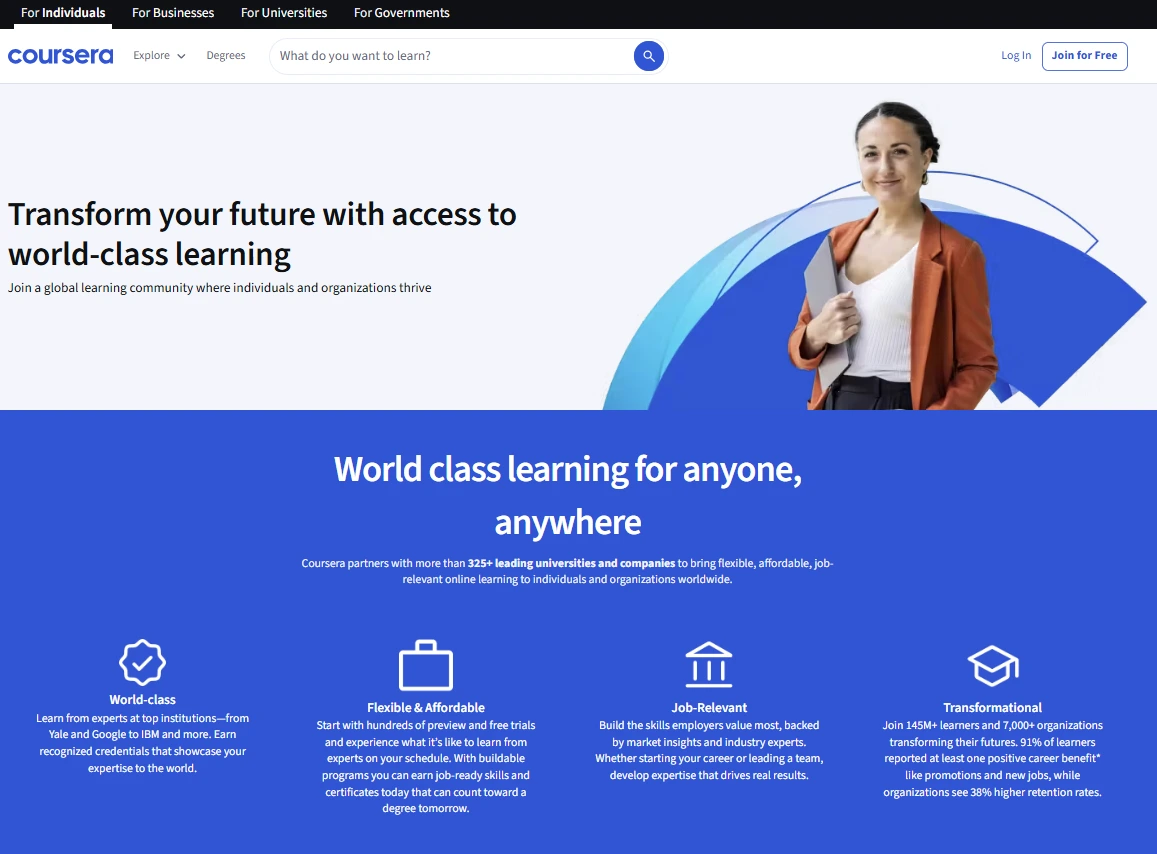
Coursera promotes world-class, flexible online learning with courses from universities and companies, focused on job-relevant skills and recognized credentials.
Pros include the academic credibility of the source institutions and a structured curriculum. Cons include limited interactivity and no real-time Physics support. Coursera works best as a supplement to tutoring, particularly for students who want to cover a full course independently alongside occasional expert guidance.
Local Tutors and College Libraries
Local tutors found through university notice boards, community groups, or word of mouth remain a viable option, especially for in-person learners. College and university libraries often provide free tutoring services, study groups, and academic support centres that cover Physics and STEM subjects.
Pros: cost-effective or free, can be highly personalised. Cons: quality and availability vary greatly, and in-person options are limited geographically. For students at institutions with strong academic support departments, these free resources should not be overlooked before paying for an external platform.
Winners
Quality of Tutors: Spires (7% acceptance rate, PhD-level tutors, rigorous vetting)
Pricing: Khan Academy (free) / Local College Resources (free or low cost)
Quality of Customer Care: Spires (24/7 live chat and email; active Trustpilot responses)
Ease of Use: My Physics Buddy (focused platform, no marketplace navigation required)
How It Works
For Students
Getting started on Spires is straightforward. You visit the platform and post a tutoring request describing your subject, level, and goals. Qualified tutors then bid on your request in an auction-style system. You receive bids with tutor profiles, rates, and reviews, and you choose who to work with. You can also browse profiles directly and message tutors before booking.
Once you select a tutor, you schedule sessions through the platform. In 2026, all sessions use Spires’ built-in BitPaper whiteboard and screen sharing tools. Payment is handled securely via Stripe. Every session is automatically recorded and stored on the platform, so you can replay it at any time for revision. Support is available via live chat and email if you run into issues.
For Tutors
Tutors apply online by submitting a CV and completing an application form. Spires then conducts a personal interview, reviews qualifications, and requires enhanced background checks (DBS or equivalent) for tutors working with under-18 students. Only about 7% of applicants are accepted.
Once approved, tutors set their own hourly rates and availability. They can bid on student job postings (up to 15 bids per week) or be found through profile searches. All payments are processed automatically via Stripe each Friday for completed sessions. The platform commission starts at 35% but decreases by 1% for every 5 hours on the same student job, down to a minimum of 20%. Tutors who bring their own students to the platform pay a reduced fee of 5%.
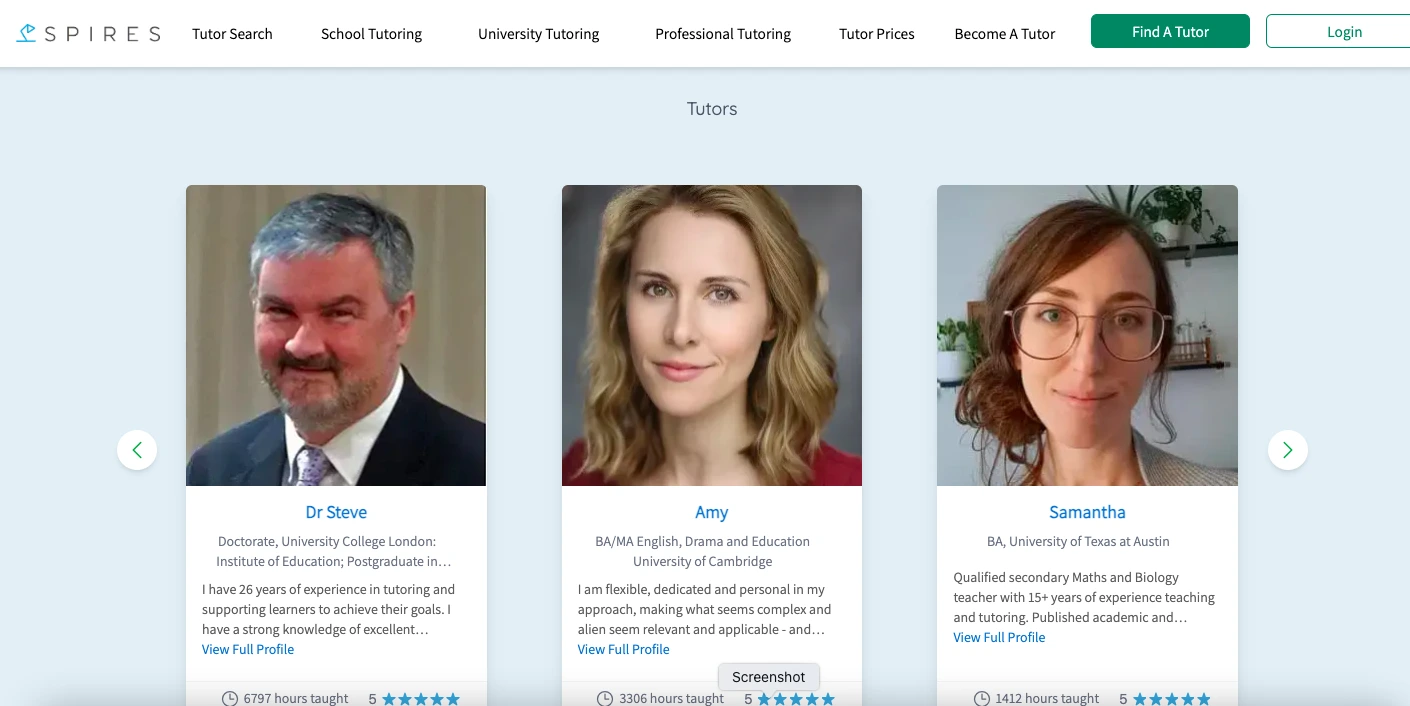
Tutor profiles on the Spires platform showcasing experienced educators with qualifications, ratings, and hours taught.
Spires Company Information
Spires was founded in 2014 by Oxbridge graduates and officially launched in 2016. It is headquartered at 60 Sheffield Terrace, London W8 7NA, United Kingdom. The co-founders are Shahid Lakha (Educational Consultant), Dr. Karol Pysniak (CTO), Dr. Leo Evans (CEO), and Nichola Green. The company’s stated mission is to give every student access to high-quality tutors regardless of location, using technology to remove geographical and logistical barriers to learning.
According to publicly available press releases, Spires served over 9,000 students through 1,000 vetted tutors across 120 countries as of 2024, with more than 100,000 classes delivered. The platform covers 400+ subjects across all academic levels, from primary school to postgraduate and professional qualifications. Spires also offers Spires Connect, a white-label API that allows tutoring agencies to operate their own branded platforms using Spires’ technology infrastructure.
The company has received notable industry recognition. It won both “Tuition Partner of the Year” and “Technology Tools for Tuition” at the 2024 National Tutoring Awards, and again won “Technology Tools for Tuition” in 2025. These awards are organised by The Tutors’ Association. Spires is also a corporate member of The Tutors’ Association, which adds an additional layer of industry accountability.
USP and Drawbacks: Spires’ main differentiator is its combination of rigorous tutor vetting (7% acceptance rate), a competitive bidding marketplace, recorded lessons, and a built-in interactive whiteboard. Drawbacks include the 35% starting commission (which inflates student costs), a 15-bid-per-week cap for tutors, and a refund policy that relies on individual tutor discretion rather than platform-level guarantees. Students in some regions cannot be served because Stripe does not support all countries.
Customer Support & Global Reach: Spires offers 24/7 live chat and email support for both students and tutors. It operates in 120 countries, though payment access via Stripe excludes certain regions (India and Brazil among them). Multilingual tutoring is available, and the platform supports international curricula including IB, GCSE, A-Level, and US university frameworks.
Future Plans — AI Usage: Spires already uses machine learning to surface best-fit tutors for student requests, balancing subject expertise, level, availability, and budget. According to their platform description on Reviews.co.uk, this matching system is actively in use. Spires has also been described in third-party reports as having “AI plans” for further integration. Karol Pysniak, CTO, has publicly stated that innovation drives the company’s direction. However, detailed public disclosures about specific upcoming AI features beyond the current matching system are not publicly available at the time of this article’s research.
“These results show the power of expert, personalised support in helping students unlock their full potential. By combining world-class tutors with technology designed to enhance learning, we’re giving young people the tools to excel.”
— Karol Pysniak, CTO and Co-Founder of Spires, via Spires Press Room
FAQs
What subjects does Spires cover for Physics students?
Spires covers Physics at GCSE, IGCSE, A-Level, IB, and undergraduate level. Related subjects include calculus, engineering mechanics, and applied mathematics. Visit spires.co to browse available Physics tutors.
How much does a Spires Physics tutoring session cost?
Tutors on Spires set their own rates. With the platform’s 35% commission added, most students pay between $40 and $100+ per hour, depending on tutor experience and subject level.
Does Spires offer a free trial for Physics tutoring?
Spires does not offer free trial lessons. Some individual tutors provide a short introductory call (10–15 minutes) before the first paid session, but this is at the tutor’s discretion and not guaranteed by Spires.
Is Spires a good platform for university-level Physics in 2026?
Yes, Spires accepts tutors with postgraduate qualifications including PhDs. Students working on undergraduate or master’s-level Physics have reported positive outcomes. Tutor acceptance rate is just 7%, ensuring academic depth.
What is Spires’ refund policy if a session does not go well?
Spires’ refund policy places responsibility with the individual tutor. If you and your tutor agree to cancel a session, the tutor can issue a refund. Spires does not guarantee automatic platform-level refunds.
Conclusion
Spires is a well-established, award-winning tutoring marketplace with strong credentials. Its 4.7/5 Trustpilot score, rigorous tutor vetting, and 120-country reach make it a credible choice in 2026 for students who want a broad marketplace with competitive tutor options.
For Physics specifically, Spires’ tutors are academically strong — many hold postgraduate degrees, and the platform’s strict 7% acceptance rate helps maintain quality. However, the 35% commission can push hourly costs high, refunds are tutor-dependent, and navigating a large marketplace may not suit students who want a simpler, Physics-focused experience. Platforms like My Physics Buddy, which specialise in Physics and related subjects, may offer a more direct and streamlined path for students whose primary need is Physics help.
Trust & Transparency Note: This article is based on publicly available data, reviews, and official sources, last verified in 2026. My Physics Buddy is listed as an alternative and reviewed using the same criteria as competitors.
Disclaimer: This article provides general educational guidance only. It is NOT official exam policy, professional academic advice, or guaranteed results. Always verify information with your school, official exam boards (College Board, Cambridge, IB), or qualified professionals before making decisions. Read Full Policies & Disclaimer , Contact Us To Report An Error.

By Ashish PM