The Princeton Review Reviews, Pricing & Alternatives (For Physics) in 2026
Big name, big price — but is it the right fit for physics and STEM students?
By Ashish PM
| Published on April 1, 2026

Reviewed By Pankaj Kumar
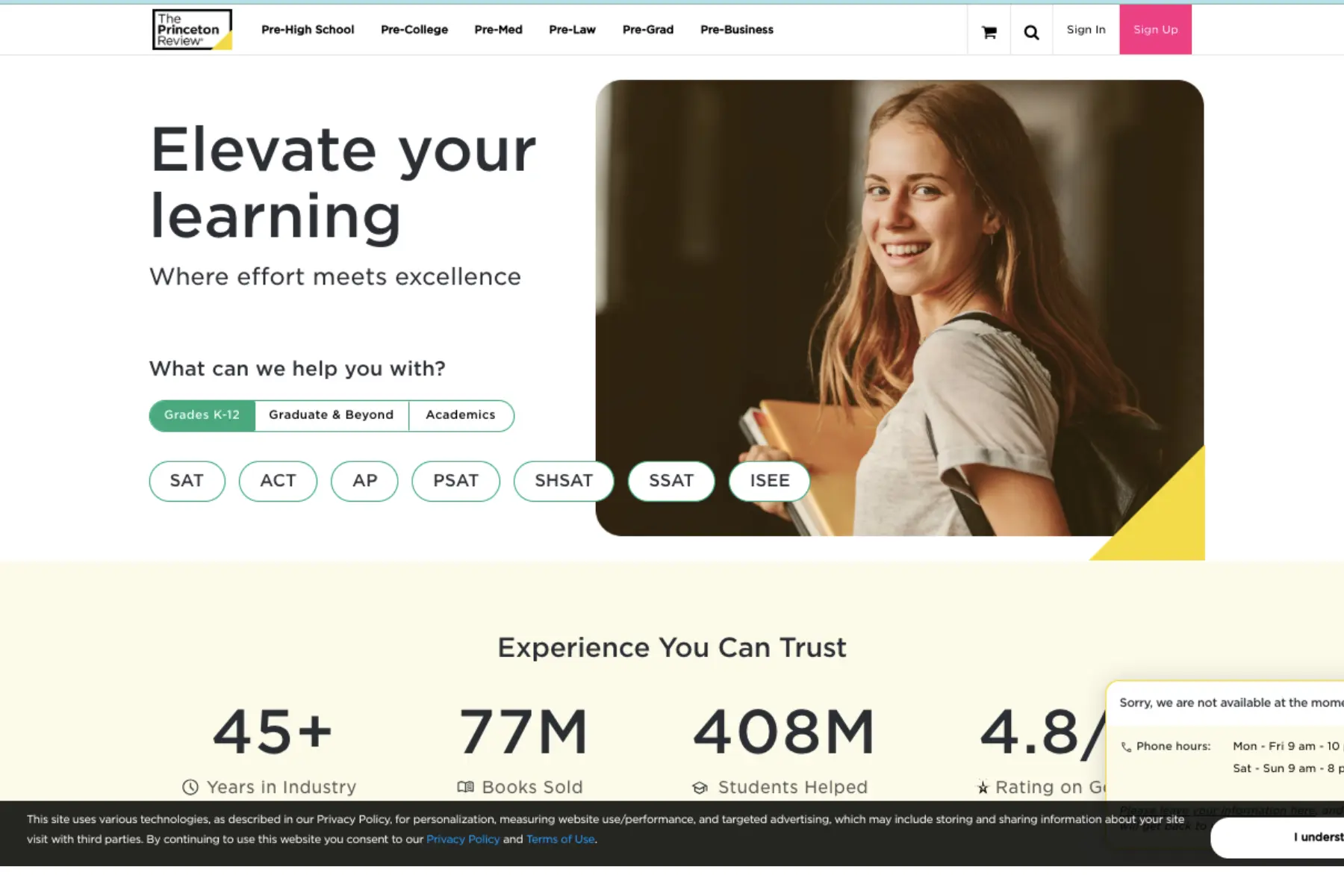
The Princeton Review (TPR) is one of the oldest and most widely recognized names in American education services, founded in 1981 and serving millions of students across test prep, academic tutoring, and admissions counseling. It is now owned by a Hong Kong-based holding group, Primavera Holdings Limited, and operates through its affiliate Tutor.com.
A mobile app interface displaying friend suggestions with profile images, Arabic “Add Friend” buttons, and mutual friend indicators.
This article is for students and parents comparing online tutoring and homework help platforms for physics, calculus, math, and related STEM subjects. It examines The Princeton Review’s reviews, pricing, tutor quality, and alternatives — so you can make a well-informed decision before spending your money.
Reviews & User Feedback for The Princeton Review in 2026
Across major review platforms, The Princeton Review earns mostly positive scores — particularly for test prep courses. Students frequently praise individual instructors by name. Negative reviews tend to cluster around pricing concerns, refund difficulties, and mixed results for less common subjects. Physics-specific feedback appears in MCAT prep reviews, where instructors covering physics content receive strong marks. General academic physics tutoring through the homework help portal receives thinner coverage in reviews.
Trustpilot
The Princeton Review holds a 4.2 out of 5 rating on Trustpilot, based on over 2,100 verified reviews. The volume of reviews and the score both reflect a generally positive student experience.
Positive reviews frequently name specific instructors, credit structured course materials, and note improvements in SAT and ACT scores. Negative reviews point to courses feeling rushed, homework requirements being burdensome, and occasional disputes over the money-back guarantee eligibility.
On physics specifically, MCAT-related reviews mention instructors like “Dr. H” for making physics concepts engaging with real-world applications. There are fewer reviews discussing standalone physics or calculus tutoring through the academic homework help portal.
Glassdoor (Employee & Tutor Reviews)
Instructor employees have rated The Princeton Review 4.3 out of 5 on Glassdoor, based on 54 reviews, with 97% saying they would recommend the employer to a friend. Work-life balance scores very high at 4.9.
Tutor-role employees rate the company lower at 3.5 out of 5 from 50 reviews. Common concerns include inconsistent hours, low pay relative to the company’s charge rates, and an opaque training evaluation process. One reviewer noted the training process lacked transparency about evaluation standards.
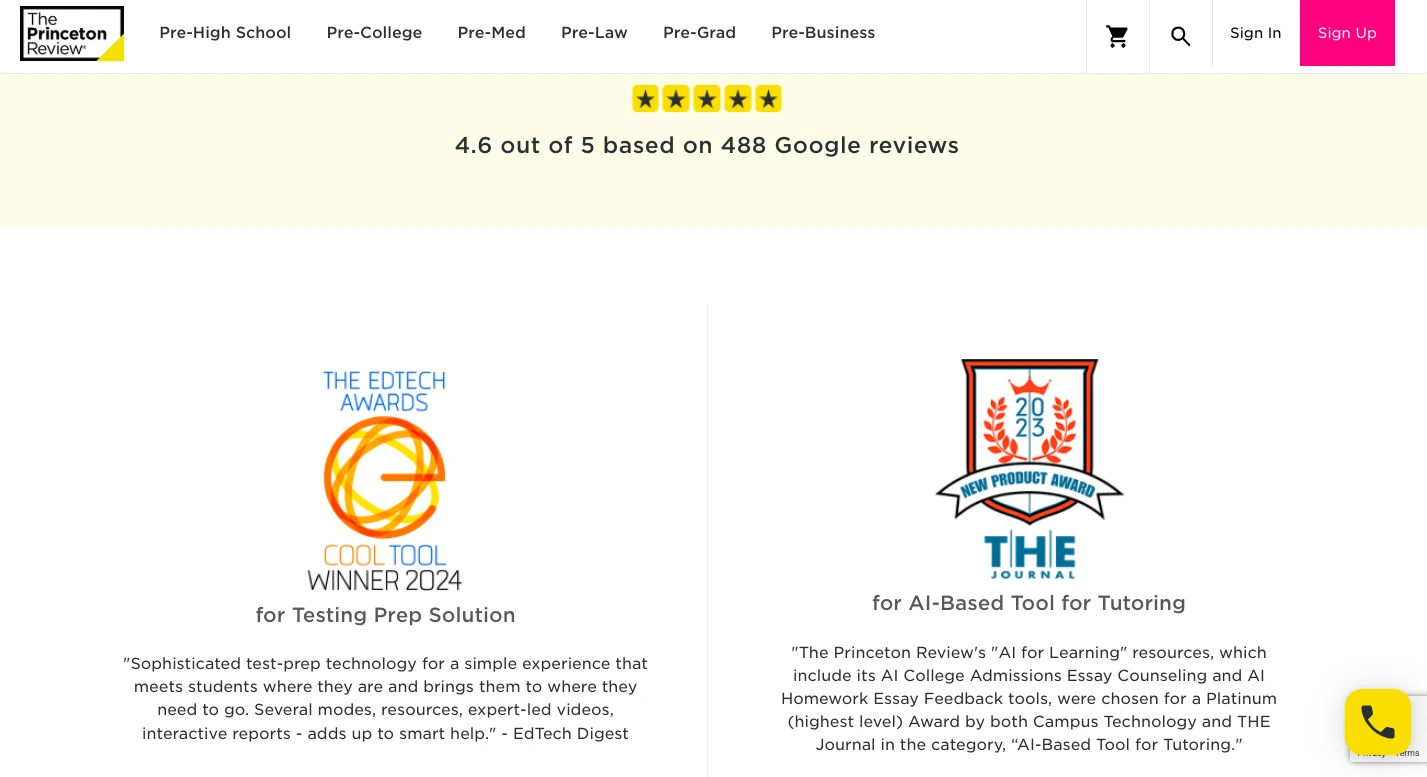
The Princeton Review highlights a 4.6/5 Google rating alongside EdTech Awards 2024 recognition and THE Journal award for its AI-powered tutoring tools.
Physics and STEM tutors are actively recruited by TPR, as job listings on Glassdoor show openings for calculus, chemistry, and science tutors. The quality of physics tutors appears to depend significantly on the individual hired, not a standardized subject-expertise bar.
Indeed
On Indeed, tutor reviews describe flexible hours and a satisfying student interaction experience. However, multiple reviewers flag that the income is inconsistent — hours depend on student demand — making it a poor fit for someone relying on it as a primary income source.
From a student’s perspective, this variability in tutor availability could affect the consistency of physics tutoring sessions, particularly for less common or advanced topics.
EduReviewer
EduReviewer rates The Princeton Review 4.5 out of 5, praising the breadth of courses, quality of content, and responsive customer service. Reviewers highlight that the money-back guarantee provides reassurance, though the site also notes that some subjects lack in-depth coverage — a relevant concern for students seeking specialized physics instruction beyond standardized test content.
Is The Princeton Review legit?
The Princeton Review has operated for over 40 years and is widely recognized in the education industry. Its current parent entity, TPR Education IP Holdings, LLC, is controlled by Primavera Holdings Limited. The company has faced scrutiny in the past: a 2012 U.S. Department of Justice settlement involved a prior ownership entity over falsified attendance records in a publicly funded tutoring program. That prior entity is not the current operator, but the incident is part of the company’s documented history as noted on Wikipedia.
More recently, the National Advertising Division (NAD) asked TPR to discontinue certain MCAT score guarantee claims that were deemed too broad. TPR agreed to comply. On the positive side, the company maintains an active presence on major review platforms and generally responds to customer issues.
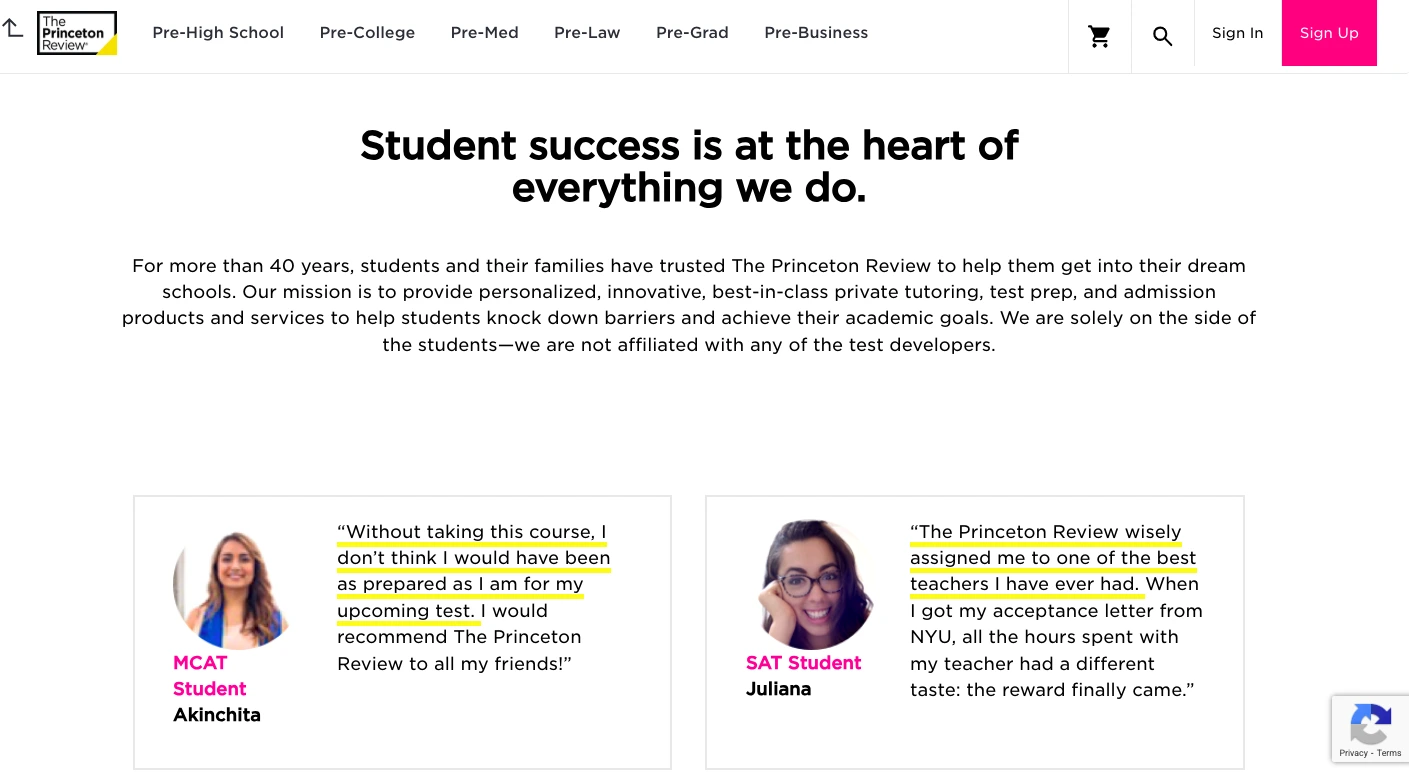
Students share how The Princeton Review’s tutoring helped them prepare for exams and achieve college admission success.
Is The Princeton Review legit?
Yes — The Princeton Review is a legitimate, long-established education company with verified student reviews and over four decades in operation. Past legal issues involved a prior ownership entity. Students should read refund terms carefully before enrolling in any Princeton Review program.
The Princeton Review Pricing, Refunds & Policies in 2026
The Princeton Review uses a tiered pricing model. Homework help subscriptions start at $39.99/month for 1 hour, $103.49 for 3 hours, and $152.99 for 5 hours. Larger bundles include 10 hours for $349.99, 30 hours for $849.99, and 50 hours for $1,299.99. Test prep packages range from $299 for self-paced courses to over $1,849 for live SAT or ACT programs. Private tutoring for premium packages can reach $278/hour or more.
On public forums, students and parents describe The Princeton Review as firmly on the expensive end compared to competitors. Reddit users have cited rates around $353/hour for premium SAT tutoring packages. Some reviewers on Trustpilot acknowledge the cost but say the structured program and score guarantees justify it — particularly for students targeting top test scores. Others, especially those who did not see significant score gains, question the value.
A research note published on Technology Science documented that TPR previously charged different prices for the same online SAT tutoring package depending on the user’s ZIP code, with prices ranging from $2,760 to $3,240 for the same 24-hour package. TPR no longer publicizes this practice, but buyers in certain regions may want to verify pricing independently.
Trials: The Princeton Review offers a free 1-hour trial of its on-demand homework help service through certain promotional offers. Some self-paced test prep courses also include a 14-day trial period, though a valid payment method is required to access it. There is no permanent free tier.
Refunds: The refund policy varies by product. For classroom or live online courses, a full refund of tuition and deposit is available if you withdraw at least 10 days before the course starts. After the course begins, refund eligibility is reduced on a sliding scale. Self-paced courses priced under $500, admissions counseling, and shipping costs are not refundable. Some Trustpilot reviewers report difficulty qualifying for the money-back guarantee due to strict homework completion schedule requirements — even when the total homework volume was completed. Full terms are available in The Princeton Review’s enrollment terms and conditions.
Hidden fees: The Princeton Review does not openly advertise many hidden fees, but several conditions can reduce refunds. Course materials must be unused and returned to receive a full tuition refund. A $50 payment plan fee is non-refundable. For LSAT programs, a $115 LawHub Advantage subscription fee is also non-refundable once activated. Students should review the full terms at the guarantee page before enrolling.
Alternatives to The Princeton Review
The Princeton Review is a solid option for standardized test prep, but students specifically seeking physics, calculus, or engineering mechanics tutoring may find more specialized platforms — or even free resources — better suited to their needs. Below is an overview of six alternatives, including both tutoring platforms and self-study options, followed by detailed breakdowns of each.
My Physics Buddy
My Physics Buddy offers 1:1 personalized online tutoring and homework help specifically in physics and closely related subjects such as calculus, mathematics, and engineering mechanics. Unlike broader platforms that cover dozens of subjects, My Physics Buddy focuses on STEM-intensive subjects where student needs tend to be highly specific.
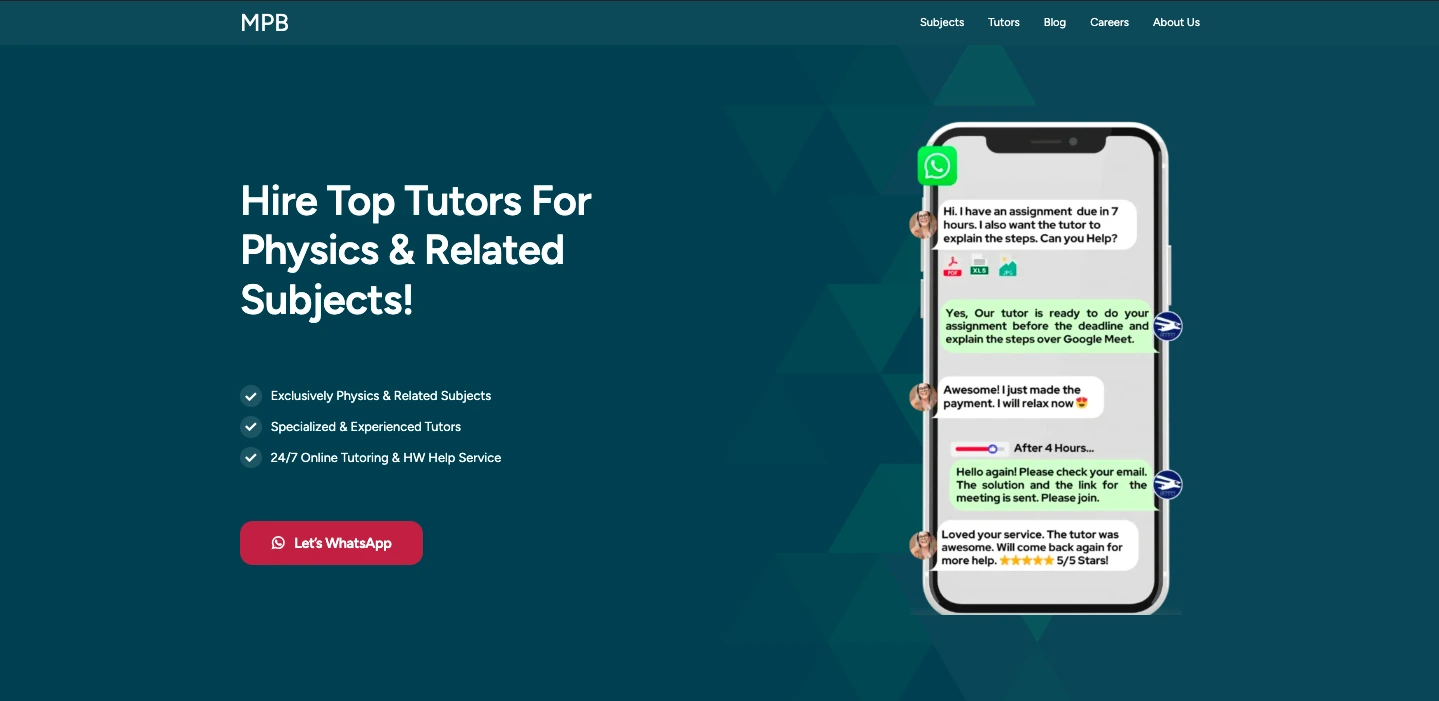
My Physics Buddy offers expert online physics tutoring with 24/7 homework help and quick support via WhatsApp.
The specialized focus means students work with tutors who have deep subject expertise in physics, rather than a generalist pool. This is a meaningful distinction for students tackling university-level mechanics, electromagnetism, or quantum physics. My Physics Buddy serves students globally in developed countries. Pricing information is available directly on their website. The narrow subject focus means it is not suitable for non-STEM subjects or standardized test prep.
Wyzant
Wyzant is a large marketplace connecting students with independent tutors in hundreds of subjects, including physics and calculus. Tutors set their own rates, typically averaging $35 to $65 per hour according to the platform, though rates can exceed this range significantly for specialized STEM subjects.
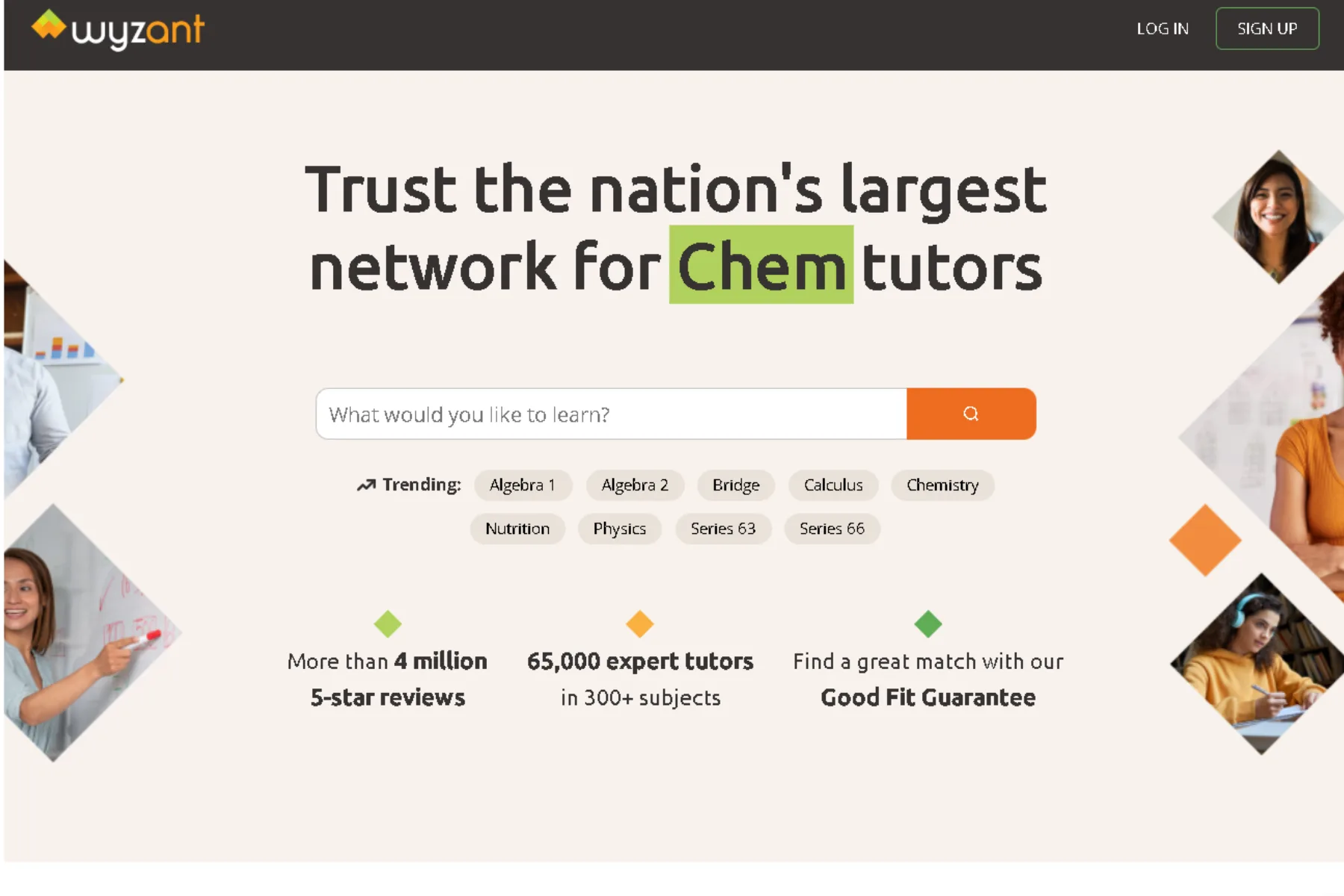
Wyzant’s homepage promotes its tutor network with a subject search bar and trending topics like Physics and Calculus.
The main advantage of Wyzant is flexibility — students choose their own tutor, can read reviews, and are not locked into a subscription. The downside is variability: tutor quality depends entirely on the individual. There is no standardized curriculum or score guarantee. For physics tutoring specifically, Wyzant can be excellent if a student takes the time to screen tutors carefully.
Khan Academy
Khan Academy is a free, nonprofit online learning platform with extensive coverage of physics, calculus, and math at the high school and introductory college level. Content is delivered through video lessons and practice exercises, with no live tutoring component.
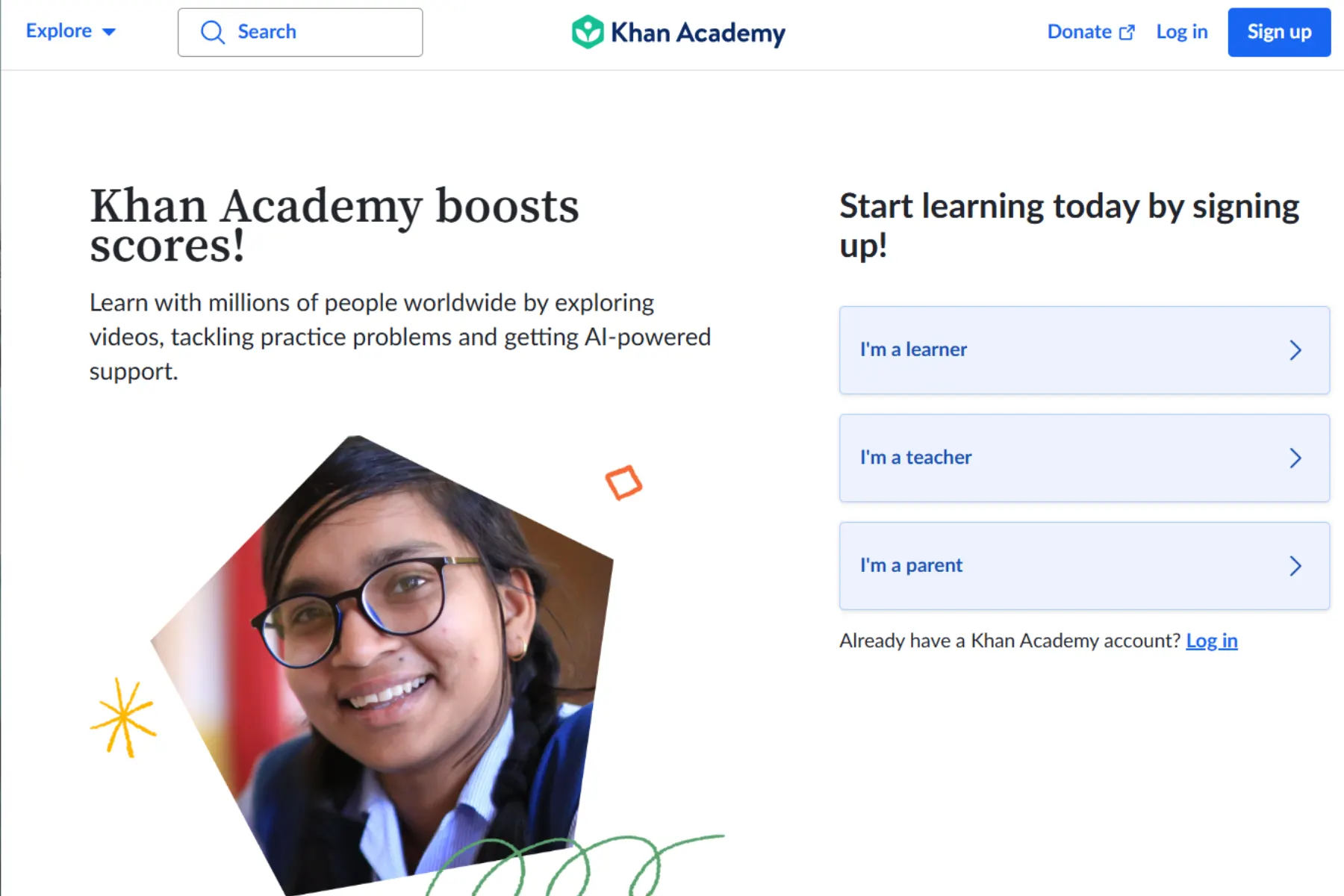
Khan Academy offers free online courses, practice exercises, and AI-powered learning tools for students, teachers, and parents.
Khan Academy is an ideal first resource for students who want to understand a concept before paying for a tutor. The physics content covers mechanics, electricity, magnetism, and waves in depth. The limitations are that it is entirely self-paced, there is no interaction with a human expert, and it may not cover advanced university-level physics topics adequately.
Chegg Tutors / Chegg Study
Chegg offers both a study tool with textbook solutions and Q&A, and an on-demand tutoring service. It is popular among college students for quick homework help. Pricing for Chegg Study is generally lower than The Princeton Review.
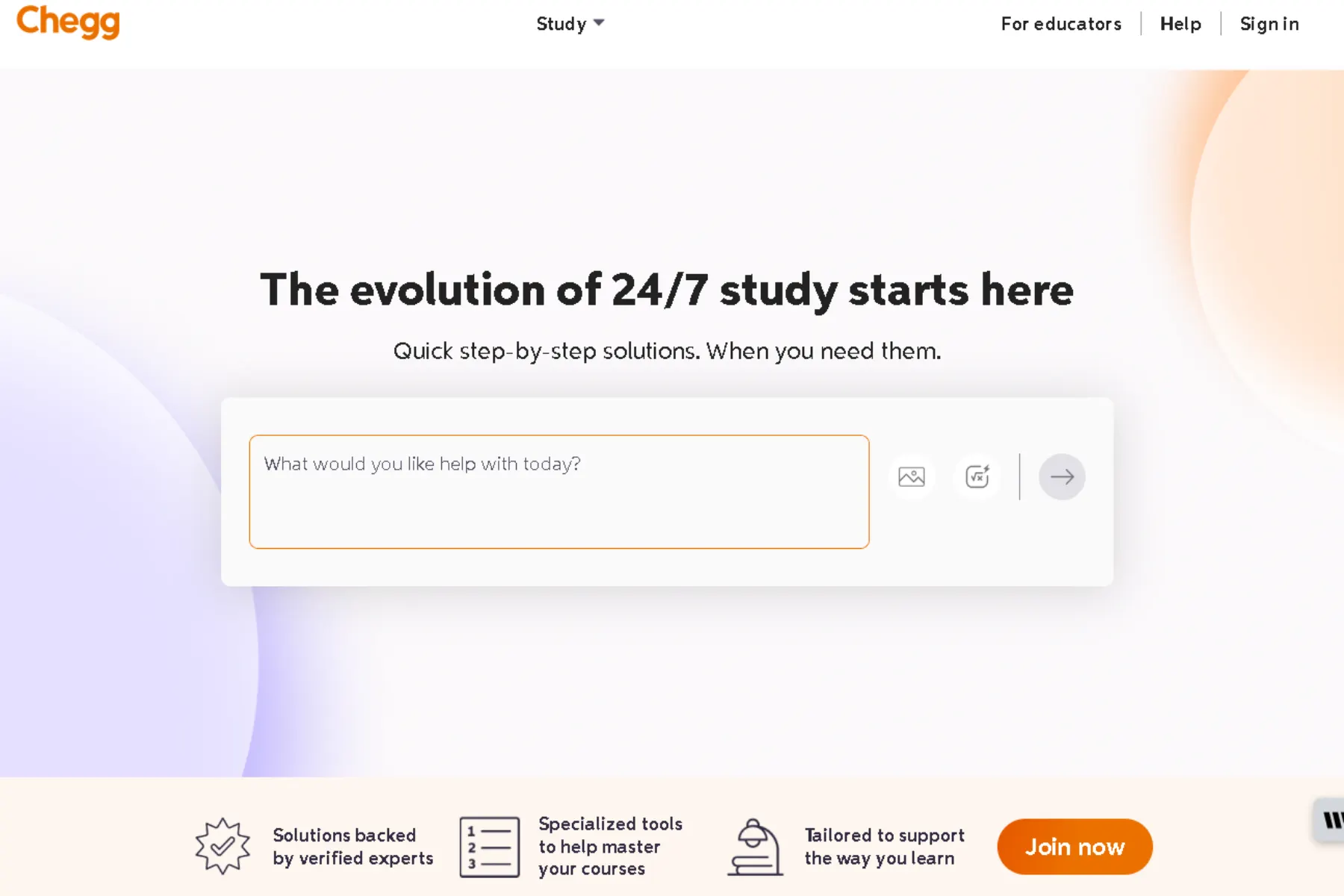
Chegg’s homepage promotes 24/7 study help with step-by-step solutions and a central question search bar.
For physics students, Chegg’s textbook solutions can be useful for checking work, but the quality of on-demand tutoring is mixed based on available user feedback. Chegg has also faced criticism for content that some educators argue enables academic dishonesty. Students seeking genuine conceptual understanding in physics may find the answer-access model counterproductive for actual learning.
Local Tutors and University Resources
Finding a local independent physics tutor — through a university bulletin board, departmental tutor lists, or platforms like Craigslist — is often more affordable than any of the above services. Many universities also offer free tutoring through their academic support centers, physics department office hours, or peer tutoring programs.
For physics and STEM subjects, a graduate student or advanced undergraduate tutor with a strong physics background may provide more targeted and flexible help than a large platform. The trade-off is that sourcing, vetting, and scheduling fall entirely on the student.
Michel van Biezen (YouTube) and MIT OpenCourseWare
For self-directed learners, Michel van Biezen’s YouTube channel offers thousands of free, structured physics and calculus video lectures covering mechanics, thermodynamics, electromagnetism, and more. MIT OpenCourseWare provides full course materials from MIT physics courses at no cost, including lecture notes, problem sets, and exams.
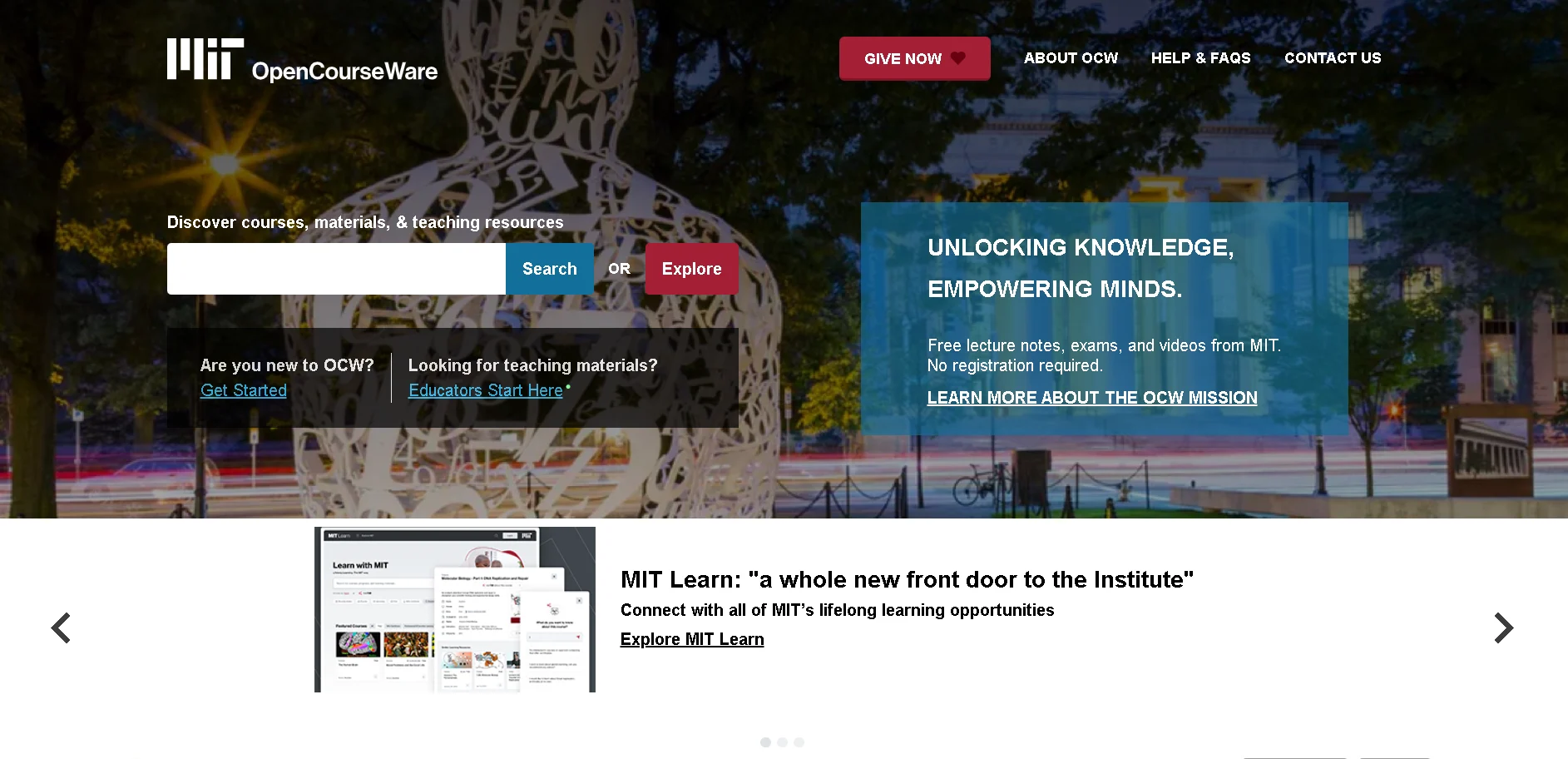
MIT OpenCourseWare displays Physics course listings, including Classical Mechanics, with filters and a search tool.
These are not tutoring services — there is no personalized feedback — but for motivated students, they represent extraordinary value. Physics students preparing for university exams have used both resources extensively with strong reported outcomes. The limitation is entirely in accountability and interactivity.
Winners by Category:
Quality of Tutors (Physics & STEM): My Physics Buddy — specialized focus on physics and related STEM subjects.
Pricing: Khan Academy (free) for self-study; local university resources for live help at low or no cost.
Quality of Customer Care: The Princeton Review — established enrollment advisors and structured guarantee process.
Ease of Use: The Princeton Review — polished platform, 24/7 on-demand access, and a well-organized student portal.
How It Works
For Students
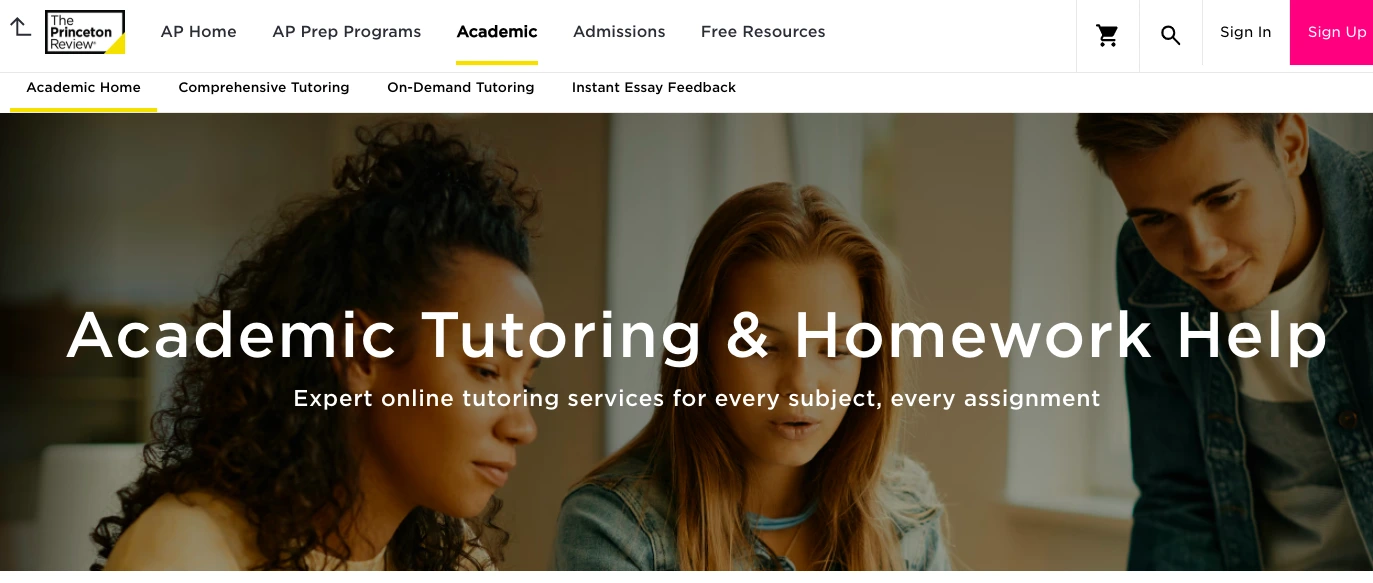
Students access The Princeton Review by creating an account on princetonreview.com and selecting a plan. For homework help, you choose a subscription tier based on hours needed per month. Once enrolled, you can connect to an on-demand tutor any time of day or night through the platform’s online classroom. The classroom includes a text chat interface, interactive whiteboard, and voice option — both student and tutor can write on the whiteboard in real time, making it practical for working through physics problems step by step.
For scheduled sessions, students can search for specific tutors and book at least 48 hours in advance. Favorite tutors can be saved for future sessions. The platform covers 80+ subjects, and in 2026 physics, calculus, and chemistry are among the most frequently requested. Unused subscription hours do not roll over between monthly billing cycles unless purchased as add-on minutes.
For Tutors
Tutors apply directly through The Princeton Review’s website and go through a multi-step vetting process that includes subject-knowledge exams, mock tutoring sessions, and mentor review. Background checks are conducted by a third party. Not all applicants are accepted; tutors must demonstrate both subject expertise and teaching ability before being permitted to take students.
Once hired, tutors are classified as instructors or academic tutors depending on their role. Pay ranges approximately from $16 to $55 per hour depending on subject and role type, based on job postings visible on Glassdoor. Hours are not guaranteed; tutors compete for availability through a seniority-based system in some configurations. The flexibility is seen as a benefit by many tutors who hold other full-time positions simultaneously.
The Princeton Review Company Information
The Princeton Review was founded in 1981 by John Katzman, a Princeton University graduate who began tutoring students for the SAT from his apartment. He later partnered with Adam Robinson, an Oxford-trained SAT tutor. Katzman grew the company from a local tutoring operation into a national and eventually international education services company, serving as CEO until 2007. He went on to found additional education ventures including 2U and Noodle. The company passed through several ownership structures and in 2014 was acquired by Tutor.com, itself an IAC company. The current controlling entity is Primavera Holdings Limited, a firm owned by Chinese nationals with a principal place of business in Hong Kong, as disclosed on TPR’s own website.
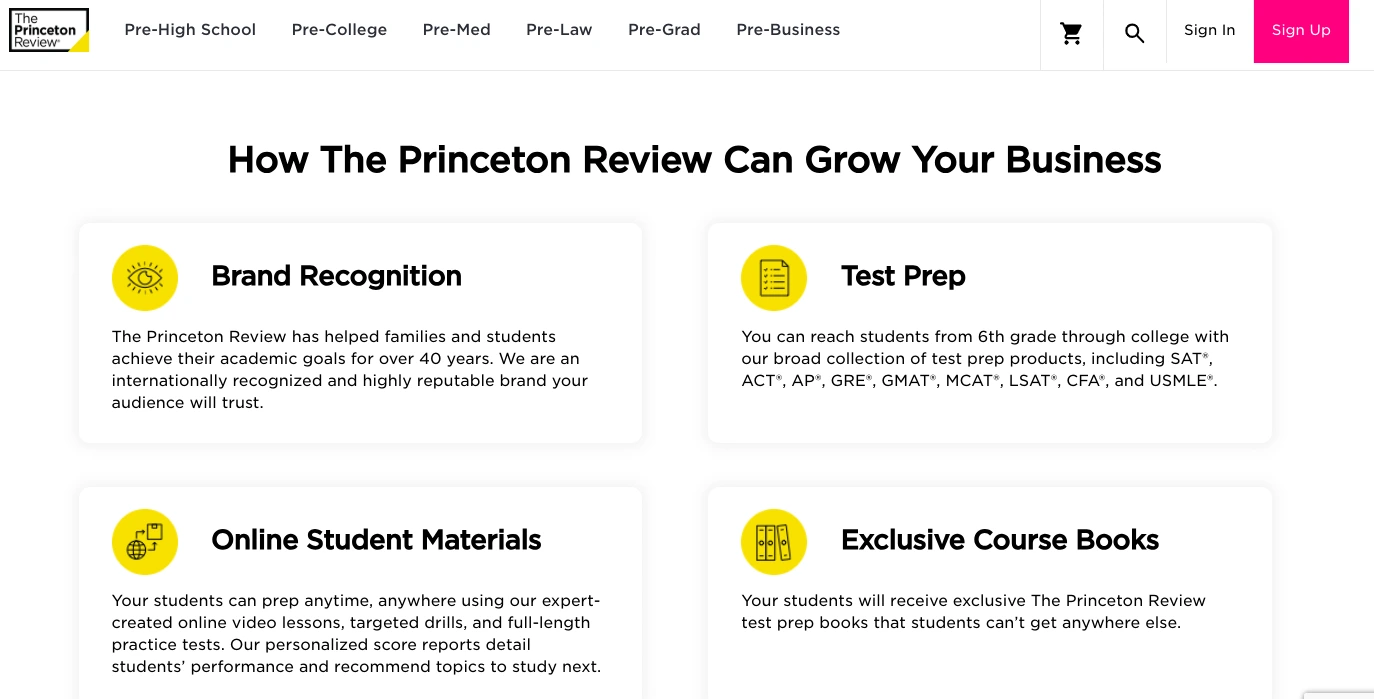
Overview of The Princeton Review’s offerings including brand trust, test prep programs, online learning materials, and exclusive course books.
According to Wikipedia and press materials, The Princeton Review has worked with over 400 million students since founding. It operates through 4,000+ tutors and teachers across the United States, Canada, and international offices in 21 countries. The company publishes over 150 print and digital books through Penguin Random House and produces dozens of categories of college rankings annually. It is headquartered in New York City and is not affiliated with Princeton University.
TPR’s stated mission is to provide personalized, innovative tutoring, test prep, and admissions products to help students remove barriers to academic goals. Its primary market is college- and graduate-school-bound students in the U.S., though it also serves professional licensing exam candidates.
USP and Drawbacks: The Princeton Review’s clearest strength is scale and brand recognition. Its score guarantees — structured around meeting specific homework and attendance requirements — provide a contractual safety net that smaller platforms do not offer. The primary drawbacks are cost, rigid guarantee terms, and the breadth-over-depth model that may leave advanced physics or STEM students underserved compared to specialized tutoring services.
Customer Support & Global Reach: Customer support is available by phone at (800) 411-1970 Monday through Wednesday 9 AM–10 PM ET, Thursday and Friday 9 AM–6 PM ET, and weekends 12–8 PM ET. The platform covers students in the U.S. and Canada for subscription billing. International students have access to the online platform but must have a U.S. or Canadian billing address.
Future Plans and AI Usage: The Princeton Review has already integrated AI tools into its product lineup. Its AI College Admissions Essay Counseling and AI Homework Essay Feedback tools received Platinum Awards from Campus Technology and THE Journal in the AI-Based Tool for Tutoring category. The company has launched AI-powered writing feedback within its tutoring platform. Founder John Katzman, speaking to the Korea Herald, noted that AI makes tutors more efficient rather than replacing them — students received the same amount of tutoring but got more out of it. TPR appears committed to layering AI tools into its existing instructor-led model rather than moving toward a fully automated experience.
“AI appears to be most useful to people who aren’t really good. But AI can help the bottom of the class and, arguably, you can make a case that will make education more fair.”
— John Katzman, co-founder of The Princeton Review, speaking to The Korea Herald
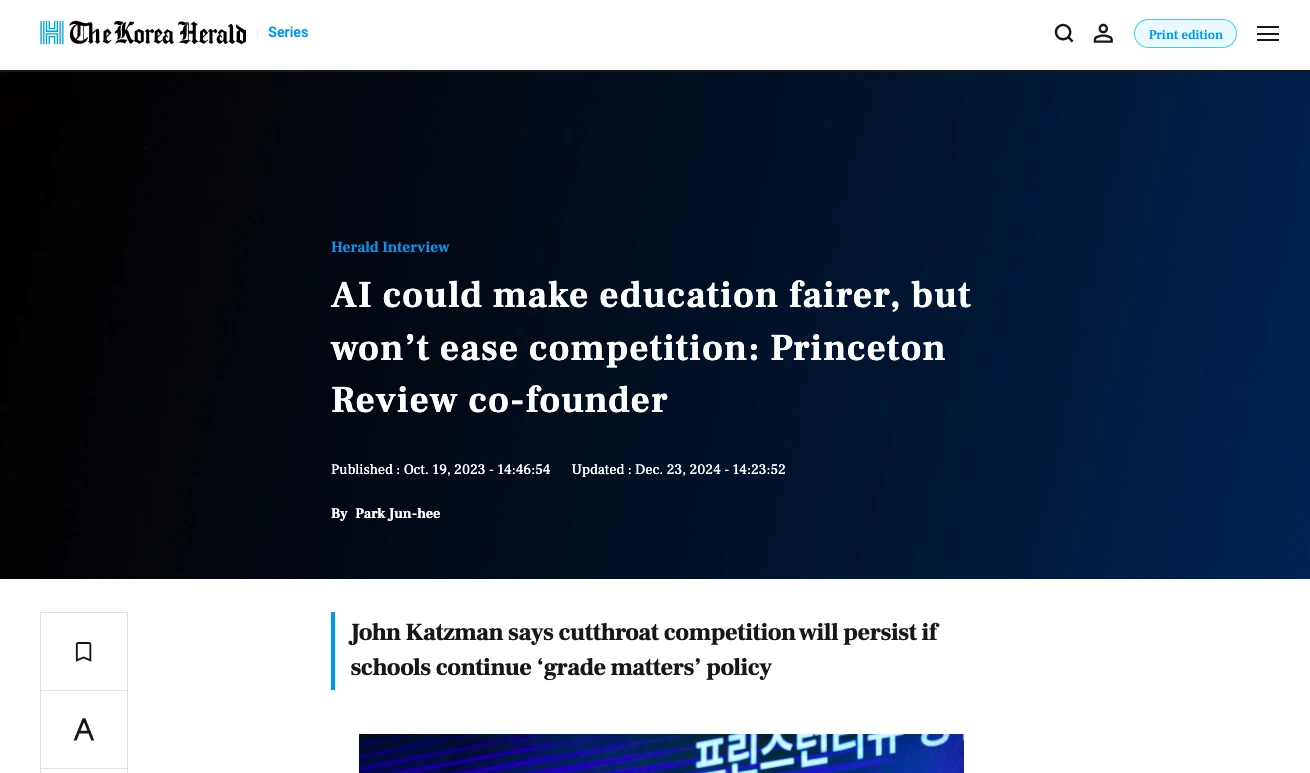
The Korea Herald features an interview on how AI could improve education fairness while competition remains unchanged, according to a Princeton Review co-founder.
FAQs
Does The Princeton Review offer physics tutoring for college students?
Yes. The Princeton Review offers academic physics tutoring through its homework help portal and live online academic tutoring service, covering high school and college-level physics on demand 24/7.
How much does The Princeton Review tutoring cost in 2026?
The Princeton Review homework help starts at $39.99/month for 1 hour. Larger bundles cost up to $1,299.99 for 50 hours. Test prep packages range from $299 to over $1,849 depending on subject and format.
Is The Princeton Review’s money-back guarantee easy to qualify for?
Not always. The Princeton Review’s guarantee requires completing specific homework schedules and minimum hours. Several Trustpilot reviewers report being denied refunds for not following the exact required schedule.
What are the best The Princeton Review alternatives for physics help?
My Physics Buddy offers specialized 1:1 physics tutoring. Wyzant allows students to choose independent physics tutors. Khan Academy and MIT OpenCourseWare provide free physics content for self-study.
Is The Princeton Review good for AP Physics preparation?
The Princeton Review offers AP 5 Tutoring and AP 4 Course options specifically for AP exam preparation. Reviews for AP-focused programs are generally positive, though depth of physics content can vary by instructor.
Conclusion
The Princeton Review is a well-established education platform with strong brand recognition, a 24/7 tutoring portal, and structured score guarantees that appeal to test-prep-focused students. In 2026, it remains a credible and widely used option, particularly for SAT, ACT, and standardized exam preparation. However, students and parents seeking specialized, in-depth physics tutoring — whether for university coursework, AP exams, or engineering prerequisites — should evaluate whether a broader platform matches their specific academic needs.
Physics tutor quality at The Princeton Review varies, and the platform’s strength lies primarily in test prep rather than deep STEM subject expertise. Platforms like My Physics Buddy, focused specifically on physics and related subjects, or independent tutors sourced through Wyzant or university resources, may provide a more targeted experience for STEM-intensive coursework. Free resources like Khan Academy and MIT OpenCourseWare remain excellent supplements for any student regardless of their tutoring provider.
Trust & Transparency Note: This article is based on publicly available data, reviews, and official sources, last verified in 2026. My Physics Buddy is listed as an alternative and reviewed using the same criteria as competitors.
Disclaimer: This article provides general educational guidance only. It is NOT official exam policy, professional academic advice, or guaranteed results. Always verify information with your school, official exam boards (College Board, Cambridge, IB), or qualified professionals before making decisions. Read Full Policies & Disclaimer , Contact Us To Report An Error.

By Ashish PM