Hire Best Mathematical Physics Tutors Online



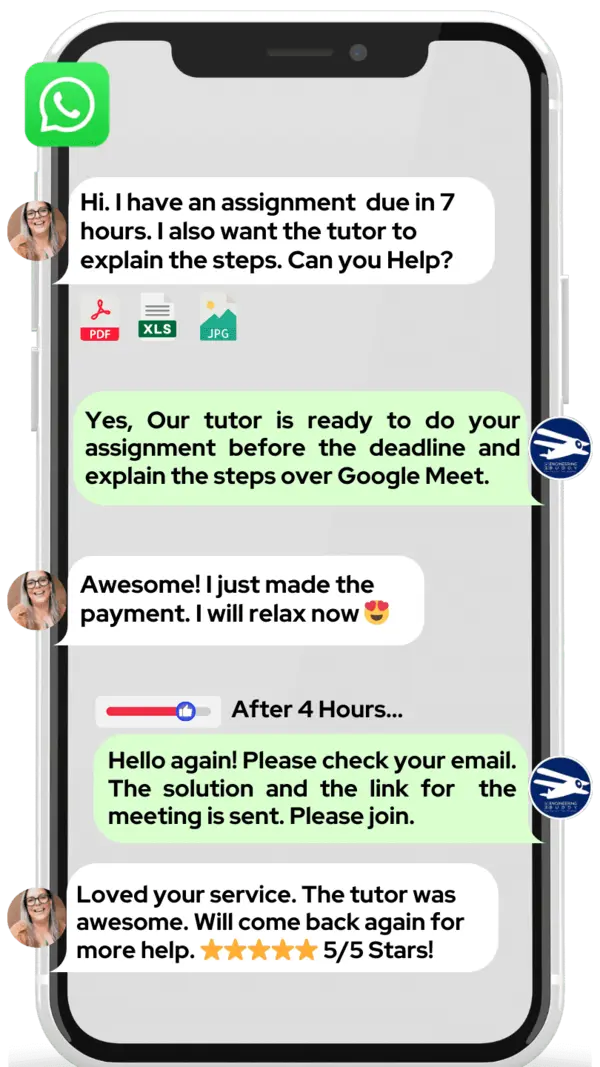
Testimonials



Mathematical Physics Tutor Online
My Physics Buddy (MPB) offers 1:1 online tutoring & homework help in Physics and related subjects, including Mathematical Physics at undergraduate, graduate, and advanced research level. If you are a physics or applied mathematics student wrestling with complex analysis, differential equations, or tensor calculus — or a parent supporting an engineering or physics undergraduate — MPB connects you with specialist tutors who understand both the mathematics and the physical reasoning behind it. Whether you searched for a Mathematical Physics tutor near me or prefer the flexibility of structured online sessions, MPB is designed to help you aim for deeper conceptual clarity and stronger problem-solving confidence.
- 1:1 online sessions tailored to your Mathematical Physics course and university syllabus
- Tutors experienced in both the rigorous mathematics and its physical applications
- Flexible time zones — sessions available across the US, UK, Canada, Australia, and the Gulf
- Structured learning plan built after a diagnostic session
- Ethical homework and assignment guidance — we explain the method so you can solve independently
Who This Mathematical Physics Tutoring Is For
MPB’s Mathematical Physics tutoring serves a range of learners who need rigorous, university-level support — not surface-level overviews.
- Undergraduate physics students taking Mathematical Methods in Physics or Mathematical Physics as a core or elective course
- Applied mathematics and engineering undergraduates whose programmes include mathematical methods modules aligned with physics applications
- Graduate and Master’s students covering advanced mathematical structures such as group theory, differential geometry, or functional analysis
- PhD students who need targeted support on the mathematical tools underlying their research — whether in quantum field theory, general relativity, or statistical mechanics
- Students at universities in the US, UK, Canada, Australia, and the Gulf following semester-based or year-long Mathematical Physics courses
- Students who need structured homework, problem set, and assignment guidance to build fluency alongside lectures
- Parents of physics or engineering undergraduates who want to ensure their child receives the individual attention a large lecture cannot provide
Outcomes: What You’ll Be Able To Do in Mathematical Physics
Every session is focused on building observable mathematical skill and physical intuition — not just familiarity with formulas.
Solve boundary value problems using separation of variables, Green’s functions, and eigenfunction expansions — and explain what the solution means physically. Analyse complex functions using Cauchy’s theorem, residue calculus, and contour integration, applying these techniques to evaluate physically motivated integrals. Model physical systems using the language of linear operators, Hilbert spaces, and eigenvalue problems, connecting abstract structure to quantum mechanics and wave physics. Apply vector calculus — gradient, divergence, curl, and Stokes’ and Gauss’s theorems — correctly across coordinate systems including spherical and cylindrical. Work fluently with tensors in both index notation and coordinate-free form, relevant to electrodynamics, elasticity, and general relativity. Present mathematical arguments clearly, with logically ordered steps and correct notation, in a format that earns full credit in both coursework and examinations.
“Mathematics is the language in which God has written the universe.”
— Galileo Galilei, as documented by Encyclopædia Britannica
What We Cover in Mathematical Physics (Syllabus / Topics)
MPB tutors align sessions to your exact course structure and textbook. The topics below reflect the standard Mathematical Physics curriculum across undergraduate and graduate programmes, as covered in widely used texts such as Arfken, Weber & Harris — Mathematical Methods for Physicists and Boas — Mathematical Methods in the Physical Sciences. Always share your syllabus so the tutor can align topics, notation, and problem types precisely.
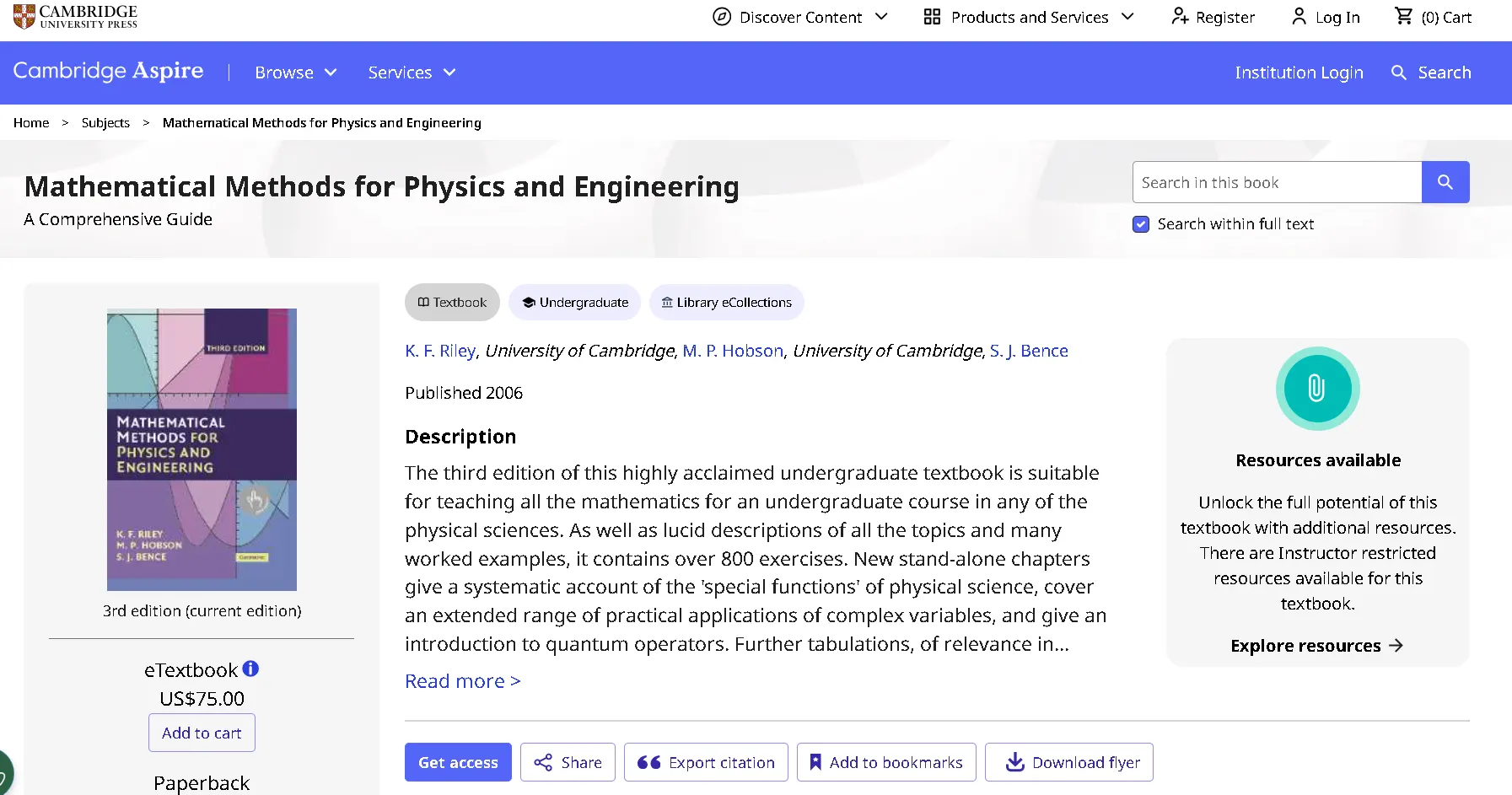
Explore the Mathematical Methods for Physics and Engineering textbook by Cambridge University Press, a comprehensive guide for undergraduate students.
Track 1: Core Mathematical Methods (Introductory Undergraduate)
- Vector algebra and vector calculus: dot and cross products, gradient, divergence, curl, and the theorems of Stokes and Gauss
- Coordinate systems: Cartesian, cylindrical, and spherical — transformations and expressions for differential operators
- Ordinary differential equations (ODEs): first and second order, homogeneous and inhomogeneous, series solutions
- Linear algebra: matrices, determinants, eigenvalues, eigenvectors, diagonalisation, and quadratic forms
- Infinite series and convergence: Taylor, Maclaurin, and Fourier series expansions
- Introduction to complex numbers: polar form, de Moivre’s theorem, roots, and basic complex functions
- Common problem types: applying differential operators in curved coordinates, solving second-order ODEs with boundary conditions, computing Fourier coefficients
Track 2: Partial Differential Equations and Boundary Value Problems (Intermediate Undergraduate)
- Classification of PDEs: elliptic, parabolic, and hyperbolic types and their physical interpretations
- Separation of variables: applied to Laplace, heat, and wave equations in Cartesian and spherical coordinates
- Sturm–Liouville theory: self-adjoint operators, orthogonal eigenfunctions, and completeness
- Special functions: Legendre polynomials, associated Legendre functions, spherical harmonics, Bessel functions, and Hermite polynomials
- Fourier transforms and inverse transforms: convolution theorem, Parseval’s theorem, and applications to wave physics
- Laplace transforms: definition, properties, and application to initial value problems
- Green’s functions: construction and use for ODEs and PDEs with specified boundary conditions
- Common problem types: solving Laplace’s equation in spherical geometry, expanding solutions in Legendre or Bessel series, constructing Green’s functions for simple geometries
Track 3: Complex Analysis (Intermediate to Advanced Undergraduate)
- Analytic functions: Cauchy–Riemann equations, harmonic functions, and conformal mappings
- Complex integration: Cauchy’s integral theorem and Cauchy’s integral formula
- Laurent series and classification of singularities: removable, poles, and essential singularities
- Residue theorem and contour integration: evaluation of real definite integrals using contour methods
- Branch points, branch cuts, and multi-valued functions: square root, logarithm, and power functions
- Dispersion relations and applications to wave physics and quantum mechanics
- Common problem types: computing residues, closing contours in the upper or lower half-plane, applying Jordan’s lemma
Track 4: Advanced Topics (Graduate Level)
- Tensor calculus: covariant and contravariant indices, metric tensor, Christoffel symbols, and covariant differentiation
- Differential geometry: manifolds, differential forms, exterior algebra, and Stokes’ theorem in modern form
- Group theory in physics: symmetry groups, representations, Lie groups, Lie algebras, and applications to quantum mechanics and particle physics
- Functional analysis: Hilbert spaces, bounded and unbounded operators, spectral theory, and distribution theory
- Variational methods: calculus of variations, Euler–Lagrange equations, and applications to classical mechanics and field theory
- Asymptotic methods and perturbation theory: WKB approximation, stationary phase, and saddle-point methods
- Common problem types: computing Lie algebra commutators, deriving geodesic equations, applying variational principles to physical systems
Track 5: Homework, Problem Set, and Exam Preparation Guidance
- Guided walkthroughs of problem set questions — tutor explains the approach, student executes the solution
- Identifying which mathematical tool applies to which physical situation
- Building correct mathematical notation and argument structure for full-mark written answers
- Exam preparation: past paper practice, timed problem-solving, and formula derivation fluency
- Thesis and dissertation support at the level of mathematical methodology — MPB does not write research for students
How My Physics Buddy Tutors Help You with Mathematical Physics (The Learning Loop)
Diagnose: The first session begins with a focused diagnostic. The tutor identifies your current course unit, the specific topics causing difficulty, and whether the gap is conceptual (not understanding what a tool does) or technical (knowing the tool but making errors in application). This shapes every session that follows.
Explain: Concepts are built from first principles using live worked derivations. Tutors use digital pen-pads or iPad with Apple Pencil — so every step of a contour integral, every index manipulation in tensor notation, and every Sturm–Liouville argument appears on screen in real time, written by a human, not pasted from a document.
Practice: You attempt problems during the session with the tutor present. Problems are selected from your course problem sets, past papers, or the tutor’s own library — matched to your current topic and difficulty level.
Feedback: The tutor reviews your working step by step. Mathematical Physics errors are often structural — applying a theorem outside its domain of validity, dropping a boundary condition, or misidentifying the type of singularity — and these are caught and corrected in the session, not discovered after a marked script is returned.
Retest / Reinforce: Each session opens with a brief check on the previous topic. If it is secure, the tutor moves forward. If gaps remain, they are addressed before new material is introduced. Mathematical Physics is cumulative — an unresolved gap in complex analysis creates compounding problems in later Green’s function work.
Plan: After each session, the tutor provides a brief summary: what was covered, what the student should revisit independently, and what comes next. For students with exams approaching, this includes a prioritised topic list.
Accountability: For students on ongoing weekly plans, the tutor stays in light contact between sessions — confirming topics, answering a quick conceptual query — so progress is consistent throughout the term.
All sessions run via Google Meet — no download required, works on any device. Before your first session, it helps to share your course syllabus or textbook, any recent problem sets or test results, and upcoming assessment dates. The tutor will use this to run a diagnostic, teach one live topic, and outline a clear plan by the end of the session.
“The most important single factor influencing learning is what the learner already knows. Ascertain this and teach accordingly.”
Tutor Match Criteria (How We Pick Your Tutor)
Mathematical Physics spans a wide range of difficulty and abstraction. Every student is matched with a tutor whose expertise aligns with their specific level and topic needs.
Level and syllabus fit: The tutor must be comfortable with your precise level — from introductory mathematical methods to graduate-level differential geometry or group theory. Tutors confirm familiarity with your course structure and textbook before the first session.
Topic strengths: If your difficulty lies in complex analysis, your tutor has direct expertise there. If it is tensor calculus or functional analysis, a tutor with that specific background is selected — not a generalist.
Tools and setup: Tutors use Google Meet with a digital pen-pad or iPad and Apple Pencil. Mathematical Physics requires live, handwritten derivations on screen — a tutor who cannot demonstrate working visually is unsuitable for this subject.
Time zone and availability: Sessions are scheduled to fit students in the US, UK, Canada, Australia, and the Gulf, including evenings and weekends.
Learning style and pace: Some students need rigorous, proof-level explanation; others need fast, applied problem-solving for an imminent exam. The tutor calibrates from the very first session.
Language and communication: Clear, precise mathematical communication in English — adapted to whether the student is a first-year undergraduate or a PhD candidate working on their dissertation.
Goals: Whether the goal is to pass a mid-term, understand a specific method deeply, complete a problem set, or build mathematical fluency for advanced research — the tutor aligns entirely to that goal.
Urgency and timelines: Students with imminent assessments are matched with tutors who have immediate availability. Students on longer programmes are matched for consistency over the term.
Study Plans (Pick One That Matches Your Goal)
MPB offers three main plan types for Mathematical Physics: a focused catch-up plan (typically 1–2 weeks) for students behind on a specific method or topic before an assessment; an exam preparation plan (typically 4–8 weeks) for students working systematically through their full course before finals or qualifying exams; and ongoing weekly support for continuous reinforcement throughout a physics or mathematics semester. The tutor builds the specific session plan — topics, problem sources, pacing, and depth — after the diagnostic, not before.
Mathematical Physics is unusual among university courses in that it demands simultaneous fluency in abstract mathematics and physical reasoning. A student can learn the residue theorem perfectly in a pure mathematics context and still fail to apply it to a physics problem because the physical setup — a response function, a propagator, a dispersion integral — was never connected to the contour. MPB tutors bridge this gap deliberately and explicitly, making the connection between mathematical formalism and physical meaning the centrepiece of every session, not an afterthought.
Pricing Guide
MPB tutoring fees for Mathematical Physics start at USD 20 per hour and typically range up to USD 40 per hour for standard undergraduate-level sessions. Graduate and PhD-level topics — such as group theory for physicists, differential geometry, functional analysis, or advanced perturbation methods — may be priced higher depending on tutor expertise and subject complexity. Shorter timelines and urgent exam preparation may also affect tutor availability and rate.
FAQ
Is Mathematical Physics hard?
Mathematical Physics is widely regarded as one of the most demanding courses in any physics or applied mathematics degree. The challenge is that it requires simultaneous fluency in abstract mathematical reasoning and physical intuition. With structured one-to-one support, most students find the individual methods significantly more manageable than they appeared in a lecture setting.
How many sessions are needed?
This depends on your starting point and goal. A student who needs help with one method — say, contour integration or Legendre polynomials — before an upcoming exam may need 3–6 sessions. A student preparing for a full Mathematical Physics final over 6–8 weeks might need 12–20 sessions. The tutor gives a clearer estimate after the diagnostic.
Can tutors help with homework and problem sets?
Yes, but through guided explanation rather than solving for you. The tutor explains the relevant method, works through a parallel example, and helps you identify where your own approach breaks down. You complete and submit your own work. MPB does not solve or submit assignments on behalf of students. Academic integrity is a firm principle at MPB.
Will the tutor match my exact university syllabus?
Tutors work from your course syllabus and textbook. Coverage and notation vary across universities, so sharing your syllabus and a recent problem set before the first session allows the tutor to align precisely — both in topic order and in the conventions used by your lecturer.
What happens in the first session?
The first session includes a short diagnostic to identify your current level and the most pressing gaps, followed by live teaching on the highest-priority topic. By the end, the tutor will outline a plan — what to cover, in what order, and over what timeframe — tailored to your assessment schedule.
Is online tutoring effective for a subject as technical as Mathematical Physics?
Yes. With a digital pen-pad or tablet, the tutor can show every step of a derivation live on screen — exactly as a lecturer would on a whiteboard. The Education Endowment Foundation consistently rates one-to-one tuition as one of the highest-impact educational interventions available, and this holds strongly for technical subjects where individual error correction is essential.
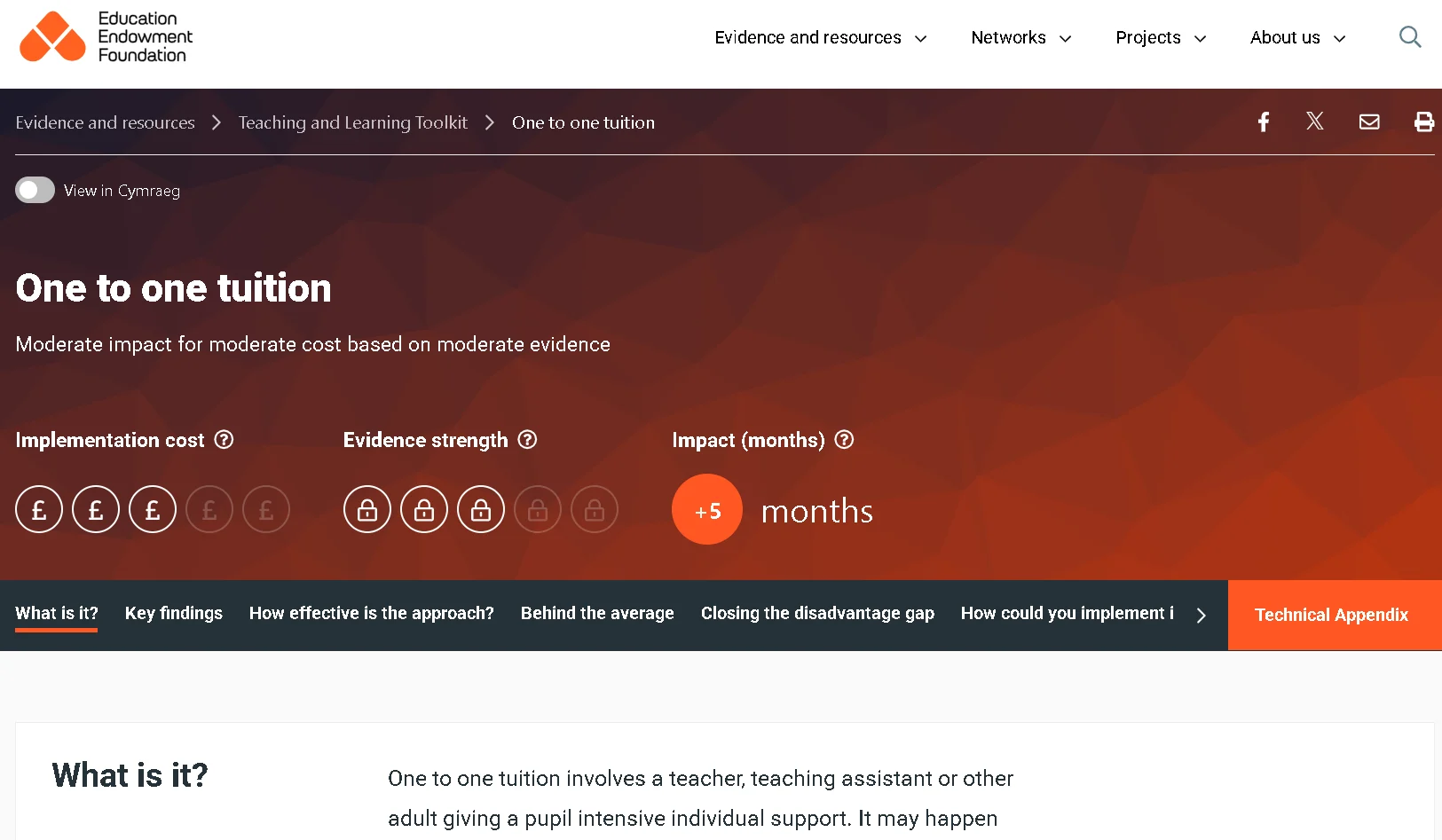
Discover the impact, cost, and evidence behind one-to-one tuition in the Education Endowment Foundation teaching and learning toolkit.
Can tutors help with graduate-level or PhD Mathematical Physics?
Yes. MPB has tutors with graduate-level and research-level expertise who can cover differential geometry, Lie group theory, functional analysis, distribution theory, and advanced asymptotic methods. Graduate students should specify their research area and the precise mathematical tools they need support with at the time of booking.
Which textbooks does MPB support for Mathematical Physics?
Tutors are familiar with the most widely used texts including Arfken, Weber & Harris; Boas; Riley, Hobson & Bence; Byron & Fuller; Hassani; Nearing; and for graduate level, Nakahara (Geometry, Topology and Physics) and Fulton & Harris (group theory). Share your textbook and edition at booking so the tutor can prepare accordingly.
Can the tutor help with thesis or dissertation work involving Mathematical Physics?
Yes, at the level of mathematical methodology and conceptual guidance. If your research involves specific mathematical tools — say, spectral methods, differential forms, or perturbation theory — the tutor can help you understand and apply those tools correctly. MPB does not write or contribute text to theses or dissertations. All research output must be the student’s own work.
What if I need support in both Mathematical Physics and a closely related subject?
MPB covers a wide range of connected physics subjects. Students studying topics that rely heavily on mathematical physics methods may also benefit from tutoring in Quantum Mechanics, Electrodynamics, or General Relativity. Tutors can sometimes address related topics within the same session if requested.
The mathematical tools at the heart of a Mathematical Physics course — Green’s functions, complex contour integration, eigenfunction expansions, and tensor calculus — are not just abstract exercises. They reappear, often without warning, in quantum mechanics, electrodynamics, statistical mechanics, and general relativity. Students who invest in building genuine fluency in these methods early gain a compounding advantage across every advanced physics course that follows. MPB tutors treat Mathematical Physics not as an obstacle to get through, but as the foundation worth building properly.
Trust & Quality at My Physics Buddy
Tutor selection: MPB tutors hold degrees in Physics, Applied Mathematics, or closely related disciplines. Every tutor is vetted through subject knowledge assessments, a live demonstration session, and ongoing student feedback review. For Mathematical Physics specifically, tutors must demonstrate the ability to explain abstract mathematical arguments clearly and connect them to physical applications — not just solve problems mechanically. Tutors who receive consistently poor feedback are not retained on the platform.
Academic integrity: MPB’s role is to teach and guide — never to complete work for students. Every problem set walkthrough, assignment discussion, and exam preparation session is structured so the student builds genuine understanding and submits their own work. We guide — you submit your own work. This principle is non-negotiable across every subject and every level at MPB. Students are encouraged to review their institution’s academic integrity policies, such as those maintained by the University of Oxford and the Massachusetts Institute of Technology.
About MPB: My Physics Buddy is a Physics-focused online tutoring platform serving undergraduates, graduate students, Masters and PhD candidates, and their parents across the US, UK, Canada, Australia, and the Gulf. The platform covers Physics and its mathematical foundations in depth — from introductory methods to advanced research-level topics. Students working on subjects that draw directly from Mathematical Physics may also find the following pages useful: Quantum Field Theory (QFT), Statistical Mechanics, Special Relativity, and Classical (Newtonian) Mechanics. Students interested in the computational side of mathematical physics may also explore Computational Physics. For those studying waves and optics with a mathematical methods focus, the Waves and Optics page may be relevant. The Institute of Physics Mathematical and Theoretical Physics Group provides additional context on the field for students exploring the subject at a deeper level.

The Institute of Physics invites students, researchers, and professionals to join its global physics community through IOP membership.
“One-to-one tutoring allows the student to identify and resolve specific misconceptions immediately — a level of feedback precision that group instruction simply cannot replicate, and that matters especially in technically demanding subjects.”
— National Bureau of Economic Research, The Effects of High-Dosage Tutoring on Student Outcomes
Content reviewed by a Mathematical Physics tutor at My Physics Buddy.
Next Steps
Tell us your current course level (undergraduate, graduate, PhD), your university and department, the textbook or syllabus you are using, and the specific topics or methods where you need the most support. Share your availability and any upcoming exam, problem set, or assessment dates. MPB will match you with a Mathematical Physics tutor who fits your syllabus, time zone, and goals — and you can get started within days.

