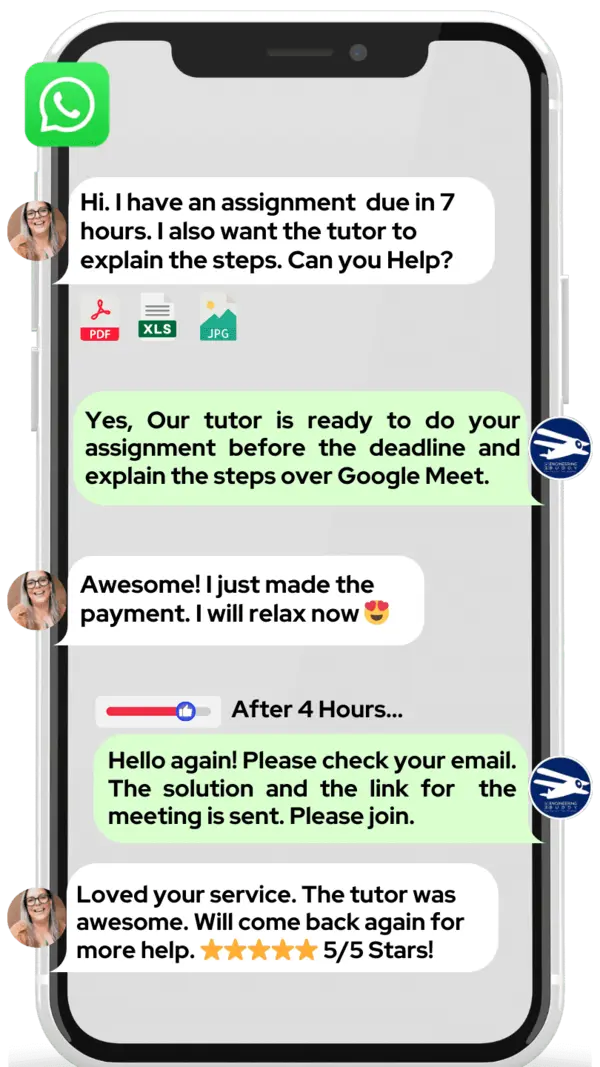
Hire Best Modern Physics Tutors Online


Testimonials



Modern Physics Tutor Online
My Physics Buddy (MPB) offers 1:1 online tutoring & homework help in Modern Physics — a dedicated area for undergraduate students in physics, engineering, and applied science programs worldwide. Modern Physics is a gateway course taken after introductory classical physics — introducing special relativity, quantum mechanics, atomic structure, and nuclear physics at the level where the classical world breaks down. If you’ve been searching for a Modern Physics tutor near me, MPB connects you with expert tutors who make the conceptual leap from classical to quantum physics clear, precise, and manageable.
- 1:1 live sessions — fully personalized to your course level, current topics, and assessment schedule
- Expert tutors with strong knowledge across all major Modern Physics course areas
- Flexible time zones — sessions conveniently scheduled for the US, UK, Canada, Australia, and Gulf regions
- Structured learning plan built around your syllabus, weakest topics, and upcoming exams
- Ethical homework and assignment guidance — we explain and guide; you complete and submit your own work
“Modern Physics marks the point where physics stops being intuitive and starts being true. Every student who masters it gains the foundation for quantum mechanics, atomic physics, nuclear physics, and every advanced course that follows.”
As broadly reflected in physics education — see the American Physical Society (APS) — Education programs
Explore how APS supports physics departments with programs, resources, and initiatives to enhance teaching, diversity, and student success.
Who This Modern Physics Tutoring Is For
- Second-year undergraduate physics or engineering students taking Modern Physics as a required course after introductory calculus-based physics
- Students finding the conceptual jump from classical physics difficult — particularly with wave-particle duality, the uncertainty principle, or relativistic kinematics
- Engineering students in electrical, materials, or biomedical programs whose curricula include Modern Physics as a science requirement
- Students preparing for advanced courses in Quantum Mechanics, Atomic Physics, or Nuclear Physics who want to solidify their Modern Physics foundations
- Students completing problem sets, lab reports, or assignments throughout the semester who need regular guided support
- International students in US, UK, Canadian, and Australian programs managing a demanding STEM workload who need flexible expert help
Outcomes: What You’ll Be Able To Do
Solve Modern Physics problems — from Lorentz transformations and relativistic energy-momentum through to photoelectric effect calculations, de Broglie wavelengths, and Bohr model energy levels — accurately and with clearly shown working. Apply the foundational ideas of quantum mechanics: wave functions, quantization, the uncertainty principle, and tunneling — at the level your course requires. Analyze atomic spectra, nuclear decay data, and relativistic kinematics problems systematically. Explain Modern Physics concepts in structured written responses that show genuine understanding of why classical physics fails and what replaces it.
What We Cover (Syllabus / Topics)
Modern Physics course content is broadly consistent across universities and typically follows textbooks like Krane, Serway, or Harris. The topics below reflect the standard coverage across undergraduate Modern Physics courses in the US, UK, Canada, Australia, and Gulf region. Always share your course syllabus with your tutor so sessions align precisely to your program’s sequence and depth.
A note on course depth: Modern Physics is an introductory survey course — it covers quantum mechanics, relativity, atomic, and nuclear physics at accessible mathematical depth. Each of these areas is developed into full advanced courses later. Your tutor calibrates depth and mathematical rigor precisely to your course level from the first session.
Track 1: Special Relativity
- The postulates of special relativity; the failure of classical ether theory
- Time dilation, length contraction, and simultaneity — physical meaning and calculations
- Lorentz transformations: coordinates, velocities, and the invariant interval
- Relativistic momentum and energy: E² = (pc)² + (mc²)²; mass-energy equivalence
- Relativistic kinematics: collisions, thresholds, and invariant mass
- Problem types: time dilation and length contraction, Lorentz boost, relativistic energy-momentum
Track 2: The Origins of Quantum Theory
- Blackbody radiation: ultraviolet catastrophe and Planck’s quantum hypothesis
- The photoelectric effect: Einstein’s explanation and the photon concept
- Compton scattering: photon momentum and wavelength shift
- Wave-particle duality: de Broglie hypothesis and matter waves
- The Davisson-Germer experiment: experimental confirmation of matter waves
- Problem types: photon energy and momentum, photoelectric threshold, Compton shift, de Broglie wavelength
Track 3: The Bohr Model and Atomic Structure
- Rutherford scattering and the nuclear model of the atom
- Bohr model: quantization condition, energy levels, and spectral series
- The Rydberg formula: hydrogen spectrum and series identification
- Limitations of the Bohr model; extension to hydrogen-like ions
- X-ray spectra: characteristic and Bremsstrahlung radiation; Moseley’s Law
- Problem types: Bohr energy levels, spectral line wavelengths, hydrogen-like ion calculations
Track 4: Quantum Mechanics — Introduction
- The wave function: probability interpretation and normalization
- The Heisenberg uncertainty principle: position-momentum and energy-time forms
- The Schrödinger equation: time-dependent and time-independent forms
- Particle in a box: energy levels, wave functions, and zero-point energy
- Quantum tunneling: barrier penetration and transmission coefficient (overview)
- Problem types: normalization, uncertainty principle estimates, particle in a box energy levels
Track 5: The Hydrogen Atom and Quantum Numbers
- Quantum numbers n, l, ml: physical meaning and allowed values
- Electron spin: spin quantum number and the Pauli exclusion principle
- Electron configurations: the aufbau principle and periodic table structure
- Optical spectra: selection rules and spectral line origin
- Problem types: quantum number sets, electron configuration, allowed transitions
Track 6: Statistical Physics and Solid State Basics
- Classical Maxwell-Boltzmann statistics: distribution function and applications
- Quantum statistics: Fermi-Dirac and Bose-Einstein distributions
- Free electron model of metals: Fermi energy and electron gas properties
- Band theory overview: conductors, insulators, and semiconductors
- Problem types: Fermi energy, distribution function calculations, conductor vs. insulator classification
Track 7: Nuclear Physics and Particle Physics
- Nuclear structure: protons, neutrons, binding energy, and the semi-empirical mass formula
- Radioactive decay: alpha, beta, and gamma decay — mechanisms and decay laws
- Radioactive decay kinetics: half-life, activity, and decay series
- Nuclear reactions: Q-value, fission, and fusion (overview)
- Elementary particles: the Standard Model — quarks, leptons, and force carriers (overview)
- Problem types: binding energy per nucleon, decay constant and half-life, Q-value calculations
Students who want to go deeper in any of these areas can explore MPB’s dedicated pages for Special Relativity, Quantum Mechanics, Atomic Physics, and Nuclear Physics.
How MPB Tutors Help You (The Learning Loop)
Diagnose: The tutor asks about your program and year, current topics, recent test or homework marks, exam dates, and which areas feel most unclear — whether that’s relativistic kinematics, wave function interpretation, the Bohr model, or nuclear decay calculations. This shapes every session.
Explain: Each topic is built from your syllabus using clear explanations that address the conceptual breaks from classical physics head-on — from why the photoelectric effect cannot be explained classically, to what the wave function actually means physically, to how the Bohr model predicts the hydrogen spectrum.
“Modern Physics is the course where students either fall in love with physics or fall behind it. The conceptual shifts are genuinely difficult — but with the right guidance, they become the most intellectually exciting moments in an undergraduate physics education.”
As broadly affirmed in physics education literature — see the American Physical Society (APS) — Education and Diversity programs

Explore APS physics education initiatives supporting students, teachers, and departments through programs, resources, and inclusive learning opportunities.
Practice: You work through past exam questions and problem sets matched to your course style and difficulty — covering relativistic calculations, quantum mechanical estimates, atomic structure, and nuclear decay problems across all major Modern Physics topics.
Feedback: Your tutor reviews your working in detail — identifying misapplication of relativistic formulas, incorrect wave function reasoning, Bohr model setup errors, and nuclear decay calculation mistakes — and corrects them with specific, actionable guidance.
Retest/Reinforce: Topics where errors are consistant are revisited with fresh problems and increasing difficulty, spaced so understanding holds under timed exam conditions.
Plan: Your tutor maintains a session roadmap anchored to your syllabus, homework deadlines, and exam schedule — adapting as results come in across the semester.
All sessions run on Google Meet with a digital pen-pad or iPad + Pencil for live energy level diagrams, spacetime sketches, wave function plots, and step-by-step problem walkthroughs.
Study Plans (Pick One That Matches Your Goal)
MPB offers three plan types: a catch-up plan (1–2 weeks intensive) for students with an imminent exam or resit, a full course prep plan (4–8 weeks) covering all major topics with problem practice and conceptual consolidation, and ongoing weekly support across a full semester. All plans are structured after the diagnostic session based on your course syllabus, topic gaps, and assessment schedule.
Pricing Guide
Modern Physics tutoring at MPB starts at USD 20 per hour and typically ranges up to USD 40 per hour. Pricing varies based on tutor experience, session depth, and timeline. For a specific quote, WhatsApp for quick quote.
FAQ
Is Modern Physics hard?
Modern Physics challanges students primarily at the conceptual level — the ideas of wave-particle duality, quantization, and relativistic spacetime are genuinely counterintuitive, and no amount of formula memorization substitutes for understanding them. Students who struggle most are often those who try to apply classical reasoning to quantum phenomena. With structured 1:1 tutoring that addresses the conceptual breaks directly, most students find the course becomes significantly more accessible within a few sessions.
What is the difference between Modern Physics and Quantum Mechanics?
Modern Physics is a broad introductory survey course covering special relativity, early quantum theory, atomic structure, and nuclear physics at accessible mathematical depth — typically taken in the second year. Quantum Mechanics is the full, mathematically rigorous development of quantum theory: operators, Hilbert spaces, the Schrödinger equation in three dimensions, angular momentum algebra, and perturbation theory — typically taken in the third year. Modern Physics is the essential preparation for Quantum Mechanics. Students moving forward can explore MPB’s dedicated page for Quantum Mechanics.
Can you help with Modern Physics homework and problem sets?
Yes — MPB provides guided homework and problem set support throughout the course. Tutors explain the relevant physics, walk through analogous worked examples, and review your reasoning and calculation approach. Our services aim to provide personalized academic guidance to help you understand concepts and improve skills. You complete and submit your own work in accordance with your institution’s academic integrity policy.
Which textbooks does MPB Modern Physics tutoring cover?
MPB tutors are familiar with the major Modern Physics textbooks used at universities worldwide — including Krane’s Modern Physics, Serway, Moses & Moyer’s Modern Physics, Harris’s Modern Physics, and Tipler & Llewellyn’s Modern Physics. Share your institution’s prescribed textbook and problem sets with your tutor so sessions align to your specific course materials from the first session.
What happens in the first session?
The first session begins with a short diagnostic — your program, year, current topic, recent marks, and exam dates. The tutor then covers a priority topic with live worked examples and Q&A. The session closes with a concrete plan for the sessions ahead. Bring your course syllabus, a recent problem set or test, and your exam schedule.
Does strong Modern Physics preparation help with advanced courses?
Yes — significantly. Modern Physics is the direct conceptual and mathematical gateway to Quantum Mechanics, Atomic Physics, Nuclear Physics, Condensed Matter Physics, and Particle Physics. Students who genuinely understand wave-particle duality, the Schrödinger equation at an introductory level, and relativistic kinematics find every subsequent advanced physics course considerably more accessible. Students planning ahead can explore MPB’s pages for Quantum Mechanics, Atomic Physics, and Nuclear Physics.
Academic Integrity Note: Our services aim to provide personalized academic guidance, helping students understand concepts and improve skills. Materials provided are for reference and learning purposes only. Misusing them for academic dishonesty or violations of academic integrity policies is strongly discouraged.
Trust & Quality at My Physics Buddy
Tutor selection: Every MPB tutor goes through subject knowledge screening, a live demo session evaluation, and ongoing student feedback review. For Modern Physics, we look for tutors who can explain the conceptual revolutions of the course — wave-particle duality, quantization, and relativistic spacetime — clearly and intuitively, while maintaining the mathematical precision the problem sets and exams demand.
About My Physics Buddy: MPB is a Physics-focused online tutoring platform serving undergraduate and graduate students across the US, UK, Canada, Australia, and Gulf regions. Our core is Physics and closely related quantitative subjects. Students in Modern Physics can explore additional depth through MPB’s pages for Special Relativity, Quantum Mechanics, Atomic Physics, and Nuclear Physics. Students looking ahead can also visit our pages for Condensed Matter Physics and Particle Physics.
Explore Related Physics Subjects at MPB: Modern Physics is the gateway to the entire advanced physics curriculum. MPB has dedicated pages for Special Relativity, Quantum Mechanics, Atomic Physics, Nuclear Physics, and Condensed Matter Physics — all disciplines that Modern Physics students progress into.
Content reviewed by a Modern Physics tutor at My Physics Buddy.
Next Steps
Share your program and year, your current course topics, the areas giving you the most difficulty, and your upcoming exam or assignment dates. Let us know your preferred session times and time zone. MPB will match you with a tutor whose Modern Physics knowledge and availability fit your course needs. Your first session is a diagnostic and live teaching session — so you leave with a clearer understanding of a priority topic and a concrete plan ahead.

