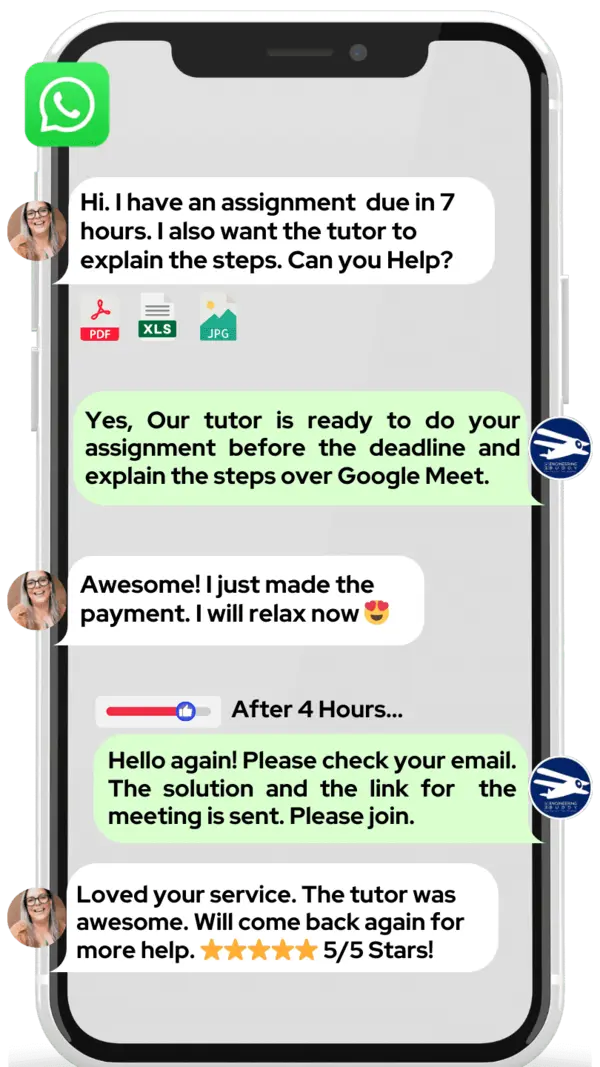
Hire Best Physics Tutors Online


Testimonials


Physics Tutor Online
My Physics Buddy (MPB) provides 1:1 online tutoring & homework help in Physics and related subjects for students at every level — from Grade 10 through to PhD. Whether you are a high school student building your foundation, an undergraduate working through a demanding course load, or a graduate student wrestling with advanced theory, MPB connects you with a Physics tutor who matches your exact level and syllabus. If you have been searching for a “Physics tutor near me” but want the flexibility of online sessions that actually fit your schedule, MPB is built for exactly that.
Our sessions are designed to help you aim for stronger grades, deeper understanding, and the confidence to tackle problems you have not seen before — at every stage from pre-university through doctoral research.
- 1:1 live online sessions — no group classes, no pre-recorded content
- Tutors matched to your exact level, syllabus, and exam board
- Covers Grade 10 through to PhD-level Physics and related quantitative subjects
- Flexible time zones: US, UK, Canada, Australia, and Gulf
- Structured learning plan built around your diagnostic and goals
- Ethical homework and assignment guidance — we explain concepts, you do the work
Who This Physics Tutoring Is For
Physics spans one of the widest educational ranges of any subject — from the first encounter with Newton’s laws in Grade 10 to the frontier of quantum field theory at the doctoral level. MPB serves this full range:
- Grade 10, 11, and 12 students preparing for school exams, board exams, or university entrance (US, UK, Canada, Australia, Gulf)
- Students sitting GCSE, IGCSE, A-Level, IB, AP, HSC, VCE, SACE, or equivalent pre-university Physics exams
- Early college and undergraduate students taking introductory or intermediate Physics courses (algebra-based or calculus-based)
- Students in engineering, pre-med, or science programmes where Physics is a core requirement
- Masters-level students in Physics or related disciplines needing support with coursework, research methods, or thesis preparation
- PhD students seeking conceptual clarity on advanced topics or guidance structuring research-related problem solving
- Parents of school-age students in the US, UK, Canada, Australia, and Gulf looking for structured, accountable academic support
- Students at any level who need ethical homework help, assignment guidance, or lab report support
Outcomes: What You’ll Be Able to Do in Physics
Physics tutoring at MPB is outcome-oriented at every level. The capabilities you build depend on your current stage — but across all levels, the aim is the same: genuine understanding that holds up under exam pressure and real-world application.
Solve problems from first principles — whether that means a Grade 10 kinematics question, a calculus-based mechanics problem at undergraduate level, or a graduate-level statistical mechanics derivation. Analyze physical systems by correctly identifying the relevant laws, constraints, and boundary conditions before reaching for an equation. Model real-world phenomena mathematically — building comfort with the translation between physical intuition and formal representation. Explain your reasoning in written form — a skill that matters in exams, lab reports, and research papers alike. Apply foundational principles across new contexts — the mark of a student who has genuinely understood Physics, not just practised it. Present solutions, derivations, and experimental findings with the clarity and rigour expected at your level.
What We Cover in Physics (Syllabus / Topics)
Physics at MPB is structured by level. Exact syllabi vary by exam board, institution, and country — tutors align to your specific course materials. The following tracks give an overview of what is typically covered at each stage.
Track 1 — Pre-University (Grade 10, 11, 12)
- Kinematics: motion in one and two dimensions, graphs, projectile motion
- Newton’s laws of motion, forces, friction, inclined planes
- Work, energy, power, and conservation laws
- Momentum, impulse, and collisions
- Circular motion and gravitation
- Waves, sound, light, and optics (reflection, refraction, diffraction)
- Electricity and magnetism: circuits, Ohm’s law, fields
- Thermal physics: heat, temperature, gas laws
- Modern Physics introduction: atomic models, radioactivity, nuclear reactions
- Exam-specific question types for GCSE, IGCSE, A-Level, AP, IB, HSC, VCE, and other boards
Track 2 — Early Undergraduate (First and Second Year)
- Calculus-based mechanics: kinematics, dynamics, rotational motion
- Oscillations and waves at the calculus level
- Classical thermodynamics: laws, heat engines, entropy
- Electrostatics and magnetostatics: Coulomb’s law, Gauss’s law, Ampere’s law
- Electromagnetic induction and Maxwell’s equations (introductory)
- Optics: geometric and physical optics, interference, diffraction
- Modern Physics: special relativity, photoelectric effect, de Broglie, Bohr model
- Lab report writing, data analysis, and error propagation
Track 3 — Intermediate Undergraduate (Second to Third Year)
- Classical mechanics at the advanced level: Lagrangian and Hamiltonian formulations
- Quantum mechanics: wave functions, Schrödinger equation, operators, uncertainty principle
- Electrodynamics: full Maxwell’s equations, electromagnetic waves, potentials
- Statistical mechanics and thermodynamics: ensembles, partition functions
- Solid state / condensed matter: crystal structure, band theory, semiconductors
- Nuclear and particle physics: decay, cross-sections, standard model overview
- Mathematical Physics: differential equations, linear algebra, complex analysis, tensors
Track 4 — Advanced Undergraduate and Masters Level
- Advanced quantum mechanics: perturbation theory, angular momentum, identical particles
- General Relativity: spacetime geometry, Einstein field equations (conceptual and mathematical)
- Quantum field theory introduction: path integrals, Feynman diagrams (conceptual entry)
- Advanced condensed matter, plasma physics, or photonics (subject-specific)
- Computational Physics: numerical methods, simulation, Python/MATLAB in Physics contexts
- Thesis and dissertation guidance: structuring research, literature review support, methodology discussion
Track 5 — PhD Level
- Conceptual deep-dives into specialised research areas
- Problem-solving sessions aligned to coursework or qualifying exams
- Guidance on structuring written derivations and proofs for research papers
- Discussion of research methodology and experimental design in Physics
- Broad academic planning and research career guidance
Syllabus note: Physics syllabi differ significantly across boards and institutions — GCSE (AQA, OCR, Edexcel), A-Level, IB Physics HL/SL, AP Physics, HSC, VCE, university courses, and graduate programmes all have their own structure and assessment styles. MPB tutors align to your specific course materials and exam requirements. Always confirm your current syllabus with your school or institution.
How My Physics Buddy Tutors Help You with Physics (The Learning Loop)
Diagnose: Every new student begins with a diagnostic conversation. The tutor asks you to attempt a few representative problems and talk through your approach. At school level, this might be a force diagram or an energy conservation problem. At graduate level, it might be a derivation. The goal is to pinpoint whether gaps are conceptual, mathematical, or related to exam technique.
Explain: The tutor builds understanding from the ground up where needed, or fills specific gaps for more advanced students. Explanations are tailored to your level — a Grade 11 student and an MSc student need very different language for the same underlying principle. The tutor does not just re-explain a textbook; they show you how to think about the problem.
Practice: You attempt problems live, with the tutor observing. This is the most important step. In Physics, the process of attempting a problem — not just reviewing a solution — is what builds the skill. The tutor lets you work through your reasoning before intervening.
Feedback: Feedback is specific and immediate. Not “that is wrong” but “you applied Newton’s second law in the wrong direction because you did not define your coordinate system first.” At higher levels, feedback covers proof structure, mathematical rigour, and physical interpretation.
Retest/Reinforce: The same concept returns in a new context in the next session. Physics understanding is cumulative — energy conservation at school level reappears as Lagrangian mechanics at university. Tutors track what has been covered and deliberately revisit it in harder forms.
Plan: After each session, the tutor updates your learning plan. Weak areas get more time. Stronger areas are pushed to harder problem types. No session repeats material unnecessarily.
Accountability: Between sessions, the tutor may set specific practice questions, suggest a textbook section to review, or ask you to draft a section of a lab report. This is not busywork — it is the mechanism that makes tutoring compound over time.
All sessions run via Google Meet with a digital pen-pad or iPad+Pencil setup, so every equation, diagram, and derivation is visible in real time. Before your first session, share your current syllabus or course outline, any topics you already know are weak, upcoming exam or submission dates, and your level (school, undergraduate, postgraduate). The tutor will use this to shape the diagnostic and the first live teaching block.
Tutor Match Criteria (How We Pick Your Tutor)
Physics is not one subject — it is dozens of distinct disciplines at different levels. Matching you to the right tutor requires more than finding someone with a Physics degree.
Level and syllabus fit: A tutor supporting a GCSE student needs fluency in the specific board’s question style. A tutor supporting a Masters student in condensed matter needs specialist depth. MPB matches by level and subject area, not just by “Physics” broadly.
Topic strengths and tools: Tutors are assessed on their specific topic competencies before being listed. They use Google Meet with digital pen-pad or iPad+Pencil so all working is visible, legible, and can be referred back to during the session.
Time zone and availability: MPB serves students across the US, UK, Canada, Australia, and Gulf. Sessions are scheduled to fit your local time. Early morning, evening, and weekend slots are available.
Learning style and pace: A student who needs slow, conceptual scaffolding gets that. A student who needs fast, exam-focused drilling gets that instead. The tutor adapts — not the student.
Language and communication style: Tutors communicate clearly in English. Students who need simpler phrasing, more visual explanations, or a particular teaching style can note this at the matching stage.
Goals: Grade improvement, exam preparation, concept clarity, lab report guidance, thesis support, research problem solving — the tutor shapes each session to the goal that matters most to you right now.
Urgency and timeline: Exam in ten days or building understanding over a full academic year — the tutor builds a plan that matches the time available and the depth needed.
Study Plans (Pick One That Matches Your Goal)
MPB offers three broad plan types: a catch-up plan (typically 1–2 weeks) for students who are behind on specific topics or units, an exam prep plan (typically 4–8 weeks) for structured pre-exam coverage of all assessed material, and a weekly support plan for consistent help throughout a school year, semester, or research period. After the first diagnostic session, your tutor builds the specific session-by-session plan based on your actual gaps, your timeline, and how much time you can commit each week.
Pricing Guide
Physics tutoring at MPB starts at USD 20 per hour and typically ranges to USD 40 per hour for standard school and early undergraduate sessions. Advanced undergraduate, Masters, and PhD-level tutoring — which requires specialist expertise — can go up to USD 100 per hour depending on topic complexity and tutor profile.
Pricing is influenced by the level and complexity of the subject matter, tutor experience and availability, the urgency of your timeline, and whether your sessions involve standard coursework or highly specialised research-area topics. Every quote is confirmed before any session begins — no hidden fees.
WhatsApp for a quick quote — share your level, subject area, and timeline and we will give you a specific number, not a range.
FAQ
Is Physics hard?
Physics is considered challenging because it demands both mathematical fluency and physical intuition at the same time. Most students struggle not because they lack ability but because a concept was not explained in a way that connected to how they think. 1:1 tutoring specifically addresses that gap — the explanation is shaped to you, not to a class of thirty.
How many sessions are needed?
It depends entirely on your level, your goals, and your current state. A Grade 11 student catching up on two units before an exam might need 6–10 sessions. An undergraduate working through a full semester of electrodynamics might need 20–30 sessions over several months. After the diagnostic, your tutor will give a practical, honest estimate based on what they see.
Can MPB help with Physics homework, assignments, and lab reports?
Yes — as guidance and explanation. Tutors work through the concepts behind your assignment, show similar example problems, and give feedback on your attempts and drafts. Lab report guidance covers structure, data analysis approach, and error discussion. The work you submit is always your own. MPB does not complete or write work for students. Academic integrity is fundamental to how MPB operates and is consistent with the policies of every school, university, and examination body we support.
Will the tutor’s content match my exact syllabus?
Tutors align to your specific course materials — your textbook, your board’s specification, or your university course outline. Share these at the start and the tutor will work from them directly. Exact exam questions are not known in advance, but thorough understanding of the full syllabus is what the sessions build toward.
What happens in the first session?
The first session begins with a short diagnostic — a few problems and a conversation about what feels clear and what does not. The tutor then teaches a focused concept live, so the session is immediately useful, not just an intake form. Before the session, share your syllabus, your known weak areas, and any upcoming deadlines or exam dates.
Is online Physics tutoring as effective as in-person?
For Physics, online tutoring via Google Meet with a digital pen-pad or iPad+Pencil is fully effective. Every diagram, free body diagram, derivation, and circuit sketch can be drawn in real time. Students in the US, UK, Canada, Australia, and Gulf consistently find live online sessions as productive as in-person ones — with the additional convenience of no commute and full scheduling flexibility across time zones.
Can MPB support PhD students and research-level Physics?
Yes. MPB works with PhD students on conceptual clarity, qualifying exam preparation, and structured problem-solving in specialist areas. Tutors at this level do not replace a research supervisor — they complement supervision by providing a space to work through the Physics without the pressure of a formal meeting. Thesis and dissertation structure guidance is also available at a high level.
What tools and equipment do tutors use?
Sessions run via Google Meet. Tutors use a digital pen-pad or iPad with Apple Pencil to write equations and draw diagrams in real time on a shared digital whiteboard or document. You need only a browser and a stable internet connection. No special software is required on your end.
Does MPB cover Physics subjects beyond the core course?
Yes. MPB has dedicated pages for a wide range of specialised Physics topics. Students in advanced programmes may also find support through pages like Quantum Mechanics, Statistical Mechanics, Electrodynamics, and General Relativity. For school-level students working toward specific exams, see the dedicated exam pages below.
Can a tutor help with Physics thesis or dissertation work at Masters or PhD level?
Yes — at a guidance level. Tutors can help you work through the Physics concepts underpinning your research, discuss problem-solving approaches, and give feedback on how you are structuring derivations or explanations in your writing. They do not write your thesis or research for you. The goal is to strengthen your own understanding so that your written work reflects it.
“Physics is not just a collection of facts and formulas. It is a way of thinking — a disciplined method of asking questions about the natural world and following the evidence wherever it leads.”
American Physical Society — Physics Education Programs
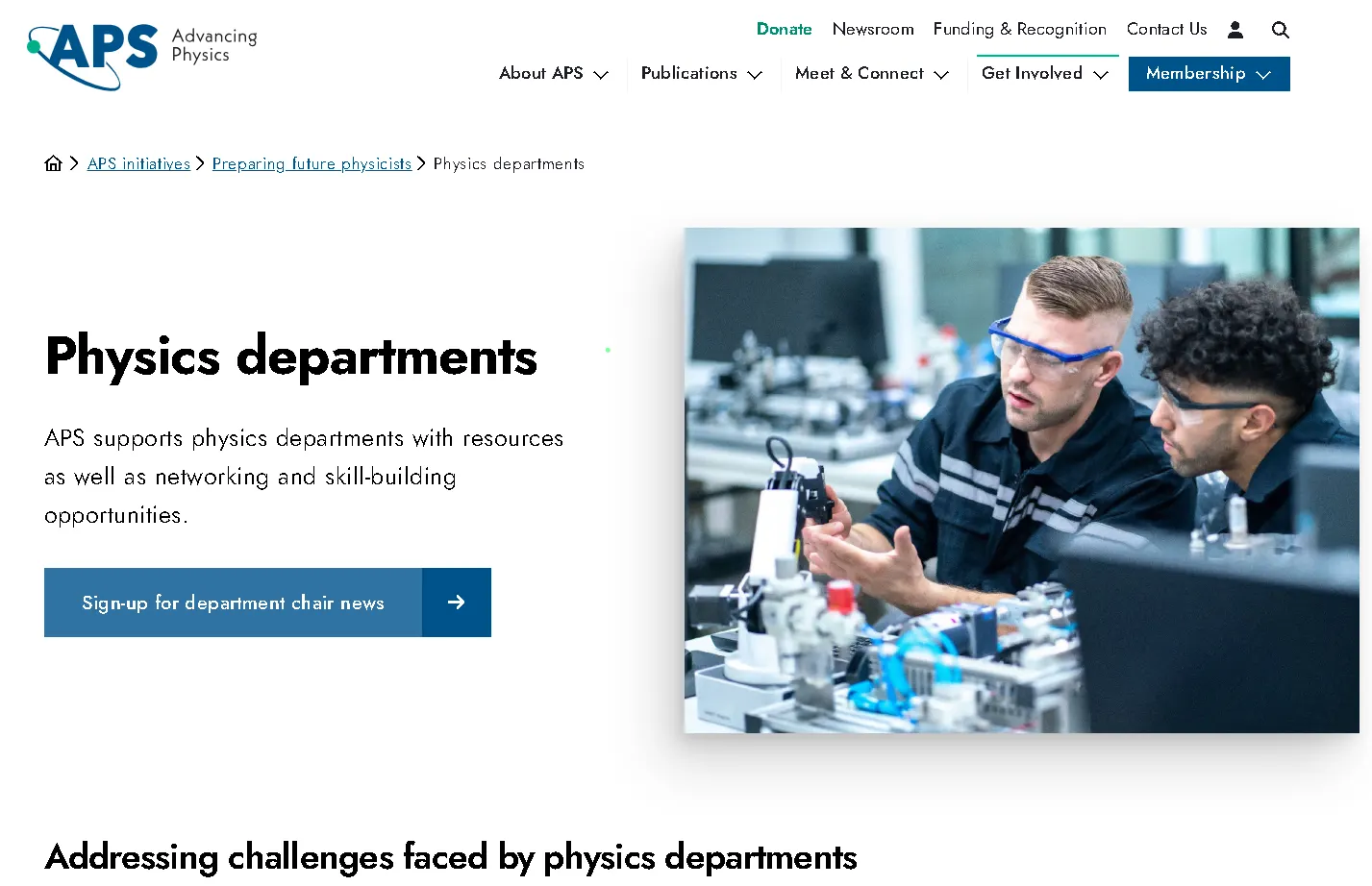
Explore how APS supports physics departments with programs, resources, and initiatives to enhance teaching, diversity, and student success.
Trust & Quality at My Physics Buddy
How We Select Tutors
Every MPB tutor undergoes a subject-specific vetting process that goes beyond credential checking. Tutors complete a practical demonstration of their teaching ability in their declared subject area and level before being listed. They are assessed on conceptual depth, clarity of explanation, and familiarity with the exam styles or course formats they claim to cover. Ongoing student feedback after sessions feeds into tutor quality reviews — tutors with consistently poor feedback are reviewed and re-assessed before being recommended again.
Academic Integrity
MPB operates on one clear principle: we guide, you submit your own work. This applies whether you are a Grade 10 student asking for help with a homework problem, an undergraduate working through a lab report, or a Masters student drafting a section of a thesis. Tutors explain the relevant concepts, demonstrate similar examples, and give feedback on your drafts and attempts. They do not write your assignments, complete your homework, or produce your work for submission. This approach is consistent with the academic integrity standards of every school, university, and examination body across our primary regions — US, UK, Canada, Australia, and the Gulf. According to Times Higher Education, physics educators consistently emphasise that genuine understanding — not answer delivery — is what distinguishes effective academic support from academic misconduct.
Why Physics-Focused Matters
MPB is not a generalist tutoring marketplace. It is a Physics-first platform. According to the Institute of Physics, students learning Physics benefit significantly from instructors who understand not just the content but the specific reasoning patterns and problem structures the discipline demands. Every tutor on MPB is assessed specifically in Physics and related quantitative subjects — not hired as a generalist.
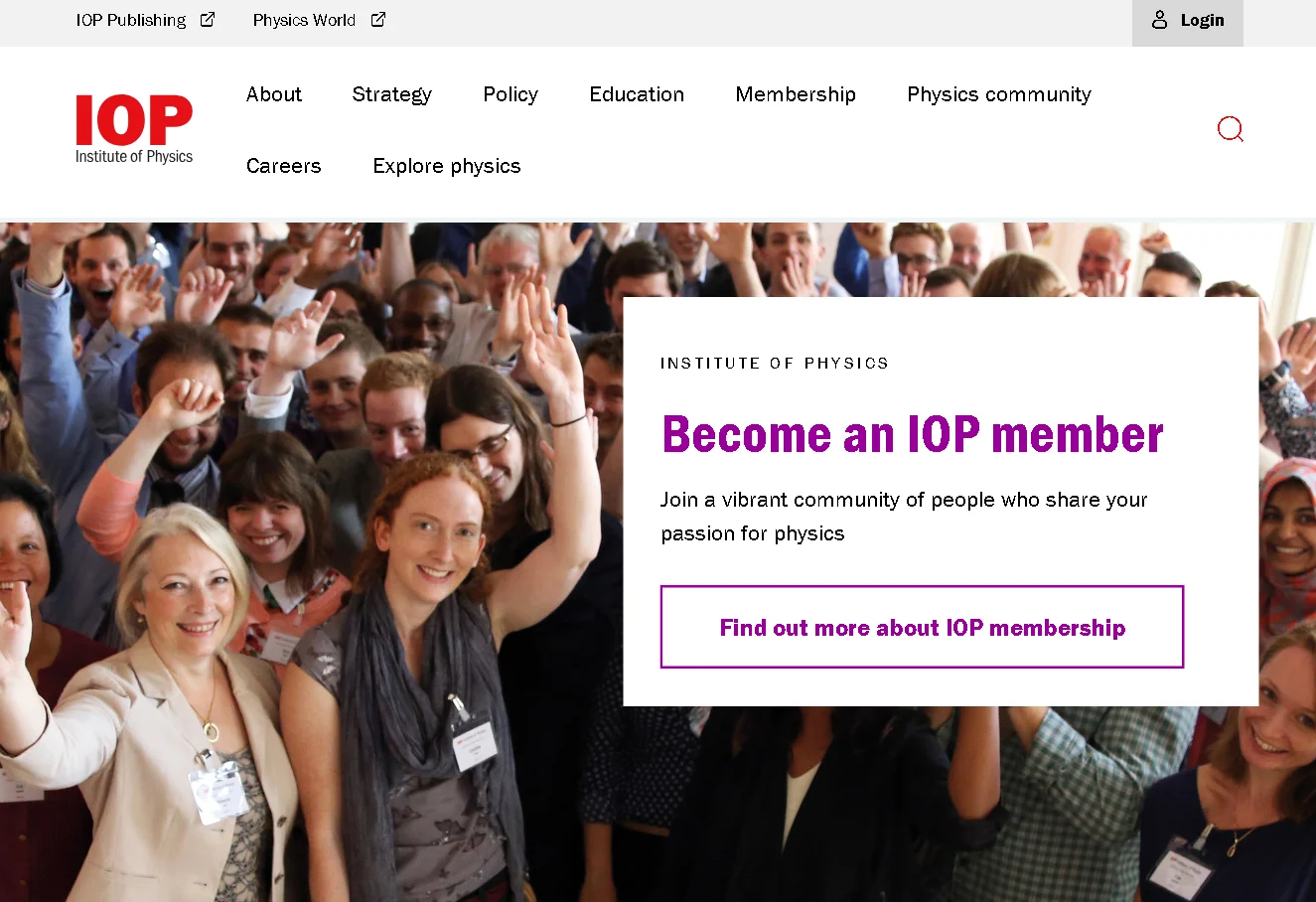
The Institute of Physics invites students, researchers, and professionals to join its global physics community through IOP membership.
Research on personalised learning outcomes in STEM — including findings summarised by the National Center for Education Statistics — consistently shows that students who receive targeted individual instruction outperform those relying on group instruction alone, particularly in subjects requiring both mathematical and conceptual fluency, such as Physics.
About My Physics Buddy
MPB is a Physics-focused online tutoring platform serving students from Grade 10 through to PhD level in the US, UK, Canada, Australia, and the Gulf. The platform covers the full range of Physics from foundational school-level topics through to advanced graduate-level theory. Because Physics connects to so many related disciplines, MPB also offers dedicated support in related areas — students working across exam boards or taking specific Physics courses can explore pages like IGCSE Physics (0625), A/AS Level Physics (9702), IB Physics HL/SL, AP Physics, HSC Physics, and VCE Physics.
Students at more advanced levels exploring specialist topics can also find dedicated support through pages like Quantum Field Theory (QFT), Condensed Matter (Solid State) Physics, Particle Physics, and Computational Physics.
“Students who receive one-to-one tutoring perform, on average, two standard deviations better than students who receive conventional group instruction.”
Content reviewed by a Physics tutor at My Physics Buddy.
Additional References and Resources
The following credible external resources provide useful background for students and parents exploring Physics education at different levels:
- American Physical Society — Physics Education Programs: The leading professional physics organisation in the US provides guidance on physics learning, career pathways, and educational standards.
- Institute of Physics — Teaching and Learning Resources: Widely used across the UK and internationally for school and undergraduate physics teaching.
- National Academies of Sciences — A Framework for K-12 Science Education: The foundational US document behind science standards from school through early college, emphasising scientific practices and reasoning over rote content.
- OECD PISA 2022 Results: International data on science education outcomes across developed nations, relevant for students and parents assessing educational standards across the US, UK, Canada, and Australia.
- The Feynman Lectures on Physics — Caltech: Richard Feynman’s complete undergraduate physics lectures, freely available from Caltech. Considered one of the most important resources in physics education history.
- edX — University Physics Courses: A reference point for the range of university-level Physics courses available globally, including courses from MIT, Caltech, and other leading institutions.
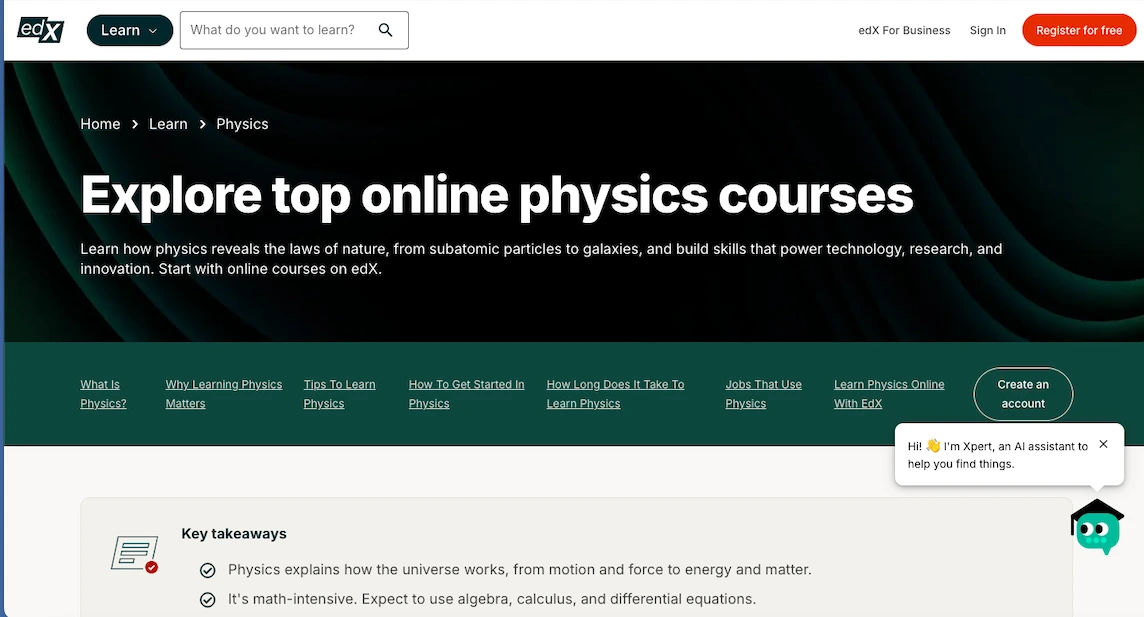
edX platform featuring online physics courses, resources, and learning pathways.
Next Steps
Tell us your current level in Physics — Grade 10, undergraduate Year 2, Masters, or PhD — along with which topics or units you need to focus on and any upcoming exam or submission dates. Share your availability and time zone. MPB will match you to a tutor, confirm the fit with you, and you can begin as soon as the next available slot. Most students are matched and have their first session booked within 24–48 hours.

