Superconductivity Tutor Online
My Physics Buddy (MPB) offers 1:1 online tutoring & homework help in Physics and related subjects. Superconductivity sits at the intersection of quantum mechanics, condensed matter physics, and materials science — and it is notoriously difficult to navigate without expert guidance. Whether you are a graduate student working through BCS theory for the first time, a PhD candidate preparing for a qualifying exam, or a master’s-level student building a thesis on unconventional superconductors, MPB connects you with a tutor who has deep, working knowledge of this subject. If you have been looking for a Superconductivity tutor near me, our fully online model removes that constraint entirely — sessions run over Google Meet with live digital handwriting tools, from any time zone. Tutoring here is designed to help you aim for a thorough conceptual grasp and strong performance in your coursework, qualifying exams, or research.
- 1:1 live sessions — fully personalized, no recorded content or group formats
- Tutors with graduate-level depth in condensed matter and quantum theory of superconductivity
- Flexible scheduling for students in the US, UK, Canada, Australia, and Gulf regions
- Structured learning plan built around your course syllabus, exam dates, and research goals
- Ethical homework, problem-set, and assignment guidance — we coach your understanding; you produce and submit your own work
Who This Superconductivity Tutoring Is For
Superconductivity is an advanced subject. The tutoring here is calibrated for students at the graduate level and above, though exceptional undergraduates in advanced condensed matter courses are equally welcome.
- Graduate (MS) students taking a condensed matter or advanced quantum mechanics course that includes superconductivity as a major topic
- PhD students in physics, materials science, or electrical engineering preparing for qualifying or comprehensive exams with superconductivity content
- PhD candidates whose dissertation involves superconducting materials or devices and need conceptual or analytical reinforcement
- Advanced undergraduates enrolled in a solid-state or modern physics course that covers the phenomenology of superconductivity
- Students in the US, UK, Canada, Australia, and Gulf countries needing structured, exam-aligned support for their specific course
- Students who need guidance on problem sets, derivations, and assignments — approached as coached learning, never as answer delivery
- Parents and academic administrators seeking credible, measurable tutoring for high-level physics students
Outcomes: What You’ll Be Able to Do in Superconductivity
Superconductivity courses challenge students to move between phenomenological descriptions, microscopic quantum theories, and practical device physics. Our tutoring builds each of these layers deliberately.
Explain the key experimental signatures of superconductors — zero DC resistance and the Meissner effect — and distinguish between Type I and Type II behavior with physical clarity. Derive and apply the London equations to describe the electrodynamic response of a superconductor, including the London penetration depth. Analyze the BCS ground state, Cooper pair formation, and the origin of the energy gap using second-quantization notation at a level appropriate for your course. Apply Ginzburg-Landau theory to calculate the coherence length, penetration depth, and the GL parameter distinguishing Type I from Type II superconductors. Write clearly about unconventional pairing symmetries, high-Tc materials, and proximity effects — whether for a problem set, a qualifying exam answer, or a dissertation chapter introduction.
What We Cover in Superconductivity (Syllabus & Topics)
The content below reflects the typical structure of graduate-level superconductivity courses. Exact coverage varies by institution and instructor — your tutor works from your actual course syllabus.
Track 1: Phenomenology and Classical Descriptions
- Discovery, history, and critical parameters: Tc, Hc, Jc
- Zero resistance and perfect diamagnetism — the Meissner-Ochsenfeld effect
- Type I vs. Type II superconductors and the mixed (Abrikosov vortex) state
- London equations and the London penetration depth λL
- Flux quantization and its physical interpretation
- Josephson effects: DC and AC Josephson relations
- Critical field phase diagrams and the role of thermodynamic free energy
Track 2: BCS Microscopic Theory
- Phonon-mediated electron-electron attraction and the Cooper instability
- Cooper pair formation and the BCS ground state wavefunction
- BCS gap equation and its self-consistent solution at T = 0 and finite T
- Density of states and the energy gap Δ — derivation and physical meaning
- Bogoliubov–de Gennes (BdG) transformation and quasiparticle excitations
- BCS predictions: ratio 2Δ/kBTc, specific heat jump, isotope effect
- Limitations of BCS: strong-coupling corrections and Eliashberg theory (high-level)
Track 3: Ginzburg-Landau Theory
- GL free energy functional and the order parameter ψ
- GL equations I and II — derivation from the free energy minimization
- Coherence length ξ and the GL parameter κ = λ/ξ
- Surface energy and the Type I / Type II boundary at κ = 1/√2
- Abrikosov vortex lattice — structure, energy, and lower/upper critical fields
- Proximity effect and the superconductor-normal metal interface in GL framework
Track 4: Josephson Junctions and Applications
- Tunneling Hamiltonian and the DC Josephson current
- AC Josephson effect and the Shapiro steps
- RCSJ model for junction dynamics
- SQUIDs: DC and RF types, operation principle, and sensitivity
- Applications in quantum computing: superconducting qubits (transmon, flux qubit) — high-level overview
- Flux quantization in superconducting loops and its measurement
Track 5: Unconventional and High-Tc Superconductivity
- Beyond phonons: magnetic and other pairing mechanisms
- Pairing symmetry: s-wave, p-wave, d-wave — order parameter symmetry and nodes
- Cuprate high-Tc superconductors: crystal structure, phase diagram, pseudogap
- Iron-based superconductors: multi-band pairing and competing order
- Topological superconductivity and Majorana fermions — conceptual introduction
- Current open questions in the field (high-level; details vary by course)
Track 6: Experimental Methods and Lab Skills
- Resistivity measurements and the four-probe method for Tc determination
- SQUID magnetometry and AC susceptibility
- Tunneling spectroscopy and scanning tunneling microscopy (STM) for gap measurement
- Specific heat measurements near Tc
- Angle-resolved photoemission spectroscopy (ARPES) — principles and what it reveals
- Lab report structuring and data interpretation guidance
How My Physics Buddy Tutors Help You with Superconductivity (The Learning Loop)
Diagnose: The first session begins with a short diagnostic — the tutor asks you to explain a concept or work through a problem from the area you find hardest. This identifies whether gaps are mathematical (e.g., shaky second quantization), conceptual (e.g., confusing BCS and GL as competing rather than complementary theories), or applied (e.g., unable to connect GL theory to physical observables).
Explain: The tutor rebuilds each topic from a clear physical starting point. Derivations are shown step-by-step with explicit notation — assumptions are stated, not glossed over. For Superconductivity, this matters more than in most subjects because many standard textbook derivations skip steps that are critical for exam answers.
Practice: You work through problems live during the session. The tutor watches your approach, not just your answer. For derivation-heavy topics like the BCS gap equation or the GL vortex solution, the process of getting there is as important as the result.
Feedback: After each problem or derivation attempt, the tutor gives targeted feedback: where your physical reasoning broke down, where your notation was ambiguous, and what a strong exam or homework answer would look like.
Retest / Reinforce: Topics from earlier sessions are revisited with new problems in later sessions. The tutor confirms understanding has solidified before moving to dependent material — for instance, checking BCS fluency before tackling unconventional pairing symmetry.
Plan: Each session ends with a clear agenda for the next one: specific concepts to review, problems to attempt, and any reading to do beforehand.
Accountability: For students on a qualifying-exam or course-exam timeline, the tutor maintains a running checklist of topics covered and confidence levels, and flags areas that need extra attention before the deadline.
All sessions run via Google Meet. Tutors use a digital pen-pad or iPad + Apple Pencil so that every derivation is written live — not presented as a static PDF. The pace adapts to you: some students need two full sessions on the Cooper pair derivation; others move quickly and need the tutor to push into advanced territory. Before your first session, share your course syllabus or reading list, the topics you are currently stuck on, and any upcoming exam or assignment dates. The tutor uses this to make the first session immediately useful rather than spending it on orientation.
Tutor Match Criteria (How We Pick Your Tutor)
Superconductivity tutoring requires a tutor with genuine graduate-level depth — not just general physics knowledge. Here is how MPB matches you.
Level and syllabus fit: Tutors for this subject hold graduate degrees (MS or PhD) in physics, materials science, or closely related fields, with coursework or research directly involving superconductivity or condensed matter physics.
Topic strengths: We match based on your primary area of difficulty — BCS formalism, GL theory, Josephson physics, or unconventional superconductors — so the tutor has genuine depth where you need it most.
Tools and setup: Google Meet for video, digital pen-pad or iPad + Apple Pencil for live equation and diagram work. Sessions feel like a whiteboard tutorial, not a slide presentation.
Time zone and availability: Tutors are available across US, UK, Canada, Australia, and Gulf time zones. Evening and weekend sessions are available.
Learning style and pace: Some graduate students want a tutor who moves methodically through derivations with full rigor; others want a faster-paced, problem-focused partner. We account for this.
Language and communication preferences: Tutors are selected for clear, precise, graduate-level English communication. Regional preferences can be noted.
Goals: Whether your goal is to pass a qualifying exam, complete a course, understand your dissertation background, or get unstuck on a specific derivation — the tutor match reflects that goal.
Urgency and timelines: Students with a qualifying exam in two weeks are matched for intensive sessions. Students with a full semester available are matched for a sustainable weekly cadence.
Study Plans (Pick One That Matches Your Goal)
MPB offers three broad plan types: a catch-up plan for students facing an imminent exam or assignment deadline (typically 1–2 weeks of focused, high-frequency sessions), a course-aligned exam prep plan for students building toward a midterm or final over 4–8 weeks, and an ongoing weekly support plan for students who want consistent help throughout a semester or research phase. In every case, the specific session-by-session plan is built by your tutor after the diagnostic — because the right plan depends on what you actually understand right now, not what your syllabus assumes.
Pricing Guide
Superconductivity is an advanced graduate-level subject, and pricing reflects that. Rates at MPB typically start at USD 20 per hour for foundational physics support and go up to USD 40 per hour for most graduate-level sessions. For highly specialized topics — such as topological superconductivity, Eliashberg theory, or dissertation-level support — rates may go up to USD 100 per hour depending on tutor expertise and timeline urgency.
Price is shaped by the complexity of the subject matter, the academic level, tutor availability, and how quickly you need sessions scheduled. Students with a longer lead time generally find more flexibility in both scheduling and rates.
All rates are confirmed before your first session — no surprises. WhatsApp for a quick quote.
FAQ
Is Superconductivity hard?
Yes — it is one of the more technically demanding topics in graduate-level condensed matter physics. It requires fluency in quantum mechanics, statistical mechanics, and electrodynamics simultaneously. The mathematics can be dense, particularly in BCS and Ginzburg-Landau formalisms. With structured, expert guidance, the subject becomes tractable and genuinely rewarding.
How many sessions are needed?
It depends on your starting point, course scope, and timeline. A graduate student covering superconductivity as one unit in a broader condensed matter course might need 6–10 focused sessions. A student whose entire course or qualifying exam is centered on superconductivity may need 15–25 sessions or more. Your tutor will estimate this after the diagnostic.
Can you help with homework, problem sets, and assignments?
Yes — with an important framing. Tutors explain the physics behind your problem sets, work through parallel examples to build your technique, and coach your reasoning. They do not solve graded work on your behalf, and you produce and submit your own answers. This is the only approach that builds the skills your exams and qualifying assessments will test. Our services aim to provide personalized academic guidance, helping students understand concepts and improve skills. Materials provided are for reference and learning purposes only. Misusing them for academic dishonesty or violations of integrity policies is strongly discouraged.
Will the tutor follow my exact course syllabus?
Yes. Share your syllabus, reading list, or course notes before the first session and the tutor aligns all teaching to your specific course. Different institutions cover superconductivity at different levels of rigor and with different theoretical emphases — your tutor adapts accordingly.
What happens in the first session?
The session starts with a short diagnostic — usually a concept explanation or a problem from your hardest topic. The tutor then begins teaching immediately based on what the diagnostic reveals. You leave with a clear 2–4 session plan. There is no lengthy intake or orientation process.
Is online tutoring effective for a subject this mathematically dense?
Yes. Tutors use digital pen-pad or iPad + Apple Pencil tools so that derivations, diagrams, and tensor notation are written live on screen — comparable to a whiteboard. For complex multi-line derivations like the BCS gap equation, live handwriting is often clearer than any static document. Many graduate students find the focused, distraction-free online environment more productive than in-person office hours.
Can you help with lab report guidance for experimental superconductivity work?
Yes. Tutors can explain the physics behind experiments such as four-probe resistivity measurements, SQUID magnetometry, or tunneling spectroscopy, help you understand how to interpret your data, and guide the structure and reasoning of your lab report. You write and submit your own report; the tutor supports your physical understanding and reporting clarity.
Can you help with thesis or dissertation work related to superconductivity?
Yes, at a conceptual and structural level. Tutors can help you understand the theoretical background relevant to your dissertation, clarify specific derivations or models you are using, and discuss how to structure a literature review or background chapter. They do not write dissertation content for you. Think of it as expert conceptual coaching for your own research thinking.
What textbooks or resources do tutors use?
Tutors are familiar with the standard graduate texts in the field — including works by Tinkham, de Gennes, and others — as well as current research literature where relevant to your course. Sessions draw from your assigned reading wherever possible. The Journal of Superconductivity and Novel Magnetism and resources from institutions such as Cambridge’s Theory of Condensed Matter group are referenced where appropriate.
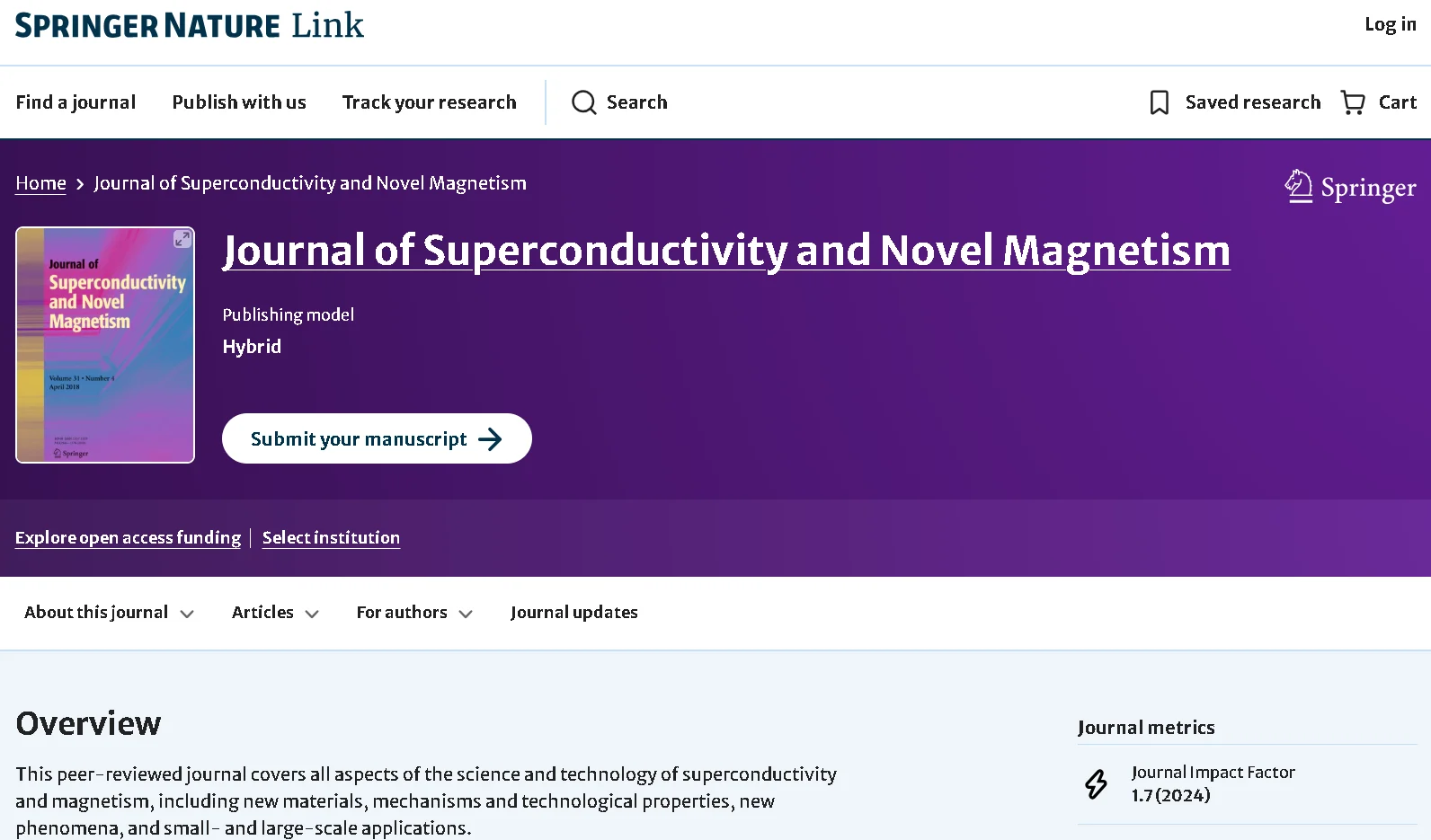
Explore cutting-edge research in superconductivity and magnetism through Springer’s peer-reviewed scientific journal.
Do I need to know second quantization before starting?
For BCS theory, yes — second quantization (creation and annihilation operators, Bogoliubov transformation) is essentially the language of the derivation. If your second quantization is weak, your tutor will spend time reinforcing it as a prerequisite before moving into BCS formalism. Students who need parallel support in quantum mechanics fundamentals can also explore MPB’s Quantum Mechanics tutoring page.
Trust & Quality at My Physics Buddy
Tutor Selection
Every MPB tutor goes through a structured vetting process. For a subject like Superconductivity, candidates must hold a graduate degree in physics, materials science, or a closely related discipline — with documented coursework or research experience in condensed matter or superconductivity specifically. They complete a subject knowledge assessment, a live demo session evaluated for pedagogical clarity and depth, and ongoing feedback reviews after onboarding. Tutors who do not consistently meet the standard are not retained.
Academic Integrity
MPB’s position is unambiguous: we guide, you submit your own work. For graduate students, this is especially important — your qualifying exams, coursework, and dissertation must reflect your own understanding. Tutors explain physics, demonstrate techniques on parallel problems, and give feedback on your reasoning. They do not complete graded work on your behalf. The American Physical Society’s guidelines on research integrity set the professional standard that MPB’s academic approach reflects.
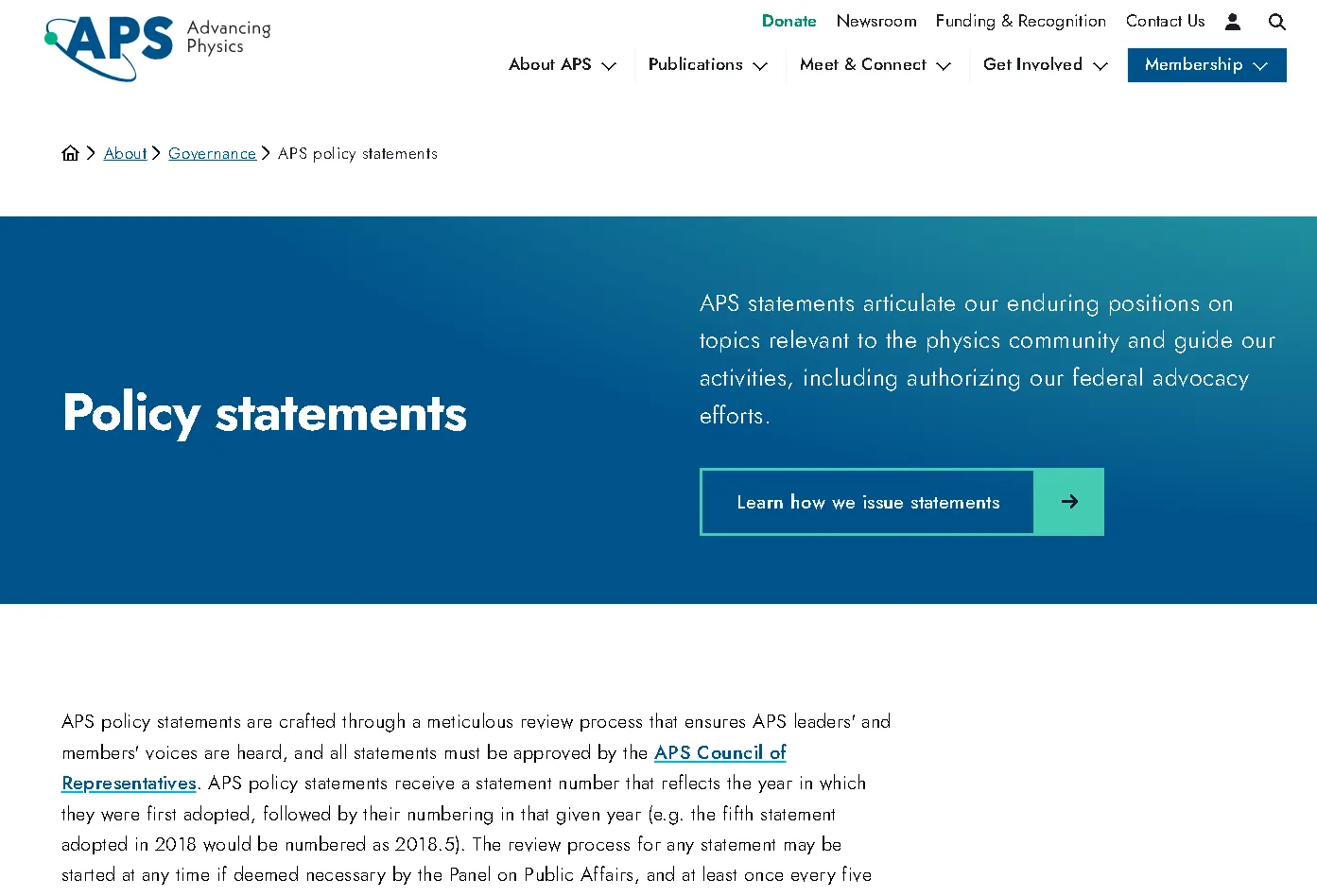
Explore APS policy statements that define science policy positions and guide advocacy within the physics community.
We guide, you submit your own work. For a PhD-track student, that is not just an integrity requirement — it is the only preparation that actually works.
About My Physics Buddy
MPB is a Physics-focused online tutoring platform built for early college students, graduate students, PhD candidates, and their families — as well as academic administrators in universities across the US, UK, Canada, Australia, and Gulf countries. Our core is Physics and closely related quantitative subjects. Students working across advanced condensed matter topics can explore our dedicated pages for Condensed Matter (Solid State) Physics, Quantum Mechanics, and Statistical Mechanics — all of which provide direct theoretical foundation for Superconductivity. Students advancing into related frontier topics may also find our pages on Quantum Field Theory (QFT) and Spintronics Physics useful as their research progresses.
For students coming from an electromagnetism background who want to strengthen the foundational physics before tackling Meissner effect derivations, our Electrodynamics and Electromagnetism pages offer targeted support. Students working in experimental settings who want to strengthen their lab physics fundamentals can also explore Experimental Physics & Lab Skills.
Content reviewed by a Superconductivity tutor at My Physics Buddy.
“The day when we shall know exactly what electricity is will chronicle an event probably greater, more important than any other recorded in the history of the human race.”
— Nikola Tesla, as cited in the Library of Congress Tesla Collection
Superconductivity represents one of the most striking quantum phenomena known — a state in which electrical resistance vanishes entirely. The theoretical tools developed to explain it, from BCS to Ginzburg-Landau to topological superconductivity, sit at the frontier of modern physics. Understanding it deeply is one of the more rewarding things a graduate physics student can do.
Research published through the Nobel Prize in Physics 1972 — awarded to Bardeen, Cooper, and Schrieffer for the BCS theory — and the Nobel Prize in Physics 1987 for the discovery of high-temperature superconductivity in ceramic materials underscores just how central this subject has been to the development of modern physics. Understanding the key results behind both awards is standard content in any serious graduate-level superconductivity course.
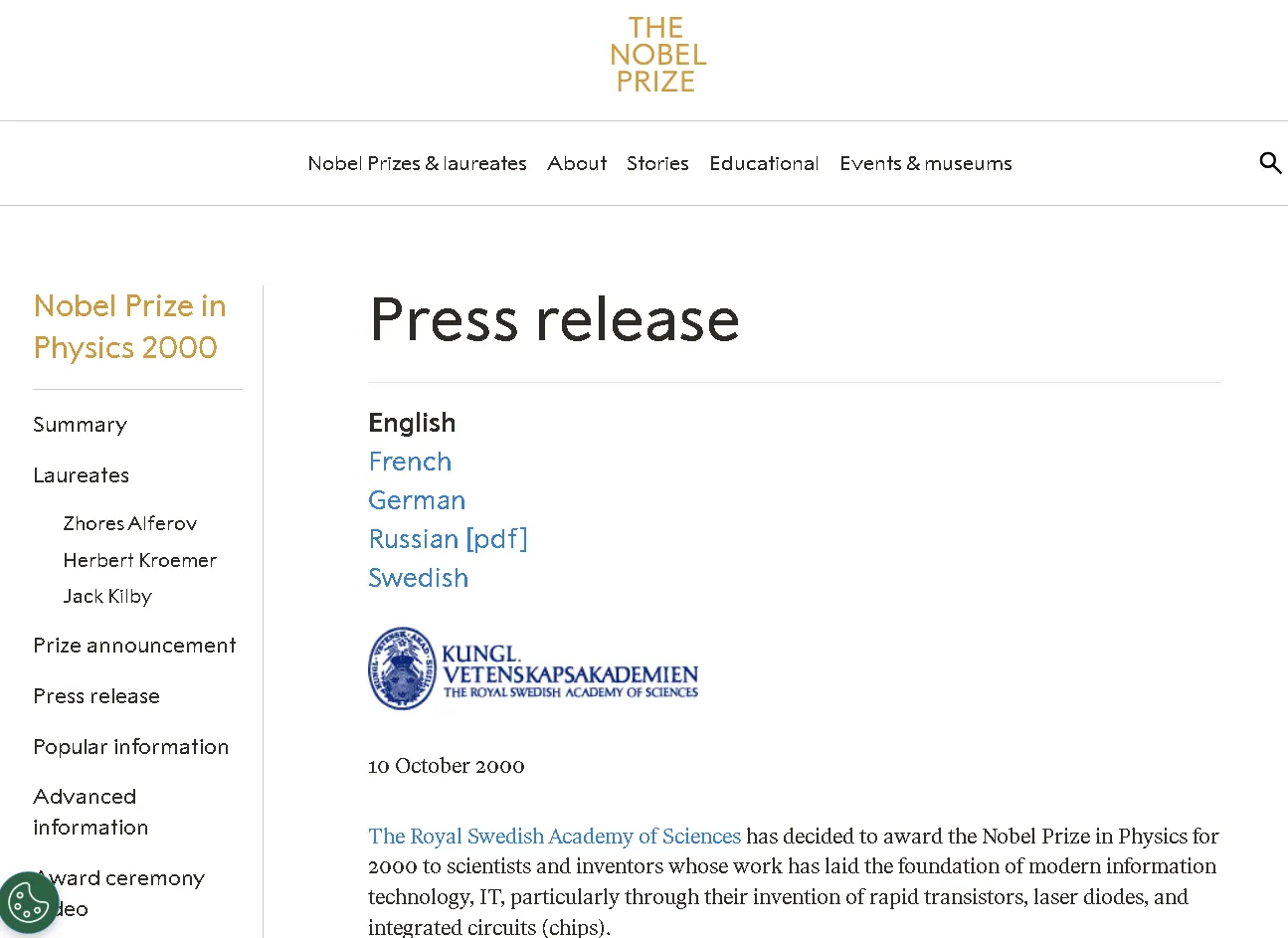
Read the official Nobel Prize 2000 press release recognizing breakthroughs in semiconductors, laser diodes, and integrated circuits.
“One of the most fundamental discoveries in physics is that quantum mechanics governs the macroscopic world in superconductors — making quantum coherence directly observable at human scales.”
— Adapted from MIT OpenCourseWare, Theory of Solids, Massachusetts Institute of Technology
This is precisely why Superconductivity is both hard and important. The physics is not abstract for its own sake — it describes real, measurable macroscopic quantum behavior. Getting that understanding right is what MPB tutoring is built to support.
Superconductivity is not just a topic in a course — it is a lens through which quantum mechanics, statistical physics, and electrodynamics converge. MPB tutors bring the depth to make that convergence clear, not more confusing.
Next Steps
Share your current course or research context, the topics giving you the most difficulty, and your exam or assignment timeline. We confirm your time zone and availability, then match you with a tutor whose depth fits your needs. In most cases, your first session can begin within a day or two of confirmation.
No long intake forms. No upfront commitment to a session package before you have seen the quality. Just a matched tutor, a diagnostic, and a plan built around your actual gaps.

