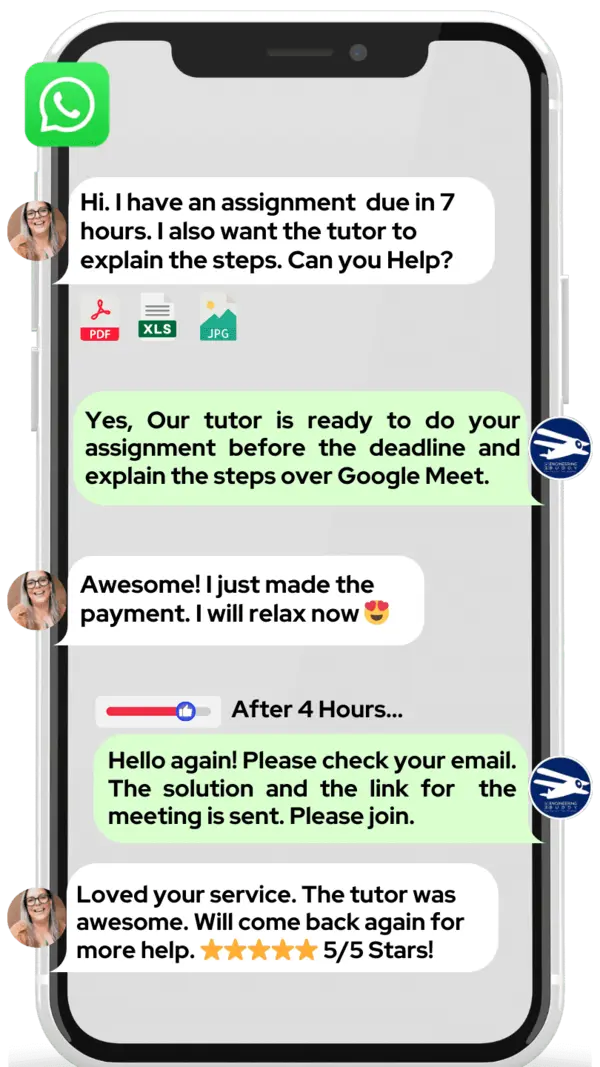
Hire Best GCSE Physics Tutors Online


Testimonials



GCSE Physics Tutor Online
My Physics Buddy (MPB) offers 1:1 online tutoring & homework help in Physics and related subjects — and GCSE Physics is one of our most active tutoring areas for secondary school students across the UK and internationally. GCSE Physics is both a foundational academic course and a high-stakes standardized exam, typically taken at age 15–16 in England, Wales, and Northern Ireland, with equivalent qualifications in other regions. Strong GCSE Physics results are essential for students planning to progress to A Level Physics, IB, or any STEM pathway at sixth form or college. Whether you are a student preparing for AQA, Edexcel, OCR, or another exam board, or a parent looking for structured, expert online support, MPB connects you with tutors who know the GCSE Physics curriculum and exam demands thoroughly. If you’ve been searching for a GCSE Physics tutor near me and want the depth and convenience of personalized online learning, you are in the right place. Our sessions are designed to improve conceptual clarity, exam technique, and problem-solving accuracy — with honest, structured guidance and no over-promises.
- 1:1 live sessions — fully personalized, no group classes or generic revision courses
- Expert tutors with strong knowledge across all major GCSE Physics exam boards — AQA, Edexcel, OCR, and others
- Flexible time zones — sessions conveniently scheduled for UK, US, Canada, Australia, and Gulf students
- Structured learning plan built around your exam board, current topics, weak areas, and exam dates
- Ethical homework and assignment guidance — we explain and guide; you complete and submit your own work
Who This GCSE Physics Tutoring Is For
GCSE Physics is studied by students across a wide ability range and in multiple countries. This tutoring is for students who want focused, expert 1:1 support — not generic revision materials or crowded group sessions.
- Year 10 and Year 11 students in the UK preparing for their GCSE Physics exam with AQA, Edexcel, OCR, or another board
- Students taking Triple Science (Separate Sciences) who cover Physics as a standalone GCSE and need deeper topic coverage than Combined Science peers
- Students taking Combined Science (Trilogy or Double Award) who need focused support on the Physics component
- International students in the US, Canada, Australia, and Gulf region sitting GCSE Physics through international Cambridge or Edexcel pathways
- Students targeting grades 7, 8, or 9 who want to push beyond a comfortable pass into the top grade bands
- Students who are struggling and need to consolidate foundational topics before the exam window closes
- Parents in the UK and internationally seeking an accountable, subject-specialist tutor to provide reliable weekly or intensive support
- Students needing homework, classwork, and assignment guidance throughout the school year alongside exam preparation
Outcomes: What You’ll Be Able To Do in GCSE Physics
Consistent, structured work with an MPB GCSE Physics tutor is designed to build real, observable skills across every topic and exam skill assessed at GCSE level.
Solve calculation-based problems across all major GCSE Physics topics — speed and acceleration, electrical power, wave frequency, radioactive decay, and more — accurately and with clear, mark-winning working shown. Analyze data presented in graphs, tables, and experimental results, applying the scientific reasoning skills that feature heavily in GCSE Physics papers, especially in the Required Practicals assessment context. Explain physical phenomena — from the behaviour of waves to the mechanism of nuclear fission — in precise, concise written answers that match the command word expectations of GCSE mark schemes. Apply physics concepts to unfamiliar contexts and multi-step problems, which is exactly what higher-tier GCSE questions demand and where many students lose marks. Write structured extended-response answers that earn full marks by covering the correct sequence of physics points — a skill that is practicable and improveable with targeted feedback.
What We Cover in GCSE Physics (Syllabus / Topics)
GCSE Physics is examined by several awarding bodies in the UK, including AQA, Edexcel (Pearson), and OCR. Topic coverage is broadly similar across boards but sequencing, question style, and specific Required Practicals differ. Always share your exam board and specification with your tutor in the first session. The coverage below reflects the core topics assessed across the major specifications.
Explore the Optics 5th Edition textbook by Eugene Hecht, covering wave motion, diffraction, and modern optics for physics students.
Track 1: Forces and Motion
- Scalars and vectors; speed, velocity, and acceleration
- Distance-time and velocity-time graphs; gradient calculations
- Newton’s three laws of motion and their real-world applications
- Resultant forces and free-body force diagrams
- Momentum, impulse, and conservation of momentum
- Work done, kinetic energy, and gravitational potential energy
- Stopping distances: thinking distance, braking distance, and factors affecting each
- Problem types: graph analysis, multi-step force and energy calculations, extended written explanations
Track 2: Electricity
- Current, potential difference, and resistance; Ohm’s Law
- Series and parallel circuits: rules for current and voltage
- Component characteristics: resistors, filament lamps, diodes, LDRs, thermistors
- Electrical power and energy calculations
- Domestic electricity: AC vs. DC, mains supply, and safe wiring
- The National Grid and energy transfer efficiency
- Static electricity and electric fields (Triple Science)
- Problem types: circuit calculations, I-V graph interpretation, power and energy problems
Track 3: Waves
- Properties of waves: amplitude, wavelength, frequency, period, and wave speed equation
- Transverse and longitudinal waves; examples from the electromagnetic spectrum and sound
- Reflection, refraction, and absorption at boundaries
- The electromagnetic spectrum: properties, uses, and hazards of each type
- Sound waves: speed, pitch, loudness, ultrasound applications
- Required Practical: measuring the speed of sound and the frequency of waves
- Problem types: wave equation calculations, refraction diagrams, EM spectrum question scenarios
Track 4: Energy
- Energy stores and energy transfers: kinetic, thermal, gravitational, elastic, chemical, nuclear
- Conservation of energy and dissipation
- Efficiency calculations and Sankey diagrams
- Specific heat capacity and specific latent heat
- Power as rate of energy transfer
- Renewable and non-renewable energy resources: advantages, disadvantages, and comparisons
- Problem types: SHC calculations, efficiency questions, energy resource evaluation answers
Track 5: Particle Model of Matter and Atomic Structure
- States of matter and changes of state; particle model explanations
- Density calculations and the particle model
- Internal energy: temperature vs. heat distinction
- Structure of the atom: protons, neutrons, electrons, atomic number, mass number
- Isotopes and their properties
- Radioactive decay: alpha, beta, gamma; properties and penetrating power
- Half-life calculations and uses of radioactivity
- Nuclear fission and fusion: principles and energy release (Triple Science)
- Problem types: half-life calculations, decay equations, nuclear energy extended answers
Track 6: Magnetism and Electromagnetism
- Permanent and induced magnets; magnetic field patterns
- The motor effect: force on a current-carrying conductor in a magnetic field
- Fleming’s left-hand rule
- Electric motors: structure and operation
- Electromagnetic induction and Faraday’s Law (conceptual)
- Generators and transformers; transformer equation
- Problem types: transformer calculations, motor effect force direction, induction qualitative reasoning
Track 7: Space Physics (Triple Science / Some Boards)
- The Solar System: planets, moons, asteroids, and comets
- The life cycle of stars: main sequence, red giant, white dwarf, neutron star, black hole
- The Big Bang theory and evidence for an expanding universe
- Red-shift and its interpretation
- Orbital motion and gravitational fields
- Problem types: stellar lifecycle sequencing, red-shift reasoning, orbital speed conceptual questions
Students who progress beyond GCSE Physics and are looking ahead to their next qualification can explore MPB’s pages for A/AS Level Physics (9702), Edexcel A Level Physics, and IB Physics HL/SL.
How My Physics Buddy Tutors Help You with GCSE Physics (The Learning Loop)
Diagnose: Every engagement starts with a structured diagnostic. The tutor asks about your exam board, which topics your class has covered, your most recent test or mock result, and which areas feel most unclear — whether that’s electricity calculations, radioactive decay, or extended-answer questions. This shapes the entire structure of your sessions from day one.
Explain: The tutor builds each topic from the ground up using clear, GCSE-appropriate language, step-by-step reasoning, and live visual examples through a digital whiteboard. Abstract concepts — like the particle model of thermal energy or how transformers work — get connected to real-world contexts and GCSE exam command words so explanations land practically, not just theoretically.
Practice: You work through past paper questions and exam-board-specific practice problems across all topic areas. Calculation questions, data analysis items, and extended-response questions are all practiced — covering the full range of skills assessed in GCSE Physics papers, including higher-tier challenge questions.
Feedback: After each practice block, your tutor reviews your answers in detail — not just the final mark, but the reasoning, the working shown, the mark scheme language used, and where marks were dropped. Common GCSE traps — forgetting units, misreading graph scales, writing vague extended answers — get caught and corrected with specific, actionable guidance.
Retest/Reinforce: Topics where errors are consistant are revisited in later sessions with fresh question types and varied difficulty levels. Reinforcement is deliberately spaced so that understanding holds up in the actual exam, not just in the session where it was first covered.
Plan: Your tutor maintains a clear session roadmap anchored to your exam dates, mock exam schedule, and remaining curriculum coverage. The plan adapts continuously as your mock results come in and new priorities emerge closer to the exam window.
Accountability: For students who want it, tutors set structured tasks between sessions — specific past paper questions, topic summaries, or formula practice — and review completion at the start of each session to keep consistent momentum across the weeks before exams.
All sessions run on Google Meet, with a digital pen-pad or iPad + Pencil for live worked examples, circuit diagrams, wave diagrams, and force arrows. Tutors adapt explanation depth and pace to your current ability and target grade — a student aiming to move from grade 4 to grade 6 gets a different session structure than one targeting a grade 8 or 9.
First session flow: Your first session starts with a short diagnostic — the tutor asks about your exam board, current school progress, recent mock scores, weakest topics, and exam dates. The tutor then moves into live teaching on a priority topic with worked examples and Q&A. The session closes with a clear plan for the sessions ahead. Before the session, it helps to share your exam board specification, recent mock paper or test, and your exam timetable.
Tutor Match Criteria (How We Pick Your Tutor)
MPB matches you with a GCSE Physics tutor based on several criteria — not just subject knowledge alone.
Exam board and specification fit: Your tutor will have direct familiarity with your specific GCSE Physics specification — AQA 8463, Edexcel 1PH0, OCR Gateway, OCR 21st Century, or another board — including the Required Practicals, mark scheme language, and question styles specific to your board.
Topic strengths and tools: For GCSE Physics, we look for tutors who are confident across all major topic areas and who understand the particular demands of GCSE exam technique — especially extended-response mark scheme requirements and higher-tier multi-step problems. Tools used include Google Meet and digital pen-pad or iPad + Pencil for live diagrams and worked examples.
Time zone and availability: Tutors are matched for availability across UK (GMT/BST), US (ET, CT, PT), Canada, Australia (AEST/AEDT), and Gulf (GST/AST) time zones. After-school and weekend slots are commonly available for UK students.
Learning style and pace: Some students learn best starting from real-world examples before moving to equations; others prefer a direct problem-solving approach. Your tutor adapts to whichever approach builds understanding and exam confidence fastest for you specifically.
Language and communication preferences: All MPB tutors communicate in clear English, adjusting technical language to GCSE-appropriate levels and ensuring explanations don’t assume prior knowledge that hasn’t been established yet.
Goals: Whether your target is a specific grade band, improving a weak topic before mocks, maintaining consistent weekly support, or intensive revision in the final weeks before exams, the tutor’s structure is calibrated to that goal from the first session.
Urgency and timelines: Students with exams in weeks get an intensive, topic-triage structure. Students beginning support earlier in Year 10 or early Year 11 get a thorough, paced curriculum build. Both are planned explicitly after the diagnostic session.
Study Plans (Pick One That Matches Your Goal)
MPB offers three broad plan types for GCSE Physics: a catch-up plan (typically 1–2 weeks of intensive sessions) for students with imminent mock or final exams who need rapid consolidation across key topic areas, an exam prep plan (typically 4–8 weeks) that works systematically through the full specification with progressive practice, past paper work, and exam technique focus, and ongoing weekly support throughout Year 10 and Year 11 for students who want consistent expert guidance as they move through the curriculum. The specific session plan — topic sequence, past paper focus, Required Practical review, and extended-answer practice — is built by your tutor after the diagnostic session, so it is aligned to your actual exam board, current gaps, and timeline.
Pricing Guide
GCSE Physics tutoring at MPB starts at USD 20 per hour and typically ranges up to USD 40 per hour for standard exam preparation and weekly support sessions. Pricing varies based on the tutor’s experience level, the intensity of support required, and the timeline. Shorter, high-urgency intensive revision periods or requests for very thorough specification coverage may be priced toward the higher end. Supply and demand also plays a role — tutor availability and session frequency can affect the final rate.
For a specific quote based on your exam board, grade target, and schedule, WhatsApp for quick quote.
FAQ
Is GCSE Physics hard?
GCSE Physics covers a broad range of topics and requires both conceptual understanding and confident calculation work. Many students find specific areas — electromagnetism, nuclear physics, and higher-tier multi-step problems — particularly challanging without structured support. With consistent 1:1 tutoring, the content becomes manageable and the exam technique improveable well before the exam window.
How many sessions are needed?
It depends on your starting point, target grade, and timeline. Students doing intensive pre-exam revision over 4–8 weeks typically benefit from 2–3 sessions per week. Students on an ongoing Year 10 or Year 11 support plan usually do 1–2 sessions per week. Your tutor will give a specific estimate after the first diagnostic session once your gaps and exam dates are clear.
Can you help with GCSE Physics homework, worksheets, and assignments?
Yes — MPB provides guided homework and classwork help throughout the school year. Tutors explain the relevant concepts, walk through similar worked examples, and review your reasoning and approach. Our services aim to provide personalized academic guidance to help you understand concepts and improve your skills. Materials provided are for learning purposes only. Submitting another person’s work as your own, or misusing guidance in ways that violates your school’s academic integrity policy, is strongly discouraged. You complete and submit your own work.
Does tutoring cover Required Practicals?
Yes. Required Practicals are a key part of all major GCSE Physics specifications and questions about them appear in written exams — so tutors cover the method, the underlying physics, the data analysis, and the types of exam questions that draw on each Required Practical. MPB does not assist students in completing or submitting Required Practical assessments that count toward formal school assessment; guidance is framed as understanding and preparation only.
Which exam boards does MPB cover for GCSE Physics?
MPB tutors cover all major GCSE Physics exam boards including AQA, Edexcel (Pearson), OCR Gateway, OCR 21st Century Science, WJEC Eduqas, and CCEA. Always share your specific exam board and specification code in the first session so your tutor can align content and past paper practice precisely to your actual exam requirements.
What happens in the first session?
The first session begins with a short diagnostic — the tutor asks about your exam board, Year group, current topic coverage, recent mock scores, and weakest areas. The tutor then moves into live teaching on a priority topic with worked examples and Q&A. The session ends with a clear plan for the sessions ahead. Bring your exam board specification, a recent mock or test paper, and your exam timetable to make the most of the session.
Is online tutoring as effective as in-person for GCSE Physics?
For most students, online 1:1 tutoring is equally effective and significantly more flexible. Sessions use Google Meet with a digital pen-pad or iPad + Pencil, so worked examples, circuit diagrams, wave diagrams, and force arrows are drawn live — just as clearly as on a physical whiteboard. Students across the UK find online sessions particularly convenient given that after-school and weekend slots can be booked without travel time.
What is the difference between GCSE Physics Triple Science and Combined Science?
Triple Science (Separate Sciences) means Physics is a standalone GCSE, covering the full Physics specification in more depth. Combined Science (Double Award or Trilogy) includes Physics alongside Biology and Chemistry but covers a slightly reduced Physics content, awarding two combined GCSEs. MPB tutors support both pathways — just confirm which you are taking and the tutor will align accordingly. See our broader Physics tutoring page for more context on how subject depth varies across levels.
Can GCSE Physics tutoring help with preparation for A Level Physics?
Absolutely. Solid GCSE Physics foundations are the single most important factor in A Level Physics readiness. Students who understand their GCSE material deeply — rather than just memorizing it for the exam — find the jump to A Level significantly more manageable. Students looking ahead can explore MPB’s pages for A/AS Level Physics (9702) and Edexcel A Level Physics to understand what comes next.
Can MPB help international students sitting GCSE Physics outside the UK?
Yes. Many students in the US, Canada, Australia, Gulf, and other regions sit Cambridge IGCSE or Edexcel International GCSE Physics as part of international school programmes. MPB tutors support both the standard UK GCSE and international GCSE pathways. Students on the Cambridge IGCSE pathway can also visit the dedicated IGCSE Physics (0625) page for specification-specific support.
Academic Integrity Note: Our services aim to provide personalized academic guidance, helping students understand concepts and improve skills. Materials provided are for reference and learning purposes only. Misusing them for academic dishonesty or violations of academic integrity policies is strongly discouraged.
Trust & Quality at My Physics Buddy
Tutor selection: Every MPB tutor goes through a subject knowledge screening, a live demo session evaluation, and an ongoing student feedback review process. For GCSE Physics, we specifically look for tutors who understand exam board mark schemes, the Required Practicals framework, and the particular demands of higher-tier calculation and extended-response questions — not just the subject content in isolation. Tutors are evaluated on clarity of explanation, patience with students at different ability levels, and the ability to build genuine exam confidence.
Academic integrity: MPB’s role is to guide and explain — not to do the work for students. In all homework, classwork, and assignment support, tutors explain concepts, work through analogous examples, and provide feedback on the student’s own reasoning. Students write, calculate, and submit their own work. This approach builds the real understanding that produces genuine grade improvement — not just short-term answers.
About My Physics Buddy: MPB is a Physics-focused online tutoring platform serving secondary school students, early college students, graduate students, and their families across the US, UK, Canada, Australia, and Gulf regions. Our core is Physics and closely related quantitative subjects. Students preparing for GCSE Physics can also explore subject-specific depth through MPB’s pages for Waves and Optics, Electrostatics, Nuclear Physics, and Kinematics. Students progressing to post-GCSE qualifications can look ahead with our pages for A/AS Level Physics (9702), Edexcel A Level Physics, and IB Physics HL/SL.
“Physics is the most fundamental of the sciences. It underpins chemistry, biology, medicine and engineering, and the boundary between physics and other sciences is increasingly blurred.”
As stated by the Institute of Physics (IOP)
The Institute of Physics invites students, researchers, and professionals to join its global physics community through IOP membership.
“GCSE qualifications are internationally recognised and provide a strong academic foundation for students progressing to A Levels, IB, or vocational pathways. Physics in particular develops the quantitative reasoning skills employers and universities value most.”
As affirmed by Ofqual, the Office of Qualifications and Examinations Regulation, UK Government
Explore Related Physics Subjects and Qualifications at MPB: GCSE Physics overlaps directly with several core subject areas and feeds into multiple post-16 qualification pathways. MPB has dedicated tutoring pages for GCSE Physics, National 4 and 5 Physics (Scotland), IGCSE Physics (0625), Thermodynamics, and Electromagnetism — all relevant whether you are reinforcing current GCSE content or planning ahead for what comes next.
Content reviewed by a GCSE Physics tutor at My Physics Buddy.
Next Steps
Getting started is straightforward. Share your exam board, current Year group, the topics you find most difficult, your most recent mock score if available, and your exam dates. Let us know your preferred session times and time zone. MPB will match you with a tutor whose GCSE Physics exam board knowledge, availability, and teaching approach fits your needs. Your first session is a diagnostic and live teaching session — so you leave with a clearer understanding of a priority topic and a concrete plan for the sessions ahead.

