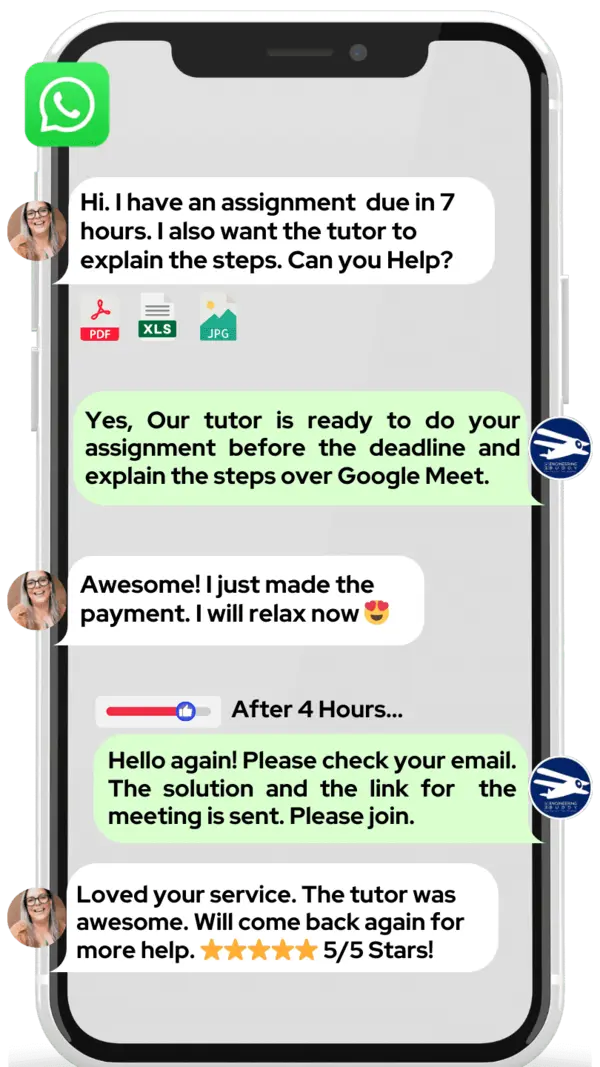
SACE Physics Tutor Online
My Physics Buddy (MPB) provides 1:1 online tutoring & homework help in Physics and related subjects, including SACE Physics for Stage 1 and Stage 2 students. SACE Physics is both a rigorous academic course and an externally examined subject — which means what you learn in class and how you perform under exam conditions both matter equally. If you have been searching for a “SACE Physics tutor near me” who understands the South Australian curriculum, MPB connects you with tutors who know the SACE Physics course, its assessment design, and what the external exam rewards — built to help you aim for the score your university goals require.
- 1:1 live online sessions — no group classes, no pre-recorded content
- Tutors matched specifically to SACE Physics Stage 1 and Stage 2 content and assessment
- Flexible scheduling across Australian time zones and beyond
- Structured learning plan built after your diagnostic session
- Ethical homework, investigation, and assignment guidance — we explain the physics, you produce the work
- External exam preparation integrated into every stage of the learning plan
Who This SACE Physics Tutoring Is For
SACE Physics is taken by Years 11 and 12 students in South Australia and in Australian schools that follow the SACE curriculum. It is also studied by some international students in schools that offer SACE as their senior secondary qualification. This tutoring is designed for:
- Year 11 students in SACE Physics Stage 1 who want to build strong foundations before Stage 2
- Year 12 students in SACE Physics Stage 2 preparing for both school-assessed components and the external examination
- Students targeting specific ATAR score ranges that require strong Physics performance
- Students who find the conceptual or mathematical demands of SACE Physics difficult and need structured, personalised support
- Students who need ethical guidance on investigations, research tasks, and assignments without academic shortcuts
- Parents of SACE students in South Australia and other Australian states looking for accountable, expert academic support
- International students whose schools follow the SACE curriculum and who want support across time zones
Outcomes: What You’ll Be Able to Do in SACE Physics
SACE Physics assesses not just content knowledge but the ability to apply physics thinking — to analyse unfamiliar situations, evaluate experimental data, and construct well-reasoned written responses. The capabilities built through structured 1:1 tutoring are directly tied to what both the school-based and external assessments reward.
Solve multi-step quantitative problems across all SACE Physics topics — kinematics, forces, energy, fields, waves, and modern physics — with the accuracy and methodical working that external exam marking expects. Analyze experimental data, graphs, and physical scenarios using physics principles, correctly identifying what the evidence shows and what it does not. Explain physical concepts and phenomena in written responses with the precision SACE rubrics reward — not vague recall but structured physical reasoning. Apply physics models to unfamiliar contexts — the hallmark of high-scoring responses in SACE Physics, where questions are deliberately designed to test transferable understanding. Evaluate the reliability and validity of experimental methods, and construct conclusions that are supported by the evidence — skills directly assessed in the SACE investigations and external exam.
SACE Physics Stage 2 is both an academic course and an externally examined subject. Your tutor will treat both dimensions equally — building genuine conceptual understanding for the school-assessed components, and developing the exam technique and time management needed for the external examination. Neither is neglected.
What We Cover in SACE Physics (Syllabus / Topics)
SACE Physics is administered by the South Australian Certificate of Education authority. Always confirm the current subject outline and assessment design directly with the SACE Board of South Australia — Physics subject page, as content and assessment details may be updated. Tutors align directly to the current subject outline. The following reflects the typical content coverage at each stage.
Stage 1 Physics — Foundation Topics
- Linear motion: displacement, velocity, acceleration, equations of motion, distance-time and velocity-time graphs
- Forces and Newton’s laws: free body diagrams, net force, Newton’s first, second, and third laws
- Energy: work, kinetic energy, gravitational potential energy, conservation of energy, power
- Momentum: linear momentum, impulse, conservation of momentum in collisions
- Waves: wave properties, wave equation, reflection, refraction, diffraction, interference
- Electricity: electric current, resistance, Ohm’s law, series and parallel circuits, power in circuits
- Introduction to fields: gravitational and electric fields at a conceptual level
- Stage 1 investigation design and scientific method: fair test, variables, data collection and analysis
- SACE-style short answer and extended response question technique for Stage 1 assessments
Stage 2 Physics — Core Topics
- Motion and relativity: uniform and non-uniform motion, projectile motion, circular motion, special relativity introduction (time dilation, length contraction, mass-energy equivalence)
- Electricity and magnetism: electric fields, magnetic fields, electromagnetic induction, Faraday’s and Lenz’s laws, transformers
- Light and atoms: wave-particle duality, photoelectric effect, atomic spectra, de Broglie wavelength, Bohr model
- Vectors: vector addition, resolution of forces, equilibrium problems
- Oscillations and waves in depth: simple harmonic motion, resonance, standing waves, sound
- Gravity and satellites: gravitational fields, orbital mechanics, Kepler’s laws
- Stage 2 investigation: designing, conducting, and writing up a physics investigation to SACE standards
- Research project or other school-assessed component: structuring physics arguments for assessed written tasks
External Examination Preparation
- Exam format familiarisation: question types, mark allocation, time management across sections
- Short answer technique: concise, accurate, and well-organised responses that match what SACE markers reward
- Extended response technique: how to construct a multi-step argument, link equations to physical reasoning, and draw valid conclusions
- Data analysis questions: interpreting graphs, tables, and experimental results under exam conditions
- Common error patterns: misconceptions in each topic area that cost marks in the external exam
- Past paper and practice exam work: timed and untimed practice with detailed feedback on every response
- SACE performance standards: understanding what distinguishes an A grade response from a B or C in each question type
How My Physics Buddy Tutors Help You with SACE Physics (The Learning Loop)
Diagnose: The first session begins with a diagnostic. The tutor gives you a few SACE-style questions across different topic areas and asks you to work through them. This quickly reveals which content areas have gaps, whether your difficulty is conceptual or mathematical, and whether your written responses are structured in the way SACE markers expect — three distinct things that all need to be addressed differently.
Explain: The tutor does not just re-teach the lesson your teacher already gave. They explain the physical reasoning behind the result — why momentum is conserved in that collision, what Lenz’s law is actually telling you about the direction of the induced current, why the photoelectric effect cannot be explained by classical wave theory. Understanding the physical reasoning is what lets you answer questions about situations you have never seen before — which is exactly what SACE exam questions are designed to test.
Practice: You work through SACE-style questions live, with the tutor observing. This includes both quantitative problems with worked solutions and extended written responses. For written responses, the tutor helps you understand what a complete answer looks like — not just correct physics, but physics expressed in the structured way the SACE rubric rewards.
Feedback: Feedback is specific and SACE-aware. Not “your answer is incomplete” but “you have stated the correct principle but not connected it to the specific context of the question — SACE markers give credit for that connection explicitly, and here is how to include it.” Knowing why marks are awarded and lost is as important as knowing the physics.
Retest/Reinforce: Topics return in harder forms across sessions. A force diagram problem in one session reappears as a projectile with air resistance in the next, which reappears as a circular motion problem after that. The tutor tracks your progress and deliberately revisits topics in new contexts until the understanding is robust enough to handle exam questions you have never seen.
Plan: After each session the tutor updates your learning plan — more time on weak topic areas, advancement to exam-level difficulty in areas now solid. As your exam date approaches, the balance shifts progressively toward past paper practice and exam technique refinement.
Accountability: Between sessions the tutor may assign specific SACE-style practice questions, ask you to write out a response to an extended answer question, or suggest reviewing a specific concept from your subject outline. This between-session structure is what turns good sessions into real improvement over time.
All sessions run via Google Meet with a digital pen-pad or iPad+Pencil setup, so force diagrams, circuit diagrams, wave diagrams, and worked calculations are all visible and editable in real time. Before your first session, share your current topic area, any SACE assessments coming up, your exam date if known, and the specific areas where you already know you are struggling.
“SACE Physics aims to develop students who can apply their understanding to new and unfamiliar situations — students who think like physicists, not students who have memorised a formula sheet.”
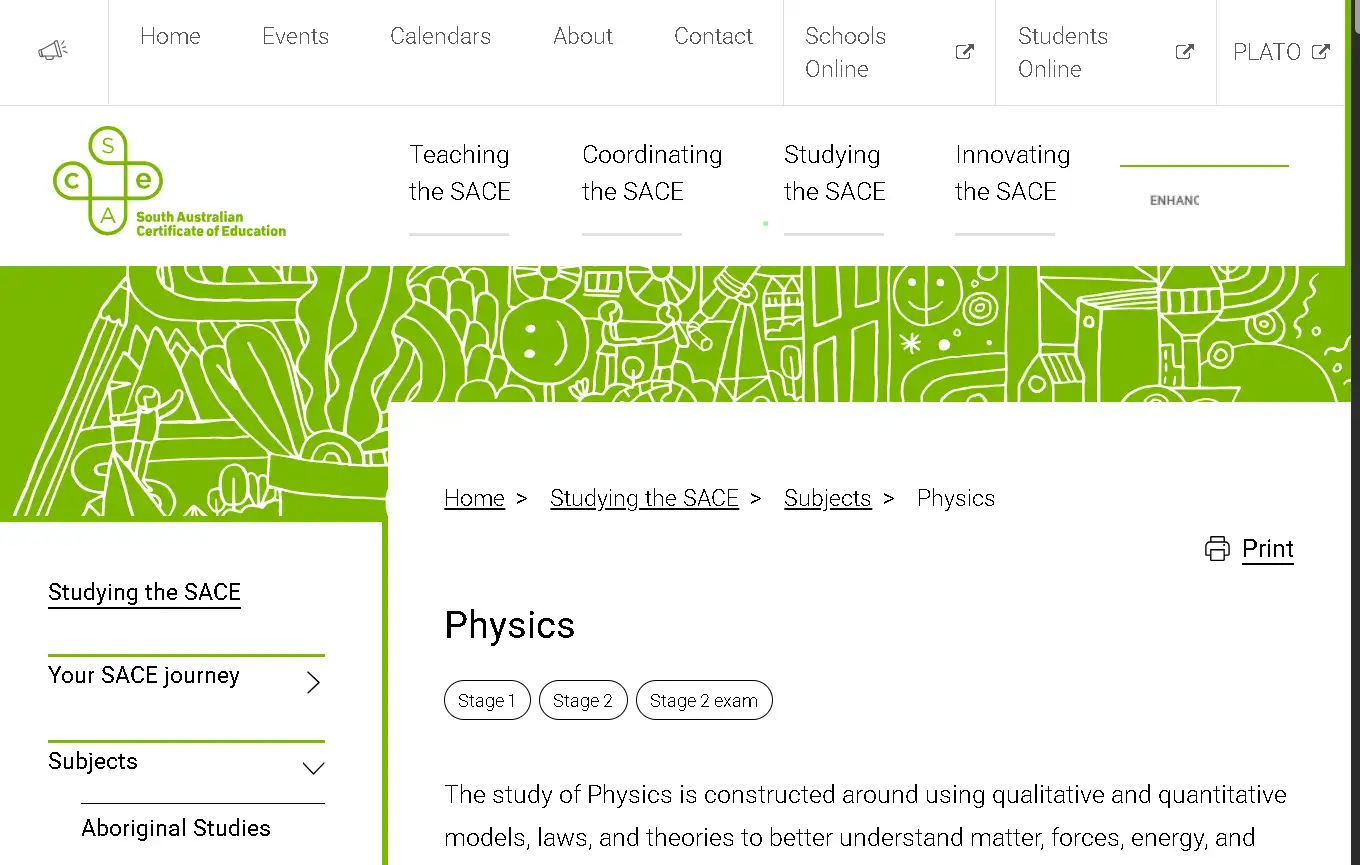
Explore the SACE Physics subject, including course structure, assessment methods, and key scientific concepts for Stage 1 and Stage 2 students in South Australia.
Tutor Match Criteria (How We Pick Your Tutor)
SACE Physics has a specific curriculum structure and assessment design that not every physics tutor is familiar with. Matching you to the right tutor matters.
SACE curriculum and exam familiarity: Your tutor will have direct familiarity with the SACE Physics subject outline, the stage-specific content, and the external examination format — including what the performance standards look like at each grade level and how SACE markers award marks for written responses.
Topic strengths and tools: Tutors cover all Stage 1 and Stage 2 content areas. They use Google Meet with a digital pen-pad or iPad+Pencil so all diagrams, worked solutions, and extended response drafts are visible and annotated in real time.
Time zone and availability: MPB serves students in South Australia and across Australian time zones, as well as international students following the SACE curriculum. Sessions can be scheduled to suit your school and study schedule, including evenings and weekends.
Learning style and pace: Some students need careful conceptual rebuilding from Stage 1 foundations. Others need targeted exam technique work in the final weeks before the external exam. The tutor adapts to exactly what you need at each stage of the year.
Goals: Whether you are aiming for an A grade, working toward a specific ATAR requirement, catching up after falling behind, or need support for a particular assessment task — the tutor shapes sessions around your specific goal.
Urgency and timeline: External exam in six weeks or just starting Stage 2 — the tutor builds a realistic plan that uses your available time as effectively as possible.
Study Plans (Pick One That Matches Your Goal)
MPB offers three broad plan types: a catch-up plan (typically 1–2 weeks) for students behind on specific topics before a school assessment or exam, an exam prep plan (typically 4–8 weeks) for structured preparation covering all Stage 2 content and external exam technique before the November examination, and a weekly support plan for consistent help throughout Stage 1 or Stage 2 across the full school year. After the first diagnostic session, your tutor builds the specific session-by-session plan based on your actual gaps, your upcoming assessment dates, and how much time you can commit each week.
Pricing Guide
SACE Physics tutoring at MPB starts at USD 20 per hour and typically ranges up to USD 40 per hour depending on the tutor’s experience level, your stage (Stage 1 or Stage 2), the intensity of exam preparation required, and session scheduling. All pricing is confirmed before any session begins — no hidden fees.
WhatsApp for a quick quote — share your stage, the topics you need help with, and your exam timeline.
FAQ
Is SACE Physics hard?
SACE Physics is considered one of the more demanding senior secondary subjects in South Australia. The Stage 2 external exam in particular tests conceptual reasoning and the ability to apply physics to unfamiliar situations — not just recall. Most students who struggle do so because content gaps from Stage 1 carry into Stage 2, or because their written response technique does not match what SACE markers reward. Both are directly addressable through targeted 1:1 tutoring.
How many sessions are needed?
A student catching up on a specific Stage 2 topic before a school assessment typically needs 4–8 focused sessions. A student working through the full year with weekly support might have 20–30 sessions across Stage 2. A student doing an intensive exam prep block in the 6–8 weeks before the external exam typically needs 10–16 sessions. Your tutor will give a realistic estimate after the diagnostic — based on what they actually observe, not a generic package.
Can MPB help with SACE Physics investigations and assignment tasks?
Yes — as guidance and explanation. Investigations are a significant component of SACE Physics school-based assessment, and tutors can help you understand the scientific method, how to design a valid investigation, how to analyse your data, and how to structure your report to meet SACE standards. The investigation you submit is always your own work. MPB does not design, conduct, or write investigations for students. This approach is consistent with SACE academic integrity requirements and the policies of every school we support.
Will the tutor cover the exact SACE subject outline?
Yes. Tutors align directly to the current SACE Physics subject outline for Stage 1 and Stage 2. Share your current topic, any upcoming assessment tasks, and the stage you are in before the first session. Exact external exam questions are not known in advance — the tutor prepares you for the format, style, and reasoning demands of SACE questions so you are ready for whatever the exam presents. Always check the SACE Board Physics page for the most current subject outline and assessment information.
What happens in the first session?
The first session starts with a diagnostic — a few SACE-style questions and a conversation about which topics feel clear and which do not. The tutor also looks at how you structure written responses, because technique matters alongside content in SACE Physics. The tutor then teaches a focused concept live. Before attending, share your current stage, your topic or topics, any upcoming assessment dates, and the areas you already know are weak.
Is online SACE Physics tutoring as effective as in-person?
For SACE Physics, online sessions via Google Meet with a digital pen-pad or iPad+Pencil are fully effective. Force diagrams, circuit diagrams, wave diagrams, velocity-time graphs, and worked calculations can all be drawn and annotated in real time on a shared digital whiteboard. Students in South Australia and across Australian time zones consistently find live online sessions as productive as in-person, with the added benefit of no travel time and flexible scheduling around school commitments.
Can MPB help with the SACE external examination specifically?
Yes. External examination preparation is built into the tutoring plan from the start for Stage 2 students, and becomes the primary focus in the final 6–8 weeks before the November exam. This includes past paper practice, extended response technique, time management strategies, and systematic coverage of every topic the exam can draw from. The tutor helps you understand not just the physics but the specific way SACE questions are structured and how marks are allocated.
What is the difference between Stage 1 and Stage 2 SACE Physics?
Stage 1 Physics is taken in Year 11 and is school-assessed — there is no external examination. It covers foundational topics and introduces students to physics investigation methodology. Stage 2 Physics is taken in Year 12, carries ATAR weight, and includes an external examination administered by the SACE Board in November. Stage 2 builds directly on Stage 1 content and introduces more advanced topics including special relativity, electromagnetic induction, and wave-particle duality. Strong Stage 1 foundations make Stage 2 significantly more manageable.
Does MPB cover the SACE Physics investigation component?
Yes. The investigation is a school-assessed component in both Stage 1 and Stage 2. Tutors can help you understand what a well-designed physics investigation looks like, how to identify a testable hypothesis, how to control variables, how to analyse and present data, and how to write conclusions that accurately reflect your evidence. All of this is guidance — the planning, conducting, and writing of the investigation is always the student’s own work.
How does SACE Physics compare to other Australian senior physics exams?
SACE Physics is specific to South Australia. Students from other Australian states sit different senior physics examinations — HSC Physics in New South Wales, VCE Physics in Victoria, and QCE Physics in Queensland, among others. MPB has dedicated pages for HSC Physics and VCE Physics. If you are unsure which curriculum applies to your school, check with your teacher or school administration.
Can MPB also help with other physics subjects beyond SACE?
Yes. Students who want to extend their physics understanding beyond the SACE curriculum, explore university-level physics, or prepare for university physics courses can find support through the main Physics page. Specific topics covered in SACE Physics — such as waves, electromagnetism, and modern physics — also have dedicated MPB pages including Waves and Optics, Electromagnetism, and Modern Physics.
Our services aim to provide personalised academic guidance, helping students understand concepts and improve skills. Materials and guidance provided are for reference and learning purposes only. Misusing them for academic dishonesty or violations of SACE integrity policies is strongly discouraged.
Trust & Quality at My Physics Buddy
SACE Physics tutors at MPB are vetted for familiarity with the South Australian curriculum and its specific assessment design — not just general physics knowledge. Every tutor completes a subject-specific assessment before being listed. They demonstrate competency across the Stage 1 and Stage 2 content areas and show that they understand how SACE assessments are marked and what performance at each grade level actually looks like. Student feedback after each session feeds directly into ongoing tutor quality reviews.
MPB operates on one clear principle: we guide, you produce the work. For SACE investigations and assignment tasks, tutors help you understand the science, the methodology, and the structure — the investigation and writing are always yours. This approach is consistent with the academic integrity requirements of the SACE Board and every school that delivers SACE Physics. According to the SACE Board’s academic integrity guidelines, students are expected to submit work that genuinely represents their own understanding — and MPB’s tutoring is built specifically to develop that understanding.
MPB is a Physics-focused online tutoring platform serving students across Australia and internationally. Students in other Australian states can find dedicated support through HSC Physics and VCE Physics. Students looking for broader physics support at any level can explore the main Physics page, and those preparing for international qualifications can find support through IB Physics HL/SL and A/AS Level Physics (9702).
“The best preparation for any physics examination is genuine understanding — not practising answers, but practising thinking. Students who reason well about physics can handle questions they have never seen before.”
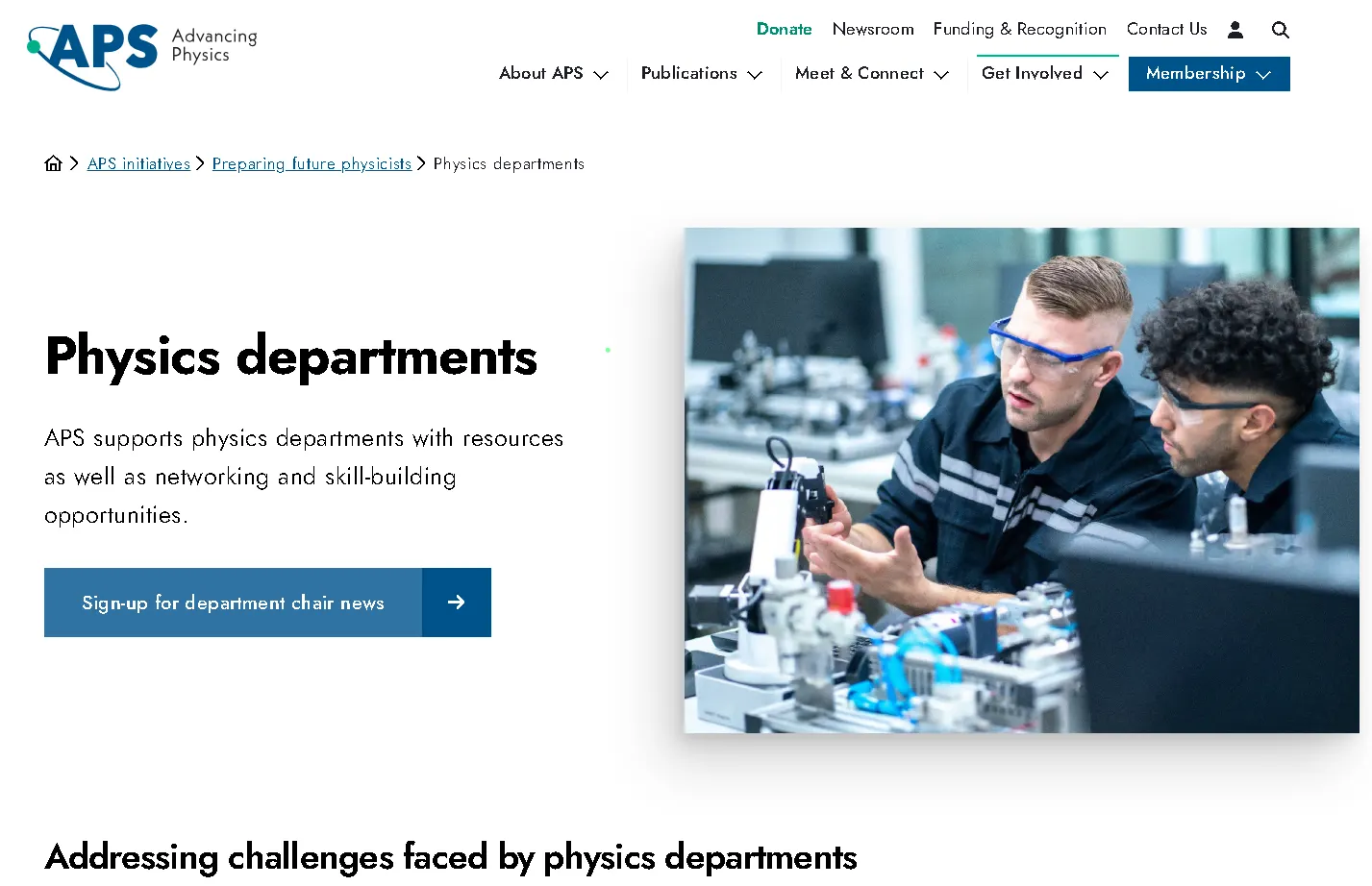
Explore how APS supports physics departments with programs, resources, and initiatives to enhance teaching, diversity, and student success.
Content reviewed by a SACE Physics tutor at My Physics Buddy.
Additional References and Resources
The following resources are directly useful for SACE Physics students and their parents:
- SACE Board of South Australia — Physics Subject Page: The official source for the current SACE Physics subject outline, assessment design, performance standards, and past examination papers. Every SACE Physics student should be familiar with this page.
- SACE Board — Academic Integrity Guidelines: The SACE Board’s official guidance on academic integrity for students, relevant to investigations, assignments, and all school-assessed components.
- Australian Curriculum — Senior Secondary Physics: Context for how SACE Physics sits within the broader Australian senior secondary science curriculum framework.
- American Physical Society — Physics Education Programs: Internationally recognised guidance on physics education — useful for understanding the broader context of what physics education at senior secondary level aims to achieve.
- Institute of Physics — Teaching Resources: Teaching and learning resources for physics at senior secondary and early undergraduate level, used widely in English-speaking countries including Australia.
- ABC Education — Australian Secondary Science Resources: Publicly funded Australian educational resource providing curriculum-aligned science content for senior secondary students.
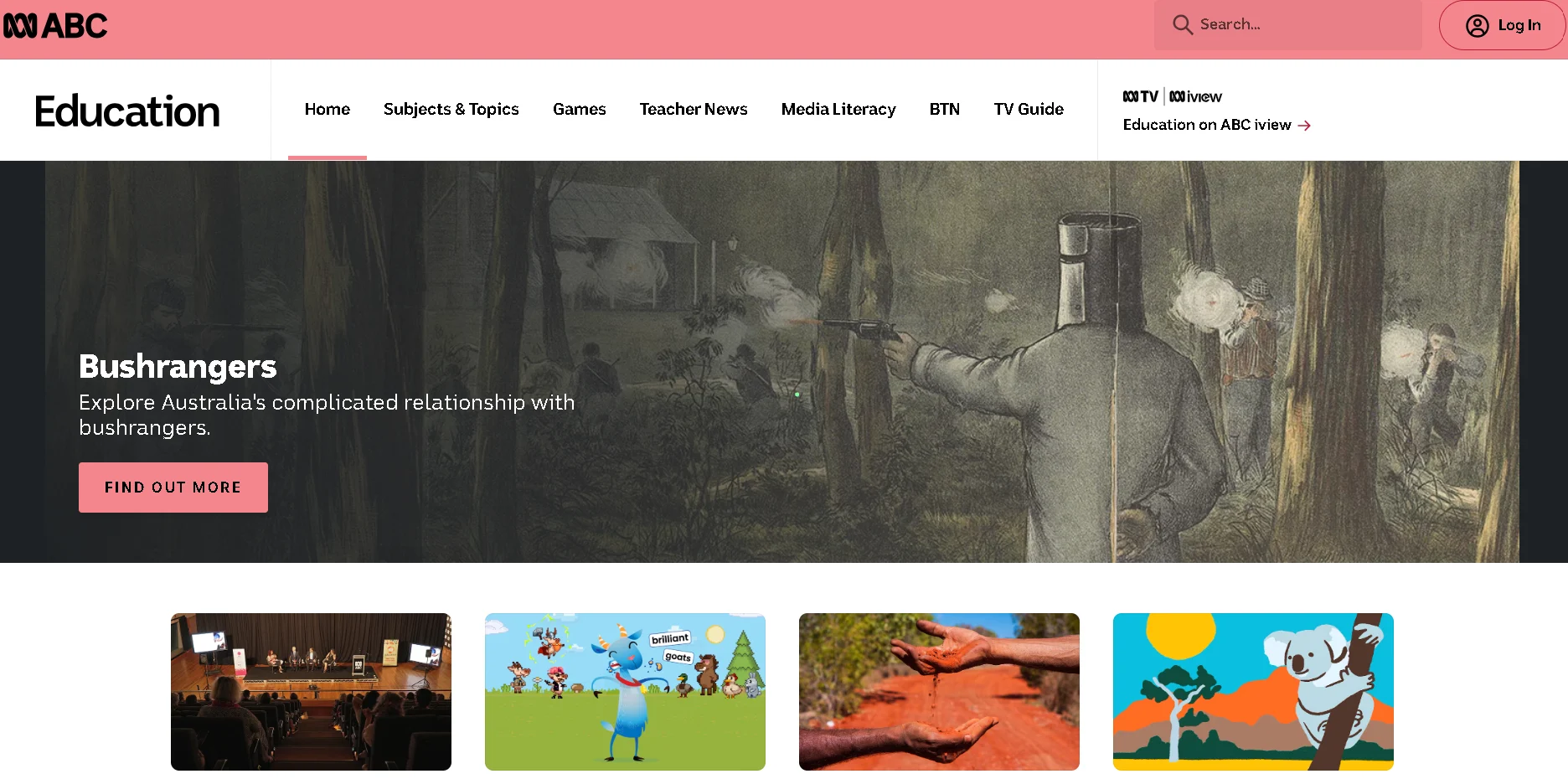
Discover ABC Education’s free classroom resources, including lesson plans, videos, and interactive content for students and teachers across Australia.
Next Steps
Tell us your current stage — Stage 1 or Stage 2 — the topics you need to focus on, and any upcoming assessment or exam dates. Share your availability and time zone. MPB will match you to a tutor who knows SACE Physics, confirm the fit, and most students have their first session booked within 24–48 hours.

