Radiation Physics Tutor Online
My Physics Buddy (MPB) provides 1:1 online tutoring & homework help in Physics and related subjects, including Radiation Physics at the undergraduate, Masters, and PhD level. Radiation Physics is a discipline where the stakes of genuine understanding are unusually high — it underpins medical imaging, radiotherapy, nuclear energy, radiation safety, and environmental monitoring. The subject demands simultaneous fluency in atomic and nuclear physics, interaction mechanisms, dosimetry mathematics, and detection instrumentation, and most students find that standard lectures leave too many physical connections unexplained. Whether you are an undergraduate encountering radioactive decay and interaction cross-sections for the first time, a Masters student working through dosimetry formalisms and detector physics, or a PhD candidate in a radiation-related research area, MPB connects you with a Radiation Physics tutor matched to your exact course content and level. If you have been looking for a “Radiation Physics tutor near me” with genuine subject depth, live online sessions with MPB give you access wherever you are.
Our sessions are designed to help you aim for stronger grades, sharper problem-solving ability, and the conceptual clarity that this technically demanding and professionally important discipline requires.
- 1:1 live online sessions — no group classes, no pre-recorded content
- Tutors matched specifically to Radiation Physics curricula and your academic level
- Covers undergraduate through to PhD-level Radiation Physics
- Flexible scheduling across US, UK, Canada, Australia, and Gulf time zones
- Structured learning plan built after your diagnostic session
- Ethical assignment, lab report, and dissertation guidance — we explain the physics, you produce the work
Who This Radiation Physics Tutoring Is For
Radiation Physics appears across a wide range of academic programmes — from physics and engineering degrees with a nuclear or health physics track, to specialist postgraduate programmes in medical physics, radiation protection, nuclear engineering, and environmental science. This tutoring is designed for:
- Undergraduate students taking Radiation Physics, Nuclear Physics, or Health Physics as a module within a Physics, Engineering, or Biomedical Science degree
- Pre-medical and health sciences students whose programme includes a radiation science or imaging physics component
- Masters-level students in Medical Physics, Health Physics, Radiation Protection, Nuclear Engineering, or Environmental Physics
- PhD students in radiation-related research areas — radiation dosimetry, detector development, nuclear medicine, radiobiology — needing conceptual support or problem-solving guidance
- Students in the US, UK, Canada, Australia, and Gulf preparing for professional or certification examinations related to radiation science (format and requirements vary by country and certifying body)
- Students needing ethical assignment guidance, lab report support, or dissertation-level writing structure without academic shortcuts
- Parents of undergraduate students in radiation-related programmes looking for accountable, expert academic support
Outcomes: What You’ll Be Able to Do in Radiation Physics
Radiation Physics asks you to reason precisely about invisible phenomena — to track energy deposition, particle interactions, and field behaviour through mathematical models that connect directly to measurable quantities. The capabilities built through structured 1:1 tutoring are observable and tied directly to what your programme and professional practice both demand.
Solve quantitative problems in radioactive decay, radiation interaction coefficients, dosimetry calculations, and detector response — with the mathematical rigour your course requires. Analyze the physical mechanisms by which different radiation types interact with matter, correctly identifying which interaction dominates at a given energy and in a given material, and what the dosimetric consequences are. Model radiation fields, dose distributions, and attenuation behaviour using the appropriate formalisms — from the Bateman equations for decay chains to the mass attenuation coefficients governing photon transport. Explain the physics of radiation detection instruments — ionisation chambers, Geiger-Müller tubes, scintillators, semiconductor detectors — connecting their operating principles to the underlying radiation interactions they exploit. Apply radiation protection principles correctly, connecting ALARA, dose limits, and shielding calculations to the physical quantities and regulatory frameworks they are built on. Write well-structured lab reports, data analyses, and research sections that demonstrate physical reasoning with the precision this subject demands.
What We Cover in Radiation Physics (Syllabus / Topics)
Radiation Physics syllabi vary significantly between institutions and programmes. Tutors at MPB align directly to your specific course materials. The following tracks reflect what is typically covered at each academic level — always confirm your current syllabus with your institution.
Radiation Physics draws on atomic physics, nuclear physics, quantum mechanics, and electromagnetic theory. Gaps in any of these foundations almost always surface when students encounter interaction cross-sections or dosimetry formalisms. Your tutor identifies those gaps in the diagnostic and addresses them directly — because building on an unstable foundation is what makes Radiation Physics problems stop making sense.
Undergraduate Level
- Atomic and nuclear structure: review of atomic models, nuclear constituents, binding energy, nuclide chart
- Radioactive decay: alpha, beta-minus, beta-plus, electron capture, gamma emission — mechanisms and kinematics
- Decay law: activity, half-life, mean life, decay constant — quantitative problems and decay chain calculations
- Interaction of charged particles with matter: stopping power, Bragg peak, range, Bethe-Bloch formula (introductory)
- Interaction of photons with matter: photoelectric effect, Compton scattering, pair production — cross-sections, attenuation coefficients, HVL and TVL
- Interaction of neutrons with matter: elastic and inelastic scattering, neutron capture, fission (introductory)
- Radiation dosimetry fundamentals: exposure, absorbed dose, kerma, equivalent dose, effective dose — units and relationships
- Radiation detection principles: ionisation chambers, proportional counters, Geiger-Müller detectors — operating regions and response
- Scintillation detectors: organic and inorganic scintillators, photomultiplier tubes, energy resolution
- Radiation protection fundamentals: ALARA principle, time-distance-shielding, dose limits, regulatory framework overview (varies by country)
- Basic shielding calculations: photon and neutron shielding, buildup factors
Advanced Undergraduate and Masters Level
- Advanced dosimetry: cavity theory (Bragg-Gray and Spencer-Attix), kerma and dose in different media, TLD and film dosimetry
- Monte Carlo methods in radiation transport: principles, variance reduction, MCNP and EGS code families (conceptual and application level)
- Semiconductor radiation detectors: HPGe, Si detectors, energy resolution, charge collection
- Neutron detection: detection reactions, thermal and fast neutron detectors, activation foil methods
- Spectrometry: gamma-ray spectrometry with HPGe, peak analysis, efficiency calibration
- Internal dosimetry: biokinetic models, committed effective dose, ICRP methodology
- Radioactive decay chains: Bateman equations, secular and transient equilibrium
- Radiation biology: cell survival curves, LET, RBE, stochastic and deterministic effects
- Nuclear reactor physics: fission chain reaction, four-factor formula, criticality (introductory)
- Environmental and health physics: radionuclide transport in the environment, occupational and public dose assessment
- Radiation safety programme management: source control, contamination monitoring, emergency procedures
PhD and Research Level
- Advanced radiation transport theory: Boltzmann transport equation, deterministic and stochastic solution methods
- Advanced Monte Carlo simulation: geometry modelling, variance reduction techniques, uncertainty quantification
- Novel detector development: novel scintillators, solid-state detectors, real-time dosimetry systems
- Microdosimetry and nanodosimetry: energy deposition at the cellular and sub-cellular scale
- Radiation effects in materials: displacement damage, defect formation, applications in nuclear materials science
- Research methodology: experimental design, measurement uncertainty, source characterisation
- Thesis and dissertation guidance: structuring radiation physics arguments in research writing
- Broad academic and career planning in medical physics, health physics, nuclear engineering, and radiation research
How My Physics Buddy Tutors Help You with Radiation Physics (The Learning Loop)
Diagnose: The first session begins with a diagnostic. The tutor asks you to work through a few representative problems — a decay chain calculation, an attenuation problem, a dosimetry question — and explain your reasoning as you go. This quickly reveals whether gaps are in the nuclear and atomic physics foundations, the interaction physics, the mathematical formalisms, or the connections between physical quantities and their units, which trip up many students in this subject.
Explain: The tutor does not re-read your lecture slides. They explain the physical mechanism — why the photoelectric effect cross-section scales so steeply with atomic number, what it physically means for a radiation field to be in charged particle equilibrium, why cavity theory requires the conditions it does, what the Bragg peak tells you about charged particle energy loss in tissue. The physical picture is what makes the mathematics coherent rather than arbitrary.
Practice: You attempt problems live, with the tutor observing your process. In Radiation Physics this means decay calculations, interaction coefficient problems, dosimetry formalisms, shielding calculations, and extended written responses connecting physics to practical or clinical context. The tutor watches where reasoning breaks down and intervenes at that precise point.
Feedback: Feedback is specific. Not “check your units” but “you have used the mass attenuation coefficient where the linear attenuation coefficient is needed here — this is a common switch and here is a reliable way to keep them straight.” At Masters and PhD level, feedback extends to the rigour of physical argumentation and the precision of uncertainty analysis in written work.
Retest/Reinforce: Concepts return in harder forms across sessions. Simple exponential attenuation at undergraduate level becomes buildup-corrected shielding calculations at Masters level, which connects to Monte Carlo transport simulation at PhD level. The tutor tracks this progression and builds on it deliberately so each new topic deepens rather than replaces what came before.
Plan: After each session the tutor updates your learning plan — more time on areas still weak, progression to harder problem types in areas now solid. No session wastes time on already-mastered ground.
Accountability: Between sessions the tutor may assign specific practice problems, suggest sections of your textbook to work through, or ask you to draft part of a lab report or problem set attempt for feedback. This structured between-session work is what makes the tutoring compound rather than reset each time.
All sessions run via Google Meet with a digital pen-pad or iPad+Pencil setup, so decay schemes, interaction diagrams, dose distribution plots, and detector response curves are all visible, legible, and editable in real time. Before your first session, share your course syllabus or module guide, any topics you already know are weak, upcoming exam or assignment deadlines, and your current level so the tutor can shape the diagnostic immediately.
“Understanding how radiation interacts with matter is not just an academic exercise — it is the physical foundation on which safe and effective use of radiation in medicine, industry, and research depends.”
International Atomic Energy Agency (IAEA) — Radiation Physics Educational Resources
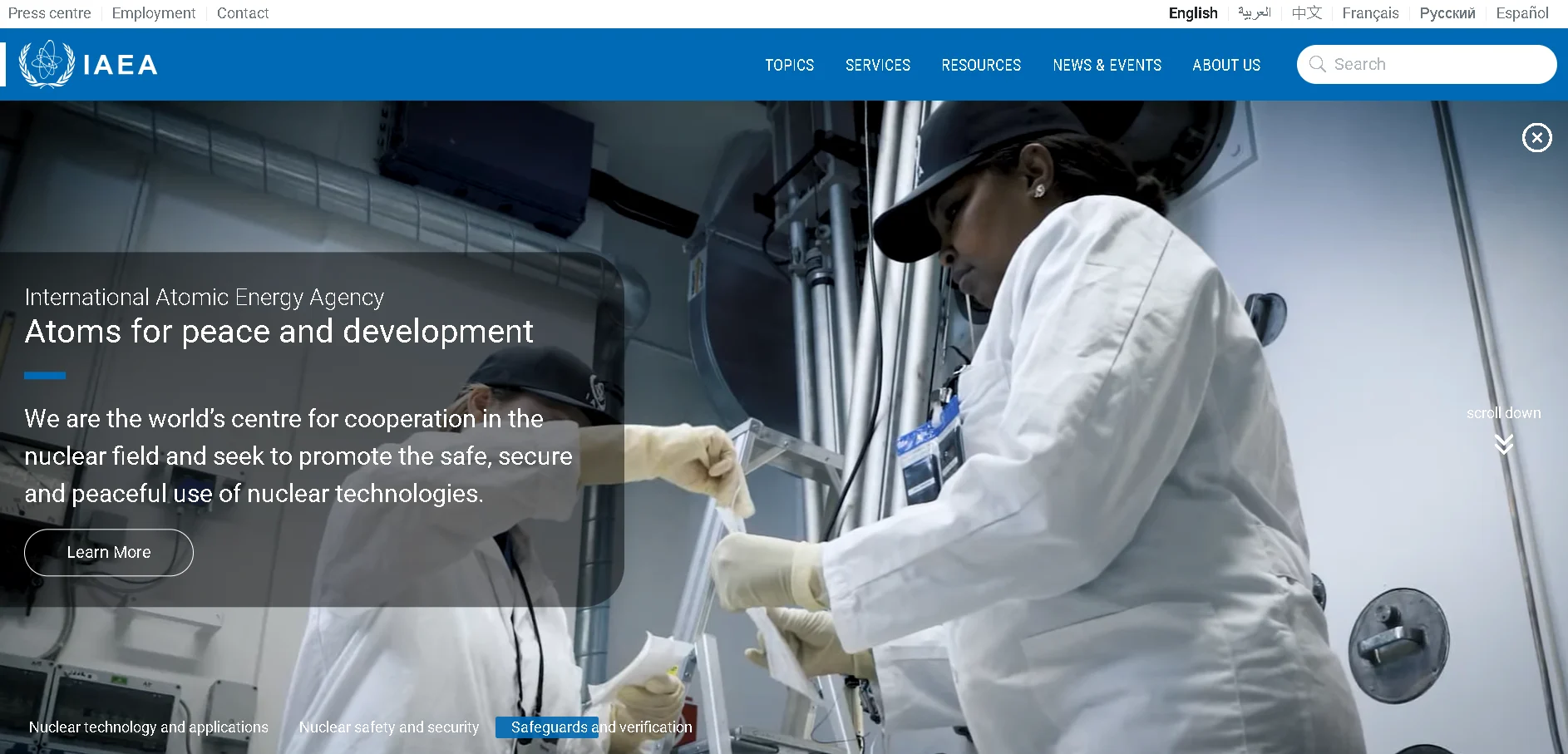
Explore the IAEA’s role in promoting safe, secure, and peaceful use of nuclear technology worldwide.
Tutor Match Criteria (How We Pick Your Tutor)
Radiation Physics spans nuclear and atomic physics, detector technology, dosimetry, and radiation protection — finding the right tutor requires matching on subject area and level, not just on “Physics” broadly.
Level and course fit: A tutor supporting an undergraduate working through basic radioactive decay and photon attenuation needs different depth and emphasis than one supporting a Masters student in advanced dosimetry or a PhD student in Monte Carlo radiation transport. MPB matches by level and specific content area.
Topic strengths and tools: Tutors are assessed on their specific competencies in Radiation Physics before being recommended — interaction mechanisms, dosimetry formalisms, detector physics, radiation protection. Sessions use Google Meet with a digital pen-pad or iPad+Pencil so all decay schemes, interaction diagrams, and calculations are fully visible in real time.
Time zone and availability: MPB serves students across the US, UK, Canada, Australia, and Gulf. Sessions are available across all major time zones including evenings and weekends.
Learning style and pace: Some students need careful conceptual build-up from atomic and nuclear foundations. Others need fast, targeted problem-solving drill before an exam or assessment. The tutor adapts to what you need, not a preset pace.
Language and communication preferences: Tutors communicate clearly in English. Students who prefer more visual explanation approaches or more explicit step-by-step working can specify this at the matching stage.
Goals: Exam preparation, assignment guidance, lab report support, professional exam readiness, or research-level conceptual clarity — the tutor shapes sessions around what matters most right now.
Urgency and timeline: Assessment next week or building systematic understanding across a full semester — the tutor builds a realistic plan that fits both the time available and the depth required.
Study Plans (Pick One That Matches Your Goal)
MPB offers three broad plan types: a catch-up plan (typically 1–2 weeks) for students behind on specific topics — for example, needing to consolidate dosimetry concepts before the course moves to detector physics — an exam prep plan (typically 4–8 weeks) for structured pre-exam coverage across all assessed material, and a weekly support plan for consistent help throughout a semester, academic year, or research period. After the first diagnostic session, your tutor builds the specific session-by-session plan based on your actual gaps, your timeline, and your available weekly commitment.
Pricing Guide
Radiation Physics tutoring at MPB starts at USD 20 per hour and typically ranges up to USD 40 per hour for standard undergraduate sessions. Advanced Masters and PhD-level tutoring — which requires specialist expertise in dosimetry theory, Monte Carlo methods, detector physics, or research-level topics — can go up to USD 100 per hour depending on topic complexity and tutor profile.
Pricing reflects the level and complexity of the material, tutor experience and availability, your timeline urgency, and whether sessions involve standard coursework or highly specialised research content. All pricing is confirmed before any session begins — no hidden fees.
WhatsApp for a quick quote — share your level, the specific Radiation Physics topics you need support with, and your timeline.
FAQ
Is Radiation Physics hard?
Radiation Physics is considered challenging because it demands simultaneous fluency in nuclear physics, quantum mechanics, electromagnetic theory, and quantitative problem solving — and connects all of these to practical applications where the numbers matter physically, not just mathematically. Most students who struggle do so because one or more of those foundations has gaps, or because the connections between physical mechanisms and dosimetric quantities were never made explicit. Targeted 1:1 tutoring addresses precisely that.
How many sessions are needed?
It depends on your level, your goals, and your starting state. An undergraduate catching up on interaction physics and dosimetry before an exam typically needs 6–10 focused sessions. A Masters student working through a full semester that includes advanced dosimetry, detector physics, and radiation biology might need 15–25 sessions. After the diagnostic your tutor will give a realistic, honest estimate based on what they observe — not a standard package.
Can MPB help with Radiation Physics assignments and lab reports?
Yes — as guided explanation and feedback. Tutors work through the underlying physics, demonstrate similar example problems, and give feedback on your attempts and drafts. For lab reports, guidance covers structure, data analysis method, uncertainty treatment, and how to connect measured quantities to physical interpretation correctly. The work you submit is always your own. MPB does not write or complete assignments for students. This approach is consistent with academic integrity standards across every institution and region we serve.
Will the tutor cover my exact course syllabus?
Yes. Tutors align directly to your specific course materials — your module guide, prescribed textbook, and learning outcomes. Share these before the first session and the tutor works from them. Exact exam questions are not known in advance, but building thorough understanding across your full syllabus is exactly what the sessions are structured to achieve.
What happens in the first session?
The first session starts with a short diagnostic — a few representative problems and a conversation about where you feel confident and where you do not. The tutor then teaches a focused concept live, so you leave the first session with something concrete. Before attending, share your course syllabus, known weak areas, and any upcoming deadlines so the tutor can make the session immediately relevant.
Is online Radiation Physics tutoring as effective as in-person?
For Radiation Physics, online sessions via Google Meet with a digital pen-pad or iPad+Pencil are fully effective. Decay schemes, interaction diagrams, dose distribution plots, detector response curves, and shielding calculations can all be drawn and worked through in real time on a shared digital whiteboard. Students across the US, UK, Canada, Australia, and Gulf consistently find live online sessions as productive as in-person, with the added benefit of flexible scheduling across time zones.
Can MPB support PhD students in Radiation Physics research?
Yes. MPB works with PhD students on conceptual clarity in specialist areas — advanced Monte Carlo transport, microdosimetry, novel detector systems, radiation effects in materials — as well as qualifying exam preparation and structured problem-solving in research-adjacent topics. Tutors can discuss dissertation chapters at a conceptual level and give feedback on how physical arguments are structured in research writing. They complement your supervisory relationship — they do not replace it, and they do not write your research.
Does MPB cover radiation protection and health physics topics?
Yes. Radiation protection fundamentals — ALARA, dose limits, shielding design, internal and external dosimetry — are covered as part of the Radiation Physics curriculum. Regulatory frameworks and specific numerical limits vary by country and certifying body. Tutors keep coverage accurate and appropriately high-level, and will direct you to the relevant national or international guidelines where specifics matter. The International Commission on Radiological Protection (ICRP) and the US Nuclear Regulatory Commission (NRC) are the primary authoritative sources for radiation protection standards internationally.
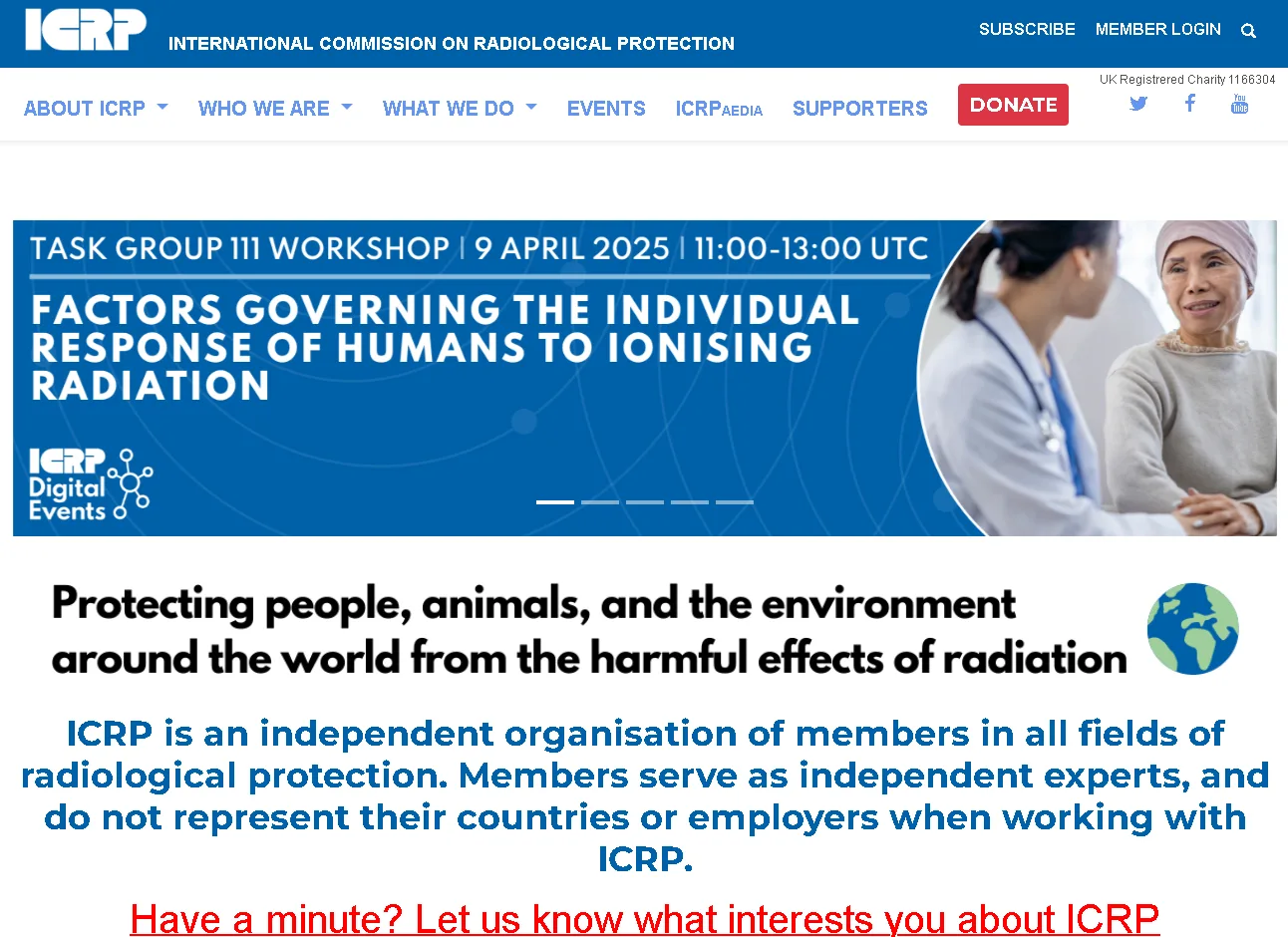
Explore ICRP’s recommendations and guidance on radiation protection for healthcare, environment, and public safety.
What textbooks do Radiation Physics tutors work with?
Tutors are familiar with standard texts including Attix’s Introduction to Radiological Physics and Radiation Dosimetry, Turner’s Atoms, Radiation, and Radiation Protection, Knoll’s Radiation Detection and Measurement, and Khan’s The Physics of Radiation Therapy, among others. Tutors work from whatever your institution prescribes — share it before your first session and the tutor aligns directly to it.
Can MPB help with Monte Carlo simulation in Radiation Physics?
Yes, at a conceptual and application level. Tutors can help you understand the physical basis of Monte Carlo radiation transport simulation, discuss the logic of geometry modelling and variance reduction, and work through interpretation of simulation outputs. If your course or research involves specific code packages such as MCNP, EGSnrc, or Geant4, share this at the matching stage so the right tutor is selected.
How does Radiation Physics connect to other subjects at MPB?
Radiation Physics draws directly on Nuclear Physics and Atomic Physics for its foundational interaction mechanisms. Students in clinical or biomedical programmes will find strong overlap with Medical Physics and Radiographic Physics. The quantum mechanical basis of radiation interactions connects to Quantum Mechanics, while students in environmental programmes may also find Environmental Physics relevant.
Can MPB support preparation for professional certification in radiation science?
MPB can support your preparation for radiation science professional examinations through structured concept review, problem-solving sessions, and targeted work on areas commonly assessed. Certification formats, eligibility requirements, and content specifications vary significantly by country and certifying body — always confirm the current requirements with the relevant organisation. MPB’s role is to build your conceptual and quantitative depth; we do not provide examination-specific materials from certifying bodies.
Our services aim to provide personalised academic guidance, helping students understand concepts and improve skills. Materials and guidance provided are for reference and learning purposes only. Misusing them for academic dishonesty or violations of integrity policies is strongly discouraged.
Trust & Quality at My Physics Buddy
Radiation Physics tutors at MPB are vetted specifically for this discipline — not assigned from a generalist pool. Every tutor completes a subject-specific assessment demonstrating competency in the areas they claim to teach before being listed. They are evaluated on technical depth, ability to connect interaction physics to dosimetric and detection concepts clearly, and familiarity with the assessment styles relevant to their declared level. Student feedback after each session feeds into ongoing quality reviews, and tutors with poor feedback are reviewed before being recommended again.
MPB operates on one principle: we guide, you produce the work. Whether you are an undergraduate asking for help understanding a shielding calculation, a Masters student working through a dosimetry lab report, or a PhD student structuring a methods section, the tutor explains, demonstrates, and gives feedback — they do not write your work. According to guidance from the National Academies of Sciences in How People Learn, deep understanding in quantitative, reasoning-intensive disciplines develops through active problem-solving with expert feedback — not passive receipt of worked solutions. That is the model MPB is built on.
MPB is a Physics-focused online tutoring platform serving students from undergraduate through PhD level across the US, UK, Canada, Australia, and Gulf. Radiation Physics is one of MPB’s specialist subject areas. Students working across related subjects can explore dedicated MPB pages for Nuclear Physics, Medical Physics, Atomic Physics, and Radiographic Physics. Students whose programmes include broader experimental or environmental physics components can also find support through Experimental Physics & Lab Skills and Environmental Physics. For foundational support, the main Physics page and Modern Physics are also available.
“Radiation physics education must develop not only technical competence but a deep appreciation of the physical principles that connect measurement, dosimetry, and protection — because errors in understanding here carry real consequences.”
Content reviewed by a Radiation Physics tutor at My Physics Buddy.
Additional References and Resources
The following credible external resources are useful for students and parents exploring Radiation Physics education at different levels:
- International Atomic Energy Agency (IAEA) — Radiation Physics Educational Resources: Freely available educational materials on radiation physics from the United Nations nuclear energy agency, used widely in academic programmes globally.
- International Commission on Radiological Protection (ICRP): The international authority on radiation protection principles — essential background for dosimetry, dose limits, and health physics components of any Radiation Physics curriculum.
- US Nuclear Regulatory Commission — Radiation Basics: Clear, authoritative introductory resource on radiation types, interaction mechanisms, and safety principles from the primary US regulatory body.
- American Association of Physicists in Medicine (AAPM) — Report 197: Academic programme recommendations for graduate degrees in Medical and Radiation Physics — the authoritative reference for what graduate-level Radiation Physics education should cover.
- World Health Organization — Ionising Radiation: Health Effects and Protective Measures: WHO’s authoritative overview of ionising radiation, its health effects, and the global framework for radiation protection.
- National Institute of Standards and Technology (NIST) — Radiation Physics Division: NIST’s radiation physics measurement standards, fundamental physical data, and reference databases — a key resource for dosimetry and detector calibration.
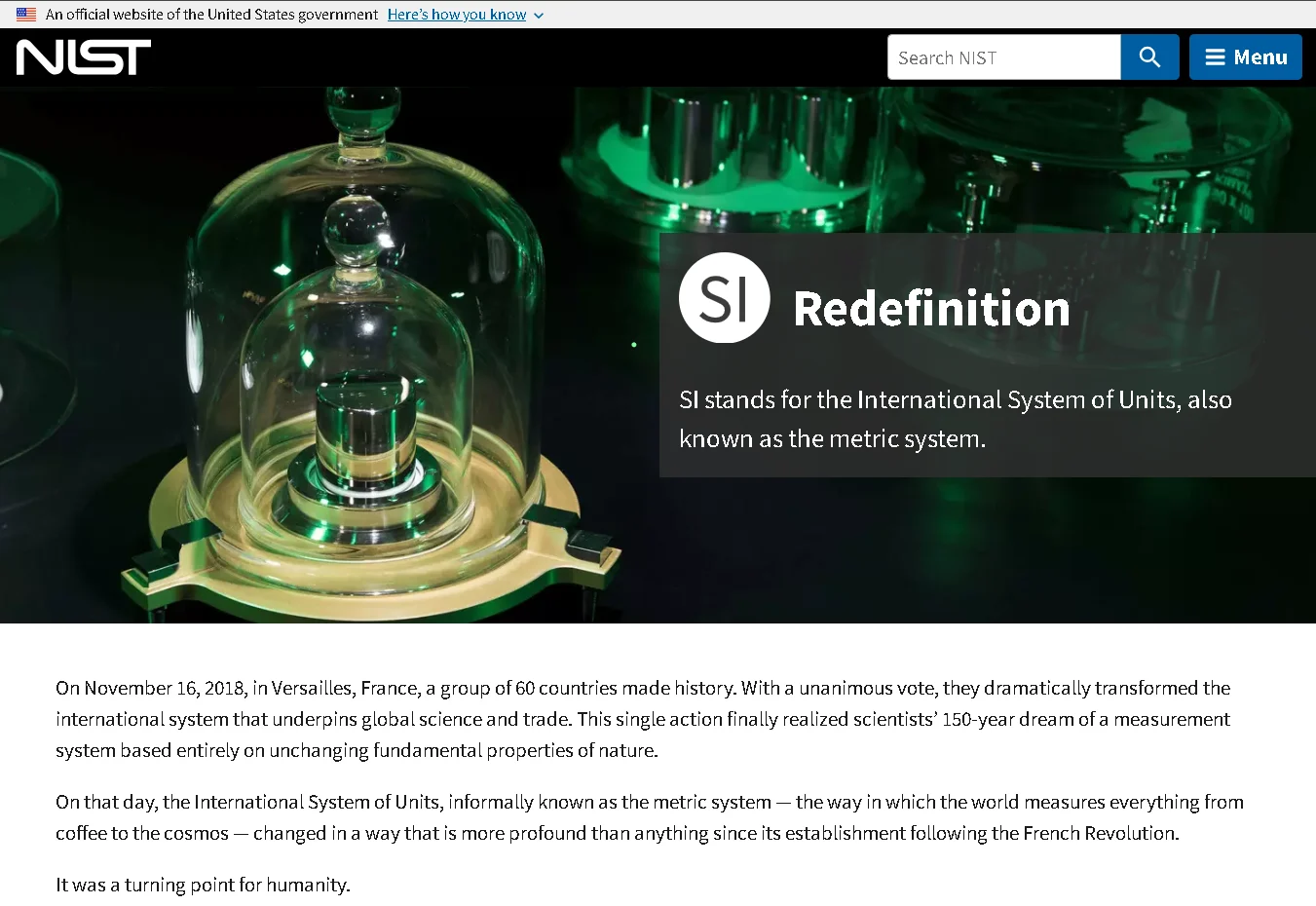
Learn how the SI redefinition transformed the metric system by basing all units on universal constants of nature.
Next Steps
Tell us your current level in Radiation Physics — undergraduate module, Masters programme, or PhD research area — along with the specific topics you need to focus on and any upcoming exam, assignment, or submission dates. Share your availability and time zone. MPB will match you to a tutor with the right depth in Radiation Physics, confirm the fit, and you can begin as soon as the next available slot. Most students are matched and have their first session booked within 24–48 hours.

