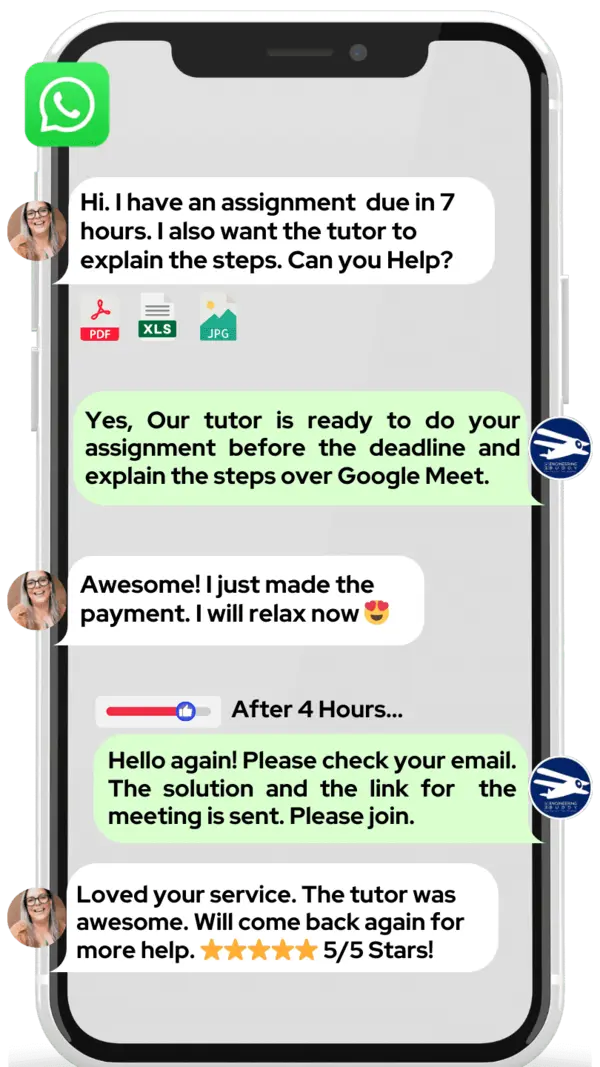
Hire Best AP Physics 1 Tutors Online


Testimonials



AP Physics 1 Tutor Online
My Physics Buddy (MPB) offers 1:1 online tutoring & homework help in Physics and related subjects. If you are searching for an AP Physics 1 tutor online — or even a reliable “AP Physics 1 tutor near me” — MPB connects you with subject-matched tutors who know exactly what the exam demands. Our sessions are built for early college and high school students preparing for AP Physics 1, as well as parents who want structured, accountable support for their child. Every session is live, personal, and paced to your level.
Our goal is to help you aim for a strong AP score by building real conceptual understanding — not just test tricks.
- 1:1 live sessions — no group classes, no pre-recorded videos
- Tutors matched to AP Physics 1 syllabus and exam style
- Flexible time zones covering the US, UK, Canada, Australia, and Gulf
- Structured learning plan built after your diagnostic session
- Ethical homework and assignment guidance — we explain, you write
Who This AP Physics 1 Tutoring Is For
AP Physics 1: Algebra-Based is taken by high school students across the US and internationally. It is also a subject many early college students revisit for credit or placement. This tutoring is designed for:
- High school students in the US enrolled in an AP Physics 1 course aiming to score a 3, 4, or 5
- Students in the UK, Canada, Australia, and Gulf who are taking an equivalent algebra-based introductory physics course
- Students who find conceptual multiple-choice and free-response questions harder than formula recall
- Parents looking for an accountable, expert-guided study plan for their child ahead of the May exam
- Students who need honest, structured homework and assignment guidance without academic shortcuts
- Students retaking the exam or catching up after a slow start to the school year
Outcomes: What You’ll Be Able to Do in AP Physics 1
By working through a structured AP Physics 1 tutoring plan, you can expect to build the skills the exam actually tests. These are not vague promises — they are observable, practicable capabilities.
Solve multi-step algebra-based problems in kinematics, dynamics, and energy conservation without relying on formula sheets alone. Analyze forces and motion diagrams to correctly set up Newton’s second law in both one and two dimensions. Explain physical phenomena in written free-response answers using precise, examinable language — a skill the AP rubric rewards directly. Apply energy and momentum principles to systems, collisions, and rotational scenarios with confidence. Interpret graphs, data tables, and experimental setups — the kind of evidence-based reasoning that runs through both the multiple-choice and free-response sections of the exam.
What We Cover in AP Physics 1 (Syllabus / Topics)
The AP Physics 1 exam is administered by the College Board. Exact content weightings and question formats can vary by exam year — always check the College Board AP Physics 1 official course page for the most current course and exam description.
That said, MPB tutors cover all core domains tested. Our typical topic coverage includes:
Unit 1 – Kinematics
- Displacement, velocity, acceleration in 1D and 2D
- Uniform and non-uniform motion
- Interpreting position-time and velocity-time graphs
- Projectile motion problems
- Relative motion and frame of reference
Unit 2 – Forces and Newton’s Laws
- Free body diagrams and net force
- Newton’s first, second, and third laws — conceptual and algebraic
- Friction, tension, normal force problems
- Inclined planes and connected systems
- Common AP exam question types: ranking tasks, system analysis
Unit 3 – Work, Energy, and Power
- Work-energy theorem
- Conservation of mechanical energy
- Potential and kinetic energy in systems
- Power and efficiency
Unit 4 – Momentum and Impulse
- Linear momentum and impulse-momentum theorem
- Conservation of momentum in collisions (elastic, inelastic)
- Center of mass motion
- Impulse from force-time graphs
Unit 5 – Rotation and Circular Motion
- Uniform circular motion and centripetal force
- Torque and rotational equilibrium
- Rotational inertia and angular momentum
- Conservation of angular momentum
Unit 6 – Simple Harmonic Motion, Waves, and Sound
- Spring-mass systems and pendulums
- Wave properties: frequency, wavelength, amplitude, speed
- Standing waves on strings and in columns
- Sound and interference patterns
Unit 7 – Electric Charge, Force, and Fields (Algebra-Based)
- Coulomb’s law and electric force
- Electric field concept and field lines
- AP-style conceptual and quantitative questions
Unit 8 – DC Circuits (Algebra-Based)
- Ohm’s law and resistance
- Series and parallel circuits
- Power dissipation and energy in circuits
- Kirchhoff’s rules at an introductory level
Note on exam format: The AP Physics 1 exam includes multiple-choice questions (some with multiple correct answers) and free-response questions. Exact question counts, point allocations, and section timing vary by exam year. MPB tutors stay current with College Board format updates so your preparation reflects the actual test structure.
How My Physics Buddy Tutors Help You with AP Physics 1 (The Learning Loop)
Diagnose: The first session begins with a diagnostic conversation. The tutor asks you to attempt a few representative problems — kinematics, forces, energy — and talk through your reasoning. This reveals whether your gaps are conceptual, algebraic, or test-strategy related.
Explain: The tutor does not just rework problems. They explain the underlying principle — why Newton’s second law is applied in a specific direction, why energy is or is not conserved in a given scenario. Understanding the “why” is what produces correct answers on both multiple-choice and free-response sections.
Practice: You attempt problems yourself, live. The tutor watches the process, not just the answer. AP Physics 1 free-response questions require written justification — tutors help you structure those responses to match what the College Board rubric rewards.
Feedback: Immediate, specific feedback follows each attempt. The tutor notes exactly where reasoning broke down — not just “wrong sign” but “you forgot to define the system before applying conservation of momentum.”
Retest/Reinforce: The same concept returns in a different problem context in the next session. Retention requires spaced repetition. MPB tutors track which topics need revisiting and cycle back systematically.
Plan: After each session, the tutor updates your learning plan. Weak topics get more time. Strong topics get tested at harder levels. No session is filler.
Accountability: For students with a fixed exam date, the tutor helps set between-session tasks — specific practice questions, concept review, or a lab report draft review. This is not about piling on homework; it is about making the time between sessions count.
Sessions run via Google Meet with a digital pen-pad or iPad+Pencil so every equation, diagram, and correction is visible in real time. Before your first session, share your current syllabus or unit, any weak topics you already know about, and your exam date if relevant. The tutor will use this to shape the diagnostic and first live teaching block.
Tutor Match Criteria (How We Pick Your Tutor)
Not every physics tutor is the right fit for AP Physics 1. Here is how MPB matches you:
Level and exam board fit: Your tutor will have direct experience with the AP Physics 1 course and exam — not just general physics knowledge.
Topic strengths and tools: Tutors demonstrate competence in all eight AP Physics 1 units. They use Google Meet, digital pen-pads, or iPad+Pencil setups so live problem solving is clear and visual.
Time zone availability: MPB serves students in the US, UK, Canada, Australia, and Gulf. Sessions can be scheduled across all major time zones.
Learning style and pace: Some students need slow conceptual build-up. Others need rapid exam-style drilling. The tutor matches the pace you need, not a preset curriculum speed.
Language and communication preferences: Tutors communicate clearly in English. Students who need simpler English phrasing or a particular explanation style can note this during matching.
Goals: Whether you want to understand every concept deeply, improve your free-response score, get ethical guidance on a physics assignment, or simply pass the exam with a 3 — your tutor shapes sessions around that goal.
Urgency and timelines: Exam in two weeks or three months? The tutor builds a plan that fits. Crash prep and long-term weekly support are both available.
Study Plans (Pick One That Matches Your Goal)
MPB offers three broad plan types: a catch-up plan (typically 1–2 weeks) for students behind on specific units, an exam prep plan (typically 4–8 weeks) for structured pre-exam coverage of all tested domains, and a weekly support plan for ongoing help throughout the school year. After the first diagnostic session, your tutor builds the specific session-by-session plan based on your actual gaps, your exam date, and how much time you can commit each week.
Pricing Guide
AP Physics 1 tutoring at MPB starts at USD 20 per hour and typically ranges up to USD 40 per hour for standard sessions. Pricing depends on the tutor’s experience level, the complexity of your preparation needs, your timeline, and tutor availability.
Students with very short timelines (intensive crash prep) or those working on advanced topics alongside AP Physics 1 may see rates toward the higher end. Every quote is specific to your situation.
Pricing is transparent and confirmed before any session begins. There are no hidden fees. WhatsApp for a quick quote.
FAQ
Is AP Physics 1 hard?
AP Physics 1 is considered challenging because it tests reasoning and explanation, not just formula recall. The free-response section requires written justification of physical thinking. Students who struggle often do so because of conceptual gaps, not just math difficulty. Targeted 1:1 tutoring directly addresses both.
How many sessions are needed?
It depends on your starting level, your exam date, and how many units you need to cover. A student with 4–6 weeks and moderate gaps typically works through 8–12 focused sessions. A student doing weekly support throughout the year may book 20–30 sessions over the school year. Your tutor will give a realistic estimate after the diagnostic.
Can MPB help with my AP Physics 1 homework or assignments?
Yes — as guidance. MPB tutors explain concepts, work through similar example problems, discuss reasoning approaches, and review your draft answers with feedback. The work you submit is always your own. We do not complete or write assignments for students. Academic integrity is a core part of how MPB operates, in line with College Board and school policies.
Will the tutor cover exactly what appears on my exam?
Tutors cover all domains in the official AP Physics 1 course and exam description. Exact question phrasing and specific items vary by exam year and are not disclosed in advance. The goal is to build genuine understanding across all tested domains so you are prepared for whatever form the questions take. Always refer to the College Board AP Physics 1 page for the official course and exam description.
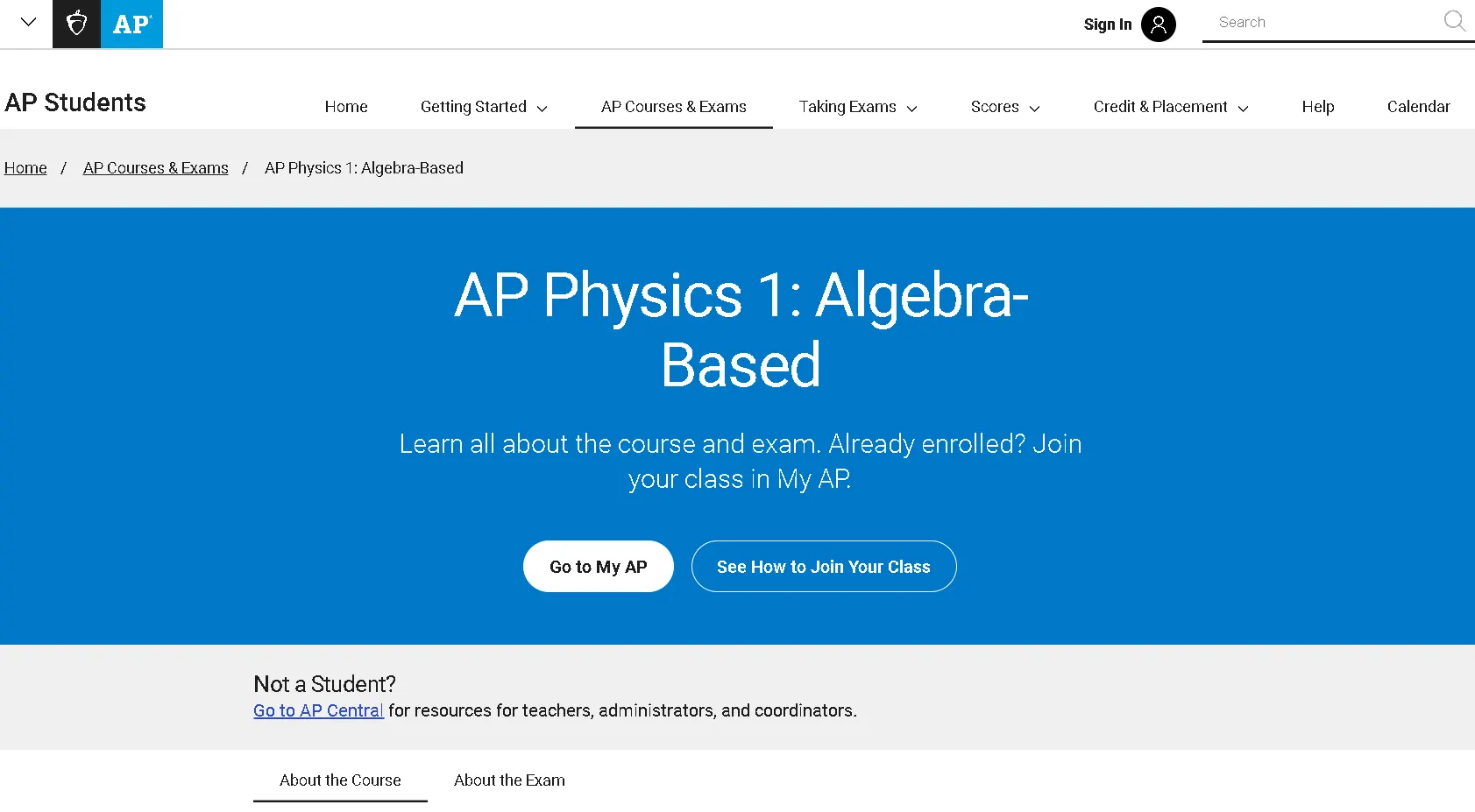
Explore AP Physics 1, an algebra-based introductory physics course covering motion, forces, energy, and real-world applications.
What happens in the first session?
The first session starts with a short diagnostic — a few problems and a conversation about where you feel confident and where you do not. The tutor then teaches a focused concept live, so you leave the first session having actually learned something. Before the session, share your syllabus, any known weak topics, and your exam date if you have one.
Is online tutoring as effective as in-person?
For a subject like AP Physics 1, online tutoring via Google Meet with a digital pen-pad is fully effective. Every diagram, equation, and problem can be drawn and annotated in real time. Students in the US, UK, Canada, Australia, and Gulf have consistently found online sessions as productive as in-person ones — with the added convenience of no commute and full schedule flexibility.
What tools does the tutor use during sessions?
Tutors use Google Meet for video, and either a digital pen-pad or iPad with Apple Pencil to write and draw in real time. A shared whiteboard or digital document is used so you can follow every step. No special software is required on your end beyond a browser.
Can I get help with my AP Physics 1 lab report?
Yes — as structural and conceptual guidance. Your tutor can help you understand what goes into a well-structured physics lab report, discuss the data analysis logic, and give feedback on your draft. The writing and submission is yours. This is the same approach as assignment guidance: we help you understand and improve, not substitute your work.
Does MPB also help with other AP Physics exams?
Yes. MPB has dedicated pages for AP Physics 2: Algebra Based, AP Physics C: Mechanics, and AP Physics C: Electricity and Magnetism. If you are planning to take multiple AP Physics exams across high school, MPB can support your progression across all of them.
What is the difference between AP Physics 1 and AP Physics C?
AP Physics 1 is algebra-based and covers a broader range of introductory topics. AP Physics C courses (Mechanics and Electricity & Magnetism) are calculus-based and go deeper into fewer topics. If you are planning ahead, your tutor can help you understand which path fits your academic goals. You can also explore the AP Physics overview page for more context.
“The AP Physics 1 exam assesses science practices — things like designing experiments, using mathematics, and constructing explanations — not just content recall.”
College Board, AP Physics 1: Algebra-Based — Course and Exam Description
Trust & Quality at My Physics Buddy
How We Select Tutors
Every MPB tutor goes through a subject-specific vetting process. Tutors demonstrate their knowledge of the AP Physics 1 curriculum in a practical assessment before being listed. They are evaluated on conceptual depth, ability to explain ideas clearly, and familiarity with the exam format. Student feedback after each session feeds into ongoing tutor quality reviews. A tutor who receives poor feedback is reviewed and re-assessed.
Academic Integrity
MPB’s academic guidance is framed around one clear principle: we guide, you submit your own work. When a student asks for help with a homework problem, the tutor explains the relevant concept, demonstrates a similar example, and gives feedback on the student’s attempt. We do not write answers, complete assignments, or produce work for submission. This is consistent with College Board policies and the academic integrity expectations of every school that offers AP courses. Misusing any academic resource — including tutoring — to bypass honest learning is strongly discouraged.
According to research published by ETS (Educational Testing Service), students benefit most from tutoring when it focuses on building understanding rather than rote answer delivery — an approach that directly aligns with how MPB tutors work.
Discover how simulated classrooms help teachers practice instructional strategies and improve teaching effectiveness.
About My Physics Buddy
MPB is a Physics-focused online tutoring platform built specifically for students at the high school, early college, undergraduate, and graduate level. The platform is used by students and parents in the US, UK, Canada, Australia, and the Gulf. Because Physics connects to so many related disciplines, MPB also covers subjects like Classical (Newtonian) Mechanics, Thermodynamics, and Electromagnetism — all of which underpin what you study in AP Physics 1.
Students preparing for other standardized exams or board-specific physics courses can explore pages like IGCSE Physics (0625), IB Physics HL/SL, and A/AS Level Physics (9702) for equivalent expert support.
For students moving beyond AP-level work, MPB also supports topics like Quantum Mechanics and Modern Physics at the undergraduate level.
“Personalized learning — where instruction is tailored to students’ individual needs — has consistently shown positive effects on academic outcomes in science subjects.”
OECD, PISA 2022 Results — Learning Environment and Student Outcomes
Content reviewed by an AP Physics 1 tutor at My Physics Buddy.
Additional References and Resources
For students who want to go deeper into physics study methods and exam preparation, the following are credible external resources:
- American Physical Society — Physics Education Programs: Guidance on physics learning and career pathways from the leading professional physics organization in the US.
- Institute of Physics — Teaching Resources: Used widely in the UK and internationally for high school and early undergraduate physics teaching.
- National Academies of Sciences — A Framework for K-12 Science Education: The foundational framework behind US science standards, including the practices AP Physics 1 is designed to assess.
- Edutopia — Why Algebra-Based Physics Matters: A useful perspective on the value of the algebra-based physics pathway for students not yet in calculus.
The Institute of Physics invites students, researchers, and professionals to join its global physics community through IOP membership.
Next Steps
Tell us your current level in AP Physics 1, which units you need to focus on, and when your exam is. Share your availability across your time zone — US, UK, Canada, Australia, or Gulf. We match you to a tutor, confirm the fit, and you can begin as soon as the next available slot. Most students are matched and booked within 24–48 hours.

