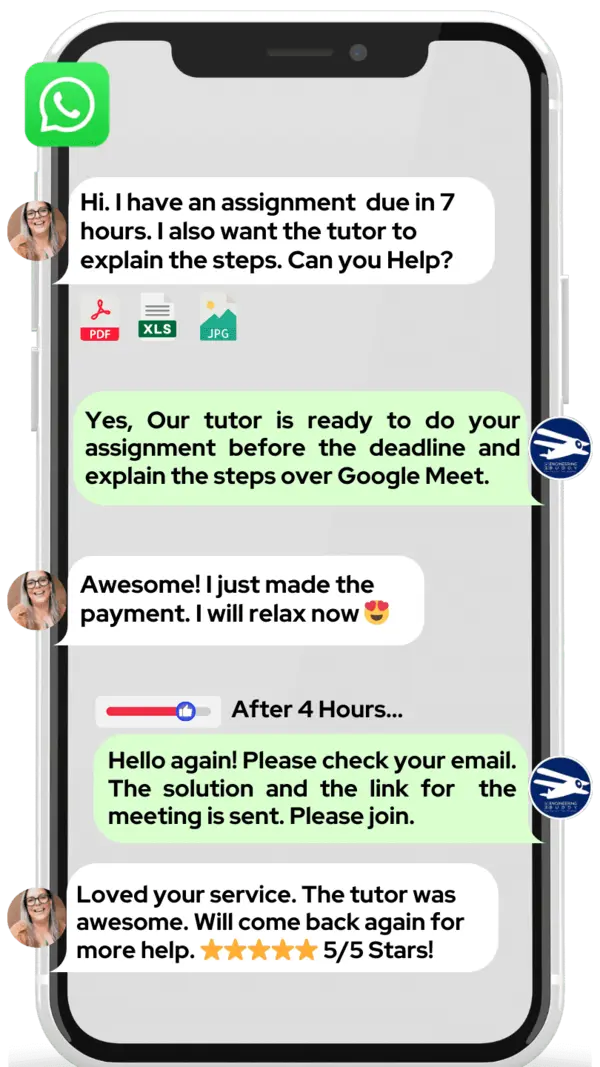
Hire Best AP Physics C: Electricity and Magnetism Tutors Online



Testimonials



AP Physics C: Electricity and Magnetism Tutor Online
My Physics Buddy (MPB) provides 1:1 online tutoring & homework help in Physics and related subjects. AP Physics C: Electricity and Magnetism is one of the most mathematically rigorous courses in the AP program — it combines calculus with the full landscape of electrostatics, circuits, magnetic fields, and electromagnetic induction. MPB connects you with a specialist tutor for live, personalized sessions built around your syllabus, your pace, and your exam date. Whether you are a high school student taking AP Physics C: E&M, an early college student looking for an AP Physics C: E&M tutor near me, or a parent seeking structured exam support for your child, MPB is designed for this level. Sessions are designed to help you aim for a strong AP score and develop the calculus-based physical reasoning that college engineering and physics programs expect.
- 1:1 live sessions — no batch classes, no pre-recorded video substitutes
- Tutors matched specifically to AP Physics C: E&M, not just general physics
- Flexible scheduling across US, UK, Canada, Australia, and Gulf time zones
- Structured learning plan built after a diagnostic session
- Ethical homework and assignment guidance — we explain concepts, you submit your own work
Who This AP Physics C: E&M Tutoring Is For
AP Physics C: Electricity and Magnetism attracts a specific kind of student — one who is comfortable with calculus and ready for university-level physics reasoning. MPB’s program is built for that learner.
- High school students in the US taking AP Physics C: E&M alongside or after AP Physics C: Mechanics, targeting a score of 4 or 5
- Students in the UK, Canada, or Australia enrolled in advanced physics or engineering tracks who are using AP Physics C: E&M as a benchmark or supplement
- Students in the Gulf region attending American-curriculum international schools and preparing for the AP exam in May
- Early college students who took AP Physics C: E&M in high school and want to reinforce the foundations before university-level electromagnetism courses
- Parents of students in calculus-based physics who want accountable, weekly expert support
- Students who need guided help with free-response derivations, Gauss’s law problem setups, or circuit analysis using differential equations
Outcomes: What You’ll Be Able To Do in AP Physics C: E&M
AP Physics C: E&M is not a subject where surface-level familiarity with formulas gets you far. The free-response questions demand derivations, physical reasoning, and precise mathematical notation. Here is what well-targeted tutoring is designed to build in you — these are observable capabilities, not guarantees.
Solve Gauss’s law problems for symmetric charge distributions by setting up surface integrals correctly and interpreting what the enclosed charge tells you about the field. Analyze multi-loop DC circuits using Kirchhoff’s laws and solve RC transient problems by setting up and solving first-order differential equations. Model magnetic fields produced by current-carrying conductors using the Biot-Savart law and Ampere’s law with the appropriate symmetry argument. Apply Faraday’s law and Lenz’s law to calculate induced EMF in changing magnetic flux scenarios, including rotating loops and moving conductors. Write multi-step free-response solutions in the structured format AP examiners expect — with clear variable definition, stated physical laws, shown mathematical steps, and interpreted results.
What We Cover in AP Physics C: E&M (Syllabus / Topics)
MPB follows the official AP Physics C: Electricity and Magnetism course framework published by College Board. Topic weightings and exact question formats vary by exam year — always verify current details with College Board directly.
Explore AP Physics C: Mechanics, a college-level course covering motion, forces, energy, and rotational physics using calculus.
Electrostatics
- Coulomb’s law and the principle of superposition for discrete and continuous charge distributions
- Electric fields — point charges, dipoles, lines, rings, disks, and planes
- Gauss’s law: choosing the right surface, computing enclosed charge, deriving E for spherical, cylindrical, and planar symmetry
- Electric potential energy and electric potential: line integrals, equipotentials, relationship between E and V
- Conductors in electrostatic equilibrium: induced charges, shielding, surface charge distribution
Conductors, Capacitors, and Dielectrics
- Capacitance: definition, parallel-plate capacitors, spherical and cylindrical configurations
- Energy stored in a capacitor and energy density of electric fields
- Dielectrics: polarization, dielectric constant, effect on capacitance and field strength
- Combinations of capacitors: series and parallel analysis
Electric Circuits
- Current, resistance, and Ohm’s law: microscopic model and macroscopic application
- Kirchhoff’s current and voltage laws for multi-loop circuits
- RC circuits: charging and discharging, time constant, differential equation setup and solution
- Power dissipation and energy considerations in circuits
Magnetic Fields
- Magnetic force on moving charges: Lorentz force, circular motion in magnetic fields
- Magnetic force on current-carrying conductors and torque on current loops
- Biot-Savart law: field due to straight wires, circular loops, and solenoids
- Ampere’s law: choosing Amperian loops, enclosed current, field in symmetric configurations
Electromagnetic Induction
- Magnetic flux and Faraday’s law: computing EMF for changing area, field, and orientation
- Lenz’s law: direction of induced current and physical interpretation
- Motional EMF: moving conductors in magnetic fields
- Inductance: self-inductance, RL circuits, energy stored in inductors
- Maxwell’s equations at an introductory level: qualitative understanding and Ampere-Maxwell law
Free-Response Exam Skills
- Multi-step derivation structure: stating laws, defining variables, showing integration steps
- Graph interpretation: E vs. r, V vs. r, charge vs. time, current vs. time
- Limiting case analysis and physical sanity checks
- AP-style justification and argumentation in written answers
Students who want to explore related physics domains in greater depth can also visit Electrostatics, Electromagnetism, and Electrodynamics tutoring pages on MPB.
How My Physics Buddy Tutors Help You with AP Physics C: E&M (The Learning Loop)
Diagnose: The first session begins with a diagnostic. The tutor identifies where your calculus application breaks down, which electromagnetism concepts are conceptually unclear, and how your current free-response technique holds up. This shapes every subsequent session.
Explain: AP Physics C: E&M is full of moments where the mathematics obscures the physics. Your tutor separates the two — first making sure you understand what Gauss’s law is physically saying, then showing you how the integral formalizes that intuition. The explanation adapts until it lands.
Practice: You work through AP-style problems live during the session: free-response multi-parters, graph reading, limiting case questions, and derivation-style problems. The tutor watches your process at every step, not just your final answer.
Feedback: After each problem set, you receive targeted feedback. “You applied Ampere’s law correctly but chose a non-symmetric Amperian loop” or “your Kirchhoff setup was right but you dropped a sign in the RC differential equation” — specific, actionable, and tied to AP rubric expectations.
Retest / Reinforce: Topics covered in earlier sessions return in new problem contexts. Electromagnetic induction, for example, appears in multiple guises — motional EMF, RL circuits, rotating loops — and each version reinforces the core principle from a new angle.
Plan: The tutor updates the session plan based on your score trajectory, your exam date, and your growing confidence. You always know what the next session targets and why.
Accountability: For students on weekly plans, tutors check in on your progress between sessions and help you maintain a consistent study rhythm in the months leading up to the exam.
Sessions run live on Google Meet with a digital pen-pad or iPad + Pencil — essential for a subject where drawing Gaussian surfaces, Amperian loops, and circuit diagrams in real time is part of understanding the physics. Before your first session, share your AP course details, your school’s pacing guide or current chapter, your weakest topics, and your exam date. The first session typically covers a short diagnostic problem set, a live teaching segment on your most urgent weak area, and a clear plan for the next two to four sessions.
AP Physics C: Electricity and Magnetism consistently sits among the AP exams with the lowest mean scores, reflecting the genuine difficulty of combining calculus fluency with deep conceptual understanding of electromagnetism. According to College Board’s published score distributions, performance varies meaningfully year to year. Students who enter the exam having regularly practiced full free-response derivations — not just multiple-choice problems — tend to be better positioned for higher scores.
Tutor Match Criteria (How We Pick Your Tutor)
MPB matches you to a tutor based on several specific factors. Here is what goes into the decision for AP Physics C: E&M:
Level and exam board fit: Your tutor will have direct, hands-on experience with AP Physics C: E&M — including its calculus-based derivation style, its free-response rubric structure, and the specific topics College Board emphasizes in the exam.
Topic strengths: If your weak area is Gauss’s law application, RC circuit differential equations, or Biot-Savart integration, we match you with a tutor whose demonstrated strength covers that domain precisely.
Tools and setup: All MPB tutors use Google Meet for live sessions and a digital pen-pad or iPad + Apple Pencil for real-time equation work, diagram drawing, and field line sketching — all of which are central to learning this subject.
Time zone and availability: Tutors are available across US, UK, Canada, Australia, and Gulf time zones. Sessions are scheduled to fit around your school week and any other AP commitments.
Learning style and pace: Some students need slow, careful concept-building before touching problems. Others want high-volume, timed practice from session one. Your tutor adjusts the mode to match what actually works for you.
Language and communication preferences: Clear, accessible English-language instruction is the default, with communication style adapted to your comfort level and background.
Goals: A student targeting a 5 on the AP exam has different session needs than one trying to pass, catch up on missed content, or build a foundation for university-level electromagnetism. We align on your goal before sessions start.
Urgency and timeline: A student with six weeks to the exam gets a compressed, high-intensity plan. A student starting in September for a May exam gets a paced, spiral-review structure. Tutor selection accounts for your remaining time.
Study Plans (Pick One That Matches Your Goal)
MPB offers three broad plan types for AP Physics C: E&M: a short catch-up plan (typically one to two weeks) for students who need to close specific topic gaps quickly, an exam prep plan (typically four to eight weeks) for structured, full-course preparation ahead of the AP exam, and an ongoing weekly support plan for students who want consistent expert guidance throughout the school year. The tutor builds the specific session-by-session plan after the diagnostic — no fixed schedule is set until your starting point and goals are clearly understood.
Pricing Guide
AP Physics C: Electricity and Magnetism tutoring at MPB starts at USD 20 per hour. Most students at this level fall in the USD 30–USD 50 per hour range, reflecting the advanced calculus-based content and the depth of expertise required from the tutor. For highly specialized sessions or very compressed timelines, rates may go higher — up to USD 100 per hour in some cases.
Pricing depends on the tutor’s qualification and experience level, your exam timeline and session frequency, and the complexity of topics you need covered. All rates are discussed transparently before you commit to any plan.
AP Physics C: E&M is not a subject where occasional drop-in sessions tend to produce strong results. The material builds on itself — Gauss’s law informs how you think about Ampere’s law, and RC circuit analysis reappears in RL and LC circuits. Students who commit to a structured, multi-session plan consistently get more out of the preparation than those who book sporadically as panic sets in before the exam.
FAQ
Is AP Physics C: Electricity and Magnetism hard?
Yes — it is widely regarded as one of the most demanding AP courses. It requires confident calculus skills (derivatives, integrals, basic differential equations) alongside genuine conceptual understanding of electromagnetism. According to College Board’s research and data portal, AP Physics C: E&M has some of the lower mean scores across all AP exams. That said, students who prepare methodically with guided practice find the material very learnable.
How many sessions are needed?
It depends on your starting point, exam date, and goal score. Students targeting specific weak spots (e.g., only electromagnetic induction) may need six to ten sessions. Students doing full exam prep from a moderate baseline typically benefit from fifteen to twenty-five sessions over six to eight weeks. Your tutor will give a more precise estimate after the diagnostic.
Can you help with AP Physics C: E&M homework or assignments?
Yes — as guided support, not submission. Your tutor will walk through problem-solving approaches, explain the calculus steps behind confusing derivations, and help you understand where your setup went wrong. MPB does not complete or submit assignments for students. All guidance is for learning and reference purposes only. Academic integrity is non-negotiable, and we expect students to submit their own work at all times.
Does the tutoring exactly match my school’s AP Physics C: E&M syllabus?
MPB follows the official AP Physics C: Electricity and Magnetism course and exam description published by College Board, which all accredited AP courses are aligned to. If your school uses a specific textbook (such as Griffiths, Serway, or Halliday/Resnick) or a particular pacing guide, share it before your first session and the tutor will incorporate it into the plan.
What happens in the first session?
The first session includes a short diagnostic problem set covering key E&M topics, a live teaching segment on your most urgent weak area, and a clear plan for the next two to four sessions. Come prepared with your current chapter or unit, any recent test or quiz results, and your exam date. The session runs on Google Meet with digital pen-pad support.
Is online tutoring as effective as in-person for this subject?
For a derivation-heavy subject like AP Physics C: E&M, online tutoring with digital pen-pad tools is highly effective. Your tutor can draw Gaussian surfaces, Amperian loops, circuit diagrams, and field sketches in real time while you watch and interact. Research on online STEM learning, including work published by EDUCAUSE, suggests that one-on-one online instruction compares favorably to in-person formats when tooling and tutor quality are strong.

Explore EDUCAUSE research and publications for insights into higher education technology, trends, and digital transformation.
Do I need to have taken AP Physics C: Mechanics first?
It is not a strict requirement, but it is strongly recommended. AP Physics C: Mechanics and AP Physics C: E&M are separate exams and courses, but both rely on the same calculus-based problem-solving framework. Many schools teach them sequentially in the same year. If you are taking E&M without a mechanics background, your tutor will note any gaps in calculus application that need addressing early. Students interested in mechanics support can also explore MPB’s AP Physics C: Mechanics tutoring page.
Can you help with lab reports for AP Physics C: E&M?
Yes, as structural and conceptual guidance. AP Physics C: E&M labs often involve measuring field strengths, verifying circuit relationships, or analyzing induced EMF data. Your tutor can help you understand data analysis, error estimation, and how to structure a scientific argument in your lab report. MPB does not write lab reports for students.
What calculus level is required for AP Physics C: E&M?
You need to be comfortable with single-variable calculus — derivatives, definite and indefinite integrals, and basic first-order differential equations. Line integrals and surface integrals appear in the context of Gauss’s law and Ampere’s law but are introduced within the physics course itself. If your calculus is still developing, your tutor can address both simultaneously, though it will affect session pacing.
Can MPB also help me with the AP Physics C: Mechanics exam?
Yes. Many students take both AP Physics C exams, often in the same school year. MPB supports both courses with separate specialist tutors. You can explore the AP Physics C: Mechanics tutoring page for details, or let us know during matching and we will coordinate support across both courses. Students also exploring other AP Physics options can visit the AP Physics overview page.
What textbooks does MPB support for AP Physics C: E&M?
MPB tutors are familiar with the most commonly used texts for this course, including Halliday, Resnick & Krane; Serway & Jewett; and at a more advanced level, Griffiths’ Introduction to Electrodynamics. If your school uses a specific text or problem set, share it beforehand and the tutor will align sessions accordingly.
Trust & Quality at My Physics Buddy
Tutor selection: MPB tutors for AP Physics C: E&M hold degrees in Physics, Electrical Engineering, Engineering Physics, or closely related quantitative disciplines — many at the postgraduate level. Every tutor goes through a subject screening that includes a live demo session and an ongoing student feedback loop. Tutors are not generalists; they are matched specifically to the calculus-based electromagnetism content and AP exam format you are preparing for.
Academic integrity: MPB’s position is clear — we guide, you submit your own work. Tutors explain concepts, work through similar examples, and provide feedback on your reasoning and derivation technique. They do not write solutions for students to copy or submit. This protects your academic record and ensures that genuine learning occurs. All guidance is framed as explanation, structured feedback, and conceptual clarification — always in line with your institution’s academic integrity policies.
About MPB: My Physics Buddy is a Physics-focused online tutoring platform serving students across the US, UK, Canada, Australia, and Gulf regions — from early college and high school learners to graduate and postgraduate students. Our core is Physics and closely related quantitative subjects. Students preparing for other advanced physics topics can explore related pages including AP Physics 1: Algebra Based, AP Physics 2: Algebra Based, and broader areas like Modern Physics and Quantum Mechanics — both of which build naturally on a strong electromagnetism foundation.
Physics education research consistently shows that the ability to transfer knowledge — applying a known principle like Faraday’s law to an unfamiliar circuit configuration — is built through guided, deliberate practice, not passive re-reading. A study published in the Physical Review Physics Education Research journal found that students who received structured, formative feedback during problem-solving demonstrated significantly stronger conceptual transfer compared to those using self-study alone. MPB’s learning loop is built around this principle.
APS Journals page featuring Physical Review Physics Education Research, a leading journal publishing research on physics teaching and learning.
“The ability to apply Maxwell’s equations fluently is not just a physics skill — it is the foundation of modern electrical engineering, photonics, and wireless technology. Students who truly understand electromagnetism at the calculus level carry that advantage into every technical discipline they touch.”
— Adapted from remarks by National Academy of Engineering, The Bridge: Electrical Engineering Education
Students who have a strong AP Physics C: E&M foundation often find university-level courses in Electrodynamics, Semiconductor Physics, and Photonics significantly more accessible. MPB supports learners at all of these levels, not just the AP stage.
“Understanding electromagnetism at a deep level — not just procedurally — is what separates students who thrive in university physics and engineering programs from those who struggle to keep up from week one.”
— Based on findings in Bloom’s 2-Sigma Study, Educational Researcher (1984)
Access millions of peer-reviewed articles and journals on Taylor & Francis Online, a leading academic research platform.
Content reviewed by an AP Physics C: Electricity and Magnetism tutor at My Physics Buddy.
Next Steps
Tell us your current unit or chapter in AP Physics C: E&M, your exam date, your goal score, and your main challenge areas — whether that is Gauss’s law, RC circuit differential equations, magnetic induction, or free-response structure. We will match you with a tutor whose background fits your course and timeline. Most students are matched and into their first session within a few days of reaching out. Scheduling is flexible across all primary time zones.

