Hire Best AP Physics 2 Tutors Online


Testimonials



AP Physics 2 Tutor Online
My Physics Buddy (MPB) offers 1:1 online tutoring & homework help in Physics and related subjects — and AP Physics 2: Algebra-Based is one of our most requested exam prep areas. Whether you’re a high school student in the US, UK, Canada, Australia, or the Gulf region, or a parent looking for structured, expert guidance, MPB connects you with tutors who know this exam inside and out. If you’ve been searching for an AP Physics 2 tutor near me and prefer the flexibility and depth of online learning, you’re in the right place. Our sessions are designed to improve conceptual clarity, problem-solving speed, and exam confidence — without any guarantees, just honest, structured work.
- 1:1 live sessions — fully personalized, no group classes
- Expert tutors with deep AP Physics 2 subject knowledge
- Flexible time zones — sessions available for US, UK, Canada, Australia, and Gulf students
- Structured learning plan built around your syllabus, weak topics, and exam date
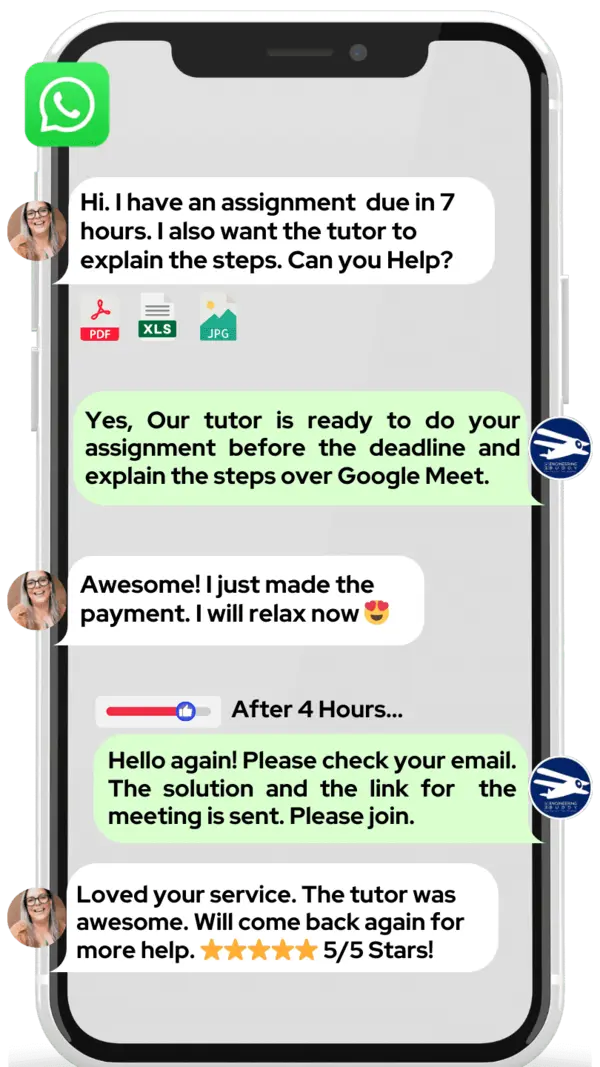
- Ethical homework and assignment guidance — we explain and guide; you do and submit your own work
“AP Physics 2 is intended to be the equivalent of a second-semester introductory college physics course — it goes beyond mechanics into electromagnetism, thermodynamics, optics, and modern physics.”
Access College Board resources for SAT, AP exams, and college planning through official student tools and guidance.
Who This AP Physics 2 Tutoring Is For
This tutoring is for students who are serious about performing well on the AP Physics 2: Algebra-Based exam and want personalized support — not a one-size-fits-all course. It’s also well-suited for parents who want to track their child’s progress and ensure effective use of study time.
- High school students in the US, UK, Canada, Australia, and Gulf countries preparing for the AP Physics 2 exam
- Students who completed AP Physics 1 and want to build smoothly on that foundation
- Students struggling with specific units — electric circuits, thermodynamics, or modern physics — and need targeted help
- Students aiming for college credit or placement who want to aim for a score of 3, 4, or 5
- Parents in primary regions who want a trustworthy, accountable tutor for their child ahead of exam season
- Students needing homework and assignment guidance — to understand problems better, structure their thinking, and review explanations with a subject expert
Outcomes: What You’ll Be Able To Do in AP Physics 2
By working with an MPB AP Physics 2 tutor, you can aim to build real, observable skills across all major exam domains. These are the kinds of capabilities consistent, structured practice makes possible.
Solve multi-step algebra-based problems involving electric force, field, potential, and circuits — including applying Kirchhoff’s rules to complex circuit configurations. Analyze thermodynamic processes such as heat engines, entropy changes, and the Ideal Gas Law in both qualitative and quantitative terms. Model wave behavior including interference, diffraction, the Doppler Effect, and the distinction between geometric and physical optics. Explain modern physics phenomena — radioactive decay, the photoelectric effect, blackbody radiation, and mass-energy equivalence — in terms that connect microscopic behavior to observable results. Interpret experimental data, design simple investigations, and translate between graphical, mathematical, and conceptual representations — all key skills tested in the AP Physics 2 free-response section.
What We Cover in AP Physics 2 (Syllabus / Topics)
The AP Physics 2: Algebra-Based exam is administered by the College Board and covers second-semester introductory college physics topics. The exam structure and exact weightings may vary slightly — always confirm current details with the official AP Central exam page. Below is a high-level overview of the domains and skills covered.
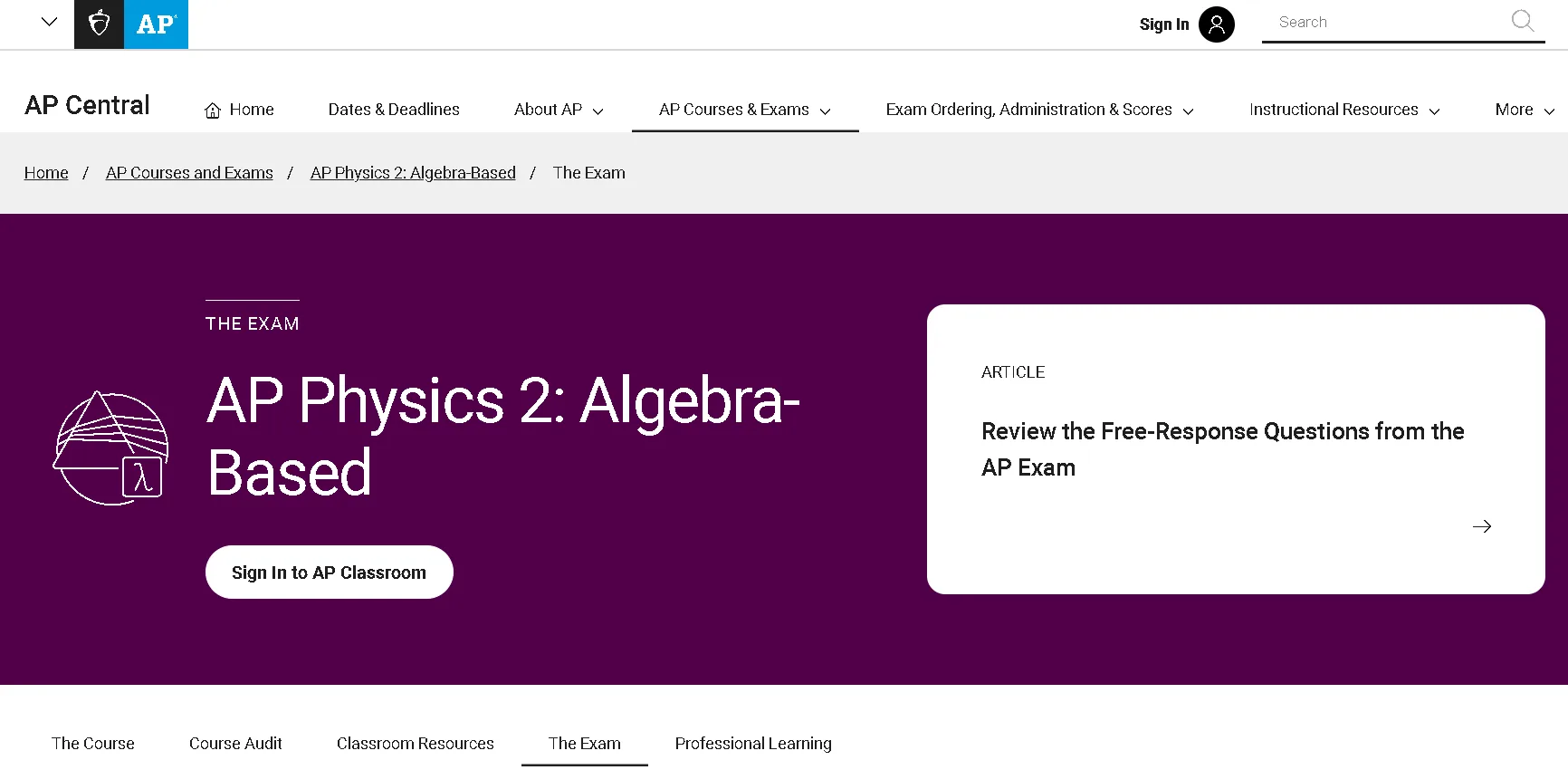
Understand the AP Physics 2 exam structure, including multiple-choice questions, free-response tasks, and scoring breakdown.
Track 1: Thermodynamics (approx. 15–18% of exam score)
- Thermodynamic systems and state variables
- Pressure, thermal equilibrium, and the Ideal Gas Law
- Heat and energy transfer mechanisms
- Heat engines, heat pumps, and refrigerators
- Entropy and probability in thermal systems
- Thermodynamic collisions and internal energy
- Problem types: quantitative PV diagrams, cycle efficiency questions, conceptual entropy reasoning
Track 2: Electric Force, Field, and Potential (approx. 15–18% of exam score)
- Electric charge, systems, and charge distribution
- Coulomb’s Law and electric force diagrams
- Electric field lines and field maps
- Electric flux and Gauss’s Law (conceptual)
- Electric potential energy and conservation of energy
- Gravitational vs. electromagnetic force comparison
- Problem types: force diagrams, field/potential calculations, energy conservation scenarios
Track 3: Electric Circuits (approx. 15–18% of exam score)
- Current, resistance, and resistivity
- Series and parallel resistor networks
- Capacitance and RC circuit behavior
- Kirchhoff’s loop rule and junction rule
- Conservation of charge in circuits
- Problem types: circuit analysis, Kirchhoff’s rule application, RC charging/discharging
Track 4: Magnetism and Electromagnetism (approx. 12–15% of exam score)
- Magnetic fields and forces on moving charges and current-carrying conductors
- Magnetic dipole moment and permeability
- Vector and scalar field representations
- Monopole vs. dipole field behavior
- Magnetic flux and Faraday’s Law (conceptual)
- Problem types: force direction (right-hand rule), field diagrams, qualitative induction questions
Track 5: Geometric Optics (approx. 12–15% of exam score)
- Reflection and refraction at boundaries
- Snell’s Law and total internal reflection
- Image formation by converging and diverging lenses
- Image formation by concave and convex mirrors
- Ray diagrams and the thin lens equation
- Problem types: ray tracing diagrams, lens/mirror equations, real vs. virtual image questions
Track 6: Waves, Sound, and Physical Optics (approx. 12–15% of exam score)
- Wave properties: amplitude, wavelength, frequency, period, wave speed
- Electromagnetic wave spectrum and properties
- Sound waves and the Doppler Effect
- Superposition, interference, and standing waves
- Single-slit and double-slit diffraction and interference
- Problem types: path difference calculations, qualitative interference reasoning, Doppler shift scenarios
Track 7: Modern Physics (approx. 12–15% of exam score)
- Radioactive decay types (alpha, beta, gamma) and half-life
- Mass-energy equivalence and nuclear binding energy
- Blackbody radiation and Wien’s Law
- The photoelectric effect and photon energy
- Wave-particle duality and de Broglie wavelength
- Atomic emission and absorption spectra
- Problem types: decay equations, photoelectric threshold calculations, energy level diagrams
Students preparing for the broader AP Physics suite can also explore our dedicated pages for AP Physics 1: Algebra Based, AP Physics C: Electricity And Magnetism, and AP Physics C: Mechanics.
How My Physics Buddy Tutors Help You with AP Physics 2 (The Learning Loop)
Diagnose: Every engagement starts with a diagnostic conversation. The tutor reviews your current understanding, past test results, and which AP Physics 2 units feel most uncertain — thermodynamics, circuits, modern physics, or others. This shapes everything that follows.
Explain: The tutor breaks down core concepts using clear language, step-by-step reasoning, and visual tools like digital whiteboards. Abstract ideas — like magnetic flux or entropy — get connected to concrete scenarios you can actually picture.
Practice: You work through real AP-style problems: multiple-choice discrete questions, stimulus-based question sets, and all four free-response types (mathematical routines, translation between representations, experimental design and analysis, qualitative/quantitative translation). Practice mirrors actual exam conditions.
Feedback: After each practice session, your tutor reviews your reasoning — not just whether the answer is right, but why. Common AP Physics 2 traps (sign errors in circuits, direction of induced fields, confusing real and virtual images) get flagged and corrected in real time.
Retest/Reinforce: Topics where errors cluster get revisited in later sessions. Reinforcement is spaced deliberately so that understanding sticks past the next session and into exam day.
Plan: Your tutor maintains a session-by-session roadmap anchored to your exam date, available study hours, and remaining weak spots. The plan adjusts as your performance improves or new priorities emerge.
Accountability: For students who want it, the tutor provides brief check-ins on self-study tasks set between sessions — practice problems, review readings, or formula reviews — so momentum carries beyond live sessions.
Sessions run on Google Meet with a digital pen-pad or iPad + Pencil for live worked examples. Tutors adapt pace and explanation style to your confidence level — some students need conceptual grounding first; others benefit from problem-first discovery. Both approaches work in 1:1 format.
First session flow: Your first session opens with a short diagnostic — the tutor asks about your syllabus progress, your strongest and weakest units, and your target exam date. From there, the tutor moves into live teaching on a priority topic, with worked examples and live Q&A. The session closes with a clear set of next steps. Before the session, it helps to share your current AP Physics 2 unit list, any recent test papers or quizzes, and your exam date or timeline.
Tutor Match Criteria (How We Pick Your Tutor)
MPB matches you with a tutor based on several factors — not just subject knowledge alone.
Level and exam board fit: Your tutor will have direct experience with the AP Physics 2: Algebra-Based exam administered by the College Board, including familiarity with the updated 2025 hybrid digital exam format.
Topic strengths and tools: For AP Physics 2, we prioritize tutors strong in electromagnetism, thermodynamics, optics, and modern physics — the domains with the highest combined exam weight. Tools used include Google Meet, digital pen-pad or iPad + Pencil for live, clear worked examples.
Time zone and availability: Tutors are matched for availability across US (ET, CT, PT), UK (GMT/BST), Canada, Australia (AEST/AEDT), and Gulf (GST/AST) time zones. Evening and weekend slots are commonly available.
Learning style and pace: Some students need conceptual-first explanations before touching equations; others prefer diving straight into problem-solving. Your tutor adapts to whichever approach leads to faster retention for you.
Language and communication preferences: All MPB tutors communicate in clear English and adjust technical language density based on your level and comfort.
Goals: Whether your goal is exam score improvement, homework understanding, concept clarity, or college placement credit, the tutor’s approach is calibrated accordingly.
Urgency and timelines: If your AP exam is weeks away versus months away, your tutor structures sessions with the appropriate intensity and focus. Short-timeline students get exam-first triage; longer timelines allow deeper conceptual work first.
Study Plans (Pick One That Matches Your Goal)
MPB offers three broad plan types for AP Physics 2: a catch-up plan (typically 1–2 weeks of intensive sessions) for students who need to cover missed units quickly, an exam prep plan (typically 4–8 weeks) that works systematically through all domains and FRQ types ahead of the AP exam, and ongoing weekly support for students who want consistent reinforcement throughout the school year. The specific session plan — topics, sequence, practice volume, and review strategy — is built by the tutor after the diagnostic session, so it reflects your actual gaps and timeline, not a generic schedule.
Pricing Guide
AP Physics 2 tutoring at MPB starts at USD 20 per hour and typically ranges up to USD 40 per hour for standard exam prep sessions. Pricing varies based on the tutor’s experience level, the complexity of the topics requested, and the timeline. Shorter, high-urgency timelines or very advanced sessions (e.g., bridging into college-level physics topics) may be priced higher. Supply and demand also plays a role — availability of specialist tutors and session frequency can affect the final rate.
For a specific quote based on your level, goals, and schedule, WhatsApp for quick quote.
FAQ
Is AP Physics 2 hard?
AP Physics 2 is considered one of the more demanding AP science exams. It covers second-semester college-level physics — thermodynamics, electromagnetism, optics, and modern physics — using algebra-based methods. The conceptual reasoning required, especially in free-response questions, is where most students need the most support. With structured practice and 1:1 guidance, the material is very manageable.
How many sessions are needed?
It depends on your starting point, exam timeline, and goal. Students doing intensive exam prep with a 4–8 week timeline typically benefit from 2–3 sessions per week. Students seeking ongoing weekly support usually do 1–2 sessions per week throughout the school year. Your tutor will give a clearer estimate after the first diagnostic session.
Can you help with AP Physics 2 homework and assignments?
Yes — MPB provides guided homework and assignment help. Tutors explain the underlying concepts, walk through similar worked examples, and help you understand how to approach a problem type. Our services aim to provide personalized academic guidance to help you understand concepts and improve your skills. Materials and explanations provided are for learning purposes only. Submitting another person’s work as your own, or misusing guidance in ways that violate your school’s academic integrity policy, is strongly discouraged. You do the work; we help you understand it.
Does the tutoring exactly match my school’s AP Physics 2 syllabus?
MPB tutors work from the official College Board AP Physics 2: Algebra-Based course framework, which forms the basis of the exam. However, individual teachers may sequence units differently or add supplemental material. Share your school’s syllabus, current unit, and any teacher-assigned resources in your first session so the tutor can align the support precisely.
What happens in the first session?
The first session includes a short diagnostic discussion about your AP Physics 2 progress, weakest units, and exam date. The tutor then moves into live teaching on a priority topic — with worked examples and Q&A. The session ends with a clear plan for next steps. Bring any recent tests, your unit list, and your exam date to make the most of it.
Is online tutoring as effective as in-person for AP Physics 2?
For most students, online 1:1 tutoring is equally effective — and often more convenient. Sessions use Google Meet with a digital pen-pad or iPad + Pencil, so worked examples, diagrams, and circuit drawings are just as clear as on a physical whiteboard. The ability to record sessions for review is an additional benefit many students find valuable.
What kind of calculator is allowed in the AP Physics 2 exam?
The College Board permits scientific and graphing calculators for the AP Physics 2 exam, subject to its official AP calculator policy. Your tutor will ensure you practice using allowed tools, including the reference sheet provided during the exam, so there are no surprises on exam day.
What is the AP Physics 2 exam format?
As of the 2025 exam cycle, AP Physics 2 uses a hybrid digital format. Section I has 40 multiple-choice questions (80 minutes, 50% of score), completed digitally in the Bluebook app. Section II has 4 free-response questions (100 minutes, 50% of score), handwritten in a paper booklet. The four FRQ types are: mathematical routines, translation between representations, experimental design and analysis, and qualitative/quantitative translation. Details may vary — always verify with the official College Board AP Physics 2 exam page.
Does AP Physics 2 help with college credit?
Many US colleges and universities grant credit or advanced placement for qualifying AP Physics 2 scores — typically a 3, 4, or 5 — though policies vary by institution. According to College Board’s official AP score distribution data, approximately 72% of students who sat the 2025 exam scored a 3 or higher. Check the credit policies of specific colleges you’re applying to, as they differ widely.
Can MPB help with AP Physics 2 lab reports?
Yes, within ethical limits. If you’ve completed a lab investigation and need help understanding how to structure your lab report, interpret your data, or explain experimental uncertainty, a tutor can guide you through those concepts. MPB does not write or complete lab reports for students; guidance is always framed as explanation, structure, and feedback — so you develop the skill yourself.
Academic Integrity Note: Our services aim to provide personalized academic guidance, helping students understand concepts and improve skills. Materials provided are for reference and learning purposes only. Misusing them for academic dishonesty or violations of integrity policies is strongly discouraged.
Trust & Quality at My Physics Buddy
Tutor selection: Every MPB tutor goes through a subject knowledge screening, a live demo session evaluation, and an ongoing feedback review process. For AP Physics 2, we specifically look for tutors who have strong backgrounds in electromagnetism, thermodynamics, and modern physics — the domains that carry the greatest combined exam weight — and who are familiar with the current College Board exam format and free-response question types.
Academic integrity: MPB’s role is to guide — not to do the work for you. In all homework, assignment, and lab report support, tutors explain concepts, walk through analogous examples, and provide feedback on your reasoning. You write, solve, and submit your own work. This approach builds the understanding that actually serves you in the exam room, where no one can help you.
About My Physics Buddy: MPB is a Physics-focused online tutoring platform serving high school students, early college students, graduate students, and their families across the US, UK, Canada, Australia, and Gulf regions. Our core is Physics and closely related quantitative subjects. Students working across the AP Physics suite can explore our pages for AP Physics (overview), AP Physics 2: Algebra Based, and Electromagnetism. Students whose coursework also touches thermodynamics or waves can explore Thermodynamics and Waves and Optics for deeper subject-level support. For students preparing for other standardized physics exams, see our pages for IB Physics HL/SL and A/AS Level Physics (9702).
“Students who take AP courses are better prepared for college-level work. AP Physics, in particular, develops analytical thinking and quantitative reasoning skills that translate directly into college success in STEM fields.”
Content reviewed by an AP Physics 2 tutor at My Physics Buddy.
Related Physics Exams & Courses at MPB: If you’re also exploring related physics content, MPB has dedicated tutoring pages for Modern Physics, Electrostatics, and Optics — all topics that overlap significantly with AP Physics 2 material. Students interested in going deeper after AP may also find our pages on Quantum Mechanics and Nuclear Physics valuable for bridging into college-level work.
Next Steps
Getting started is straightforward. Share your current AP Physics 2 level — which units you’ve covered, which feel weakest, and your exam date or timeline. Let us know your preferred session times and time zone. We’ll match you with a tutor whose subject depth, availability, and teaching style fit your needs. From there, your first session is a diagnostic + live teaching session that gives both you and the tutor a clear picture of exactly where to focus.

