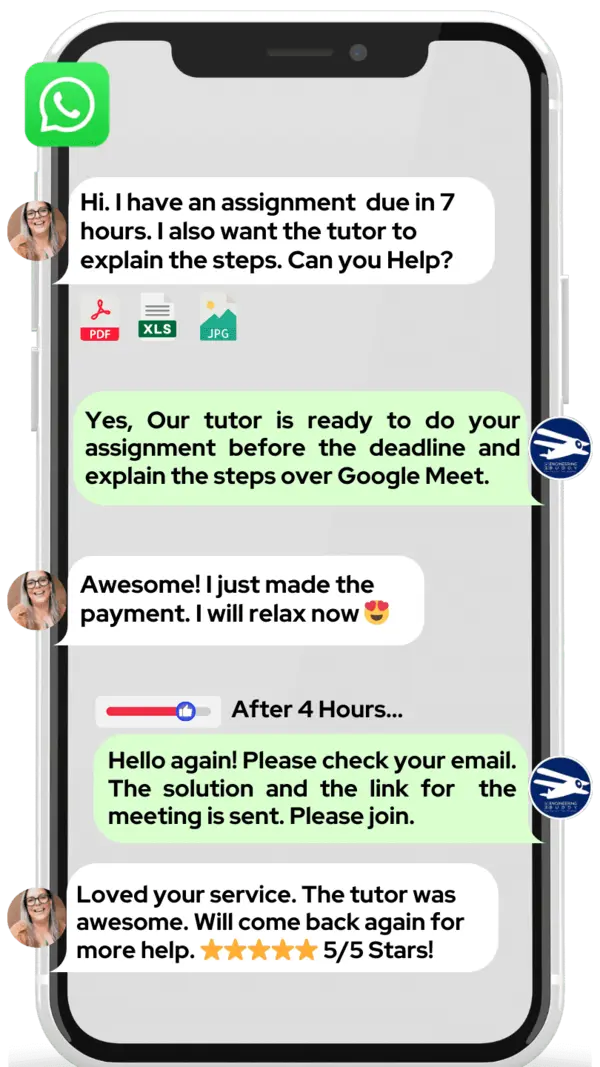
Hire Best AP Physics C: Mechanics Tutors Online


Testimonials



AP Physics C: Mechanics Tutor Online
My Physics Buddy (MPB) offers 1:1 online tutoring & homework help in Physics and related subjects. AP Physics C: Mechanics is one of the most mathematically demanding AP exams — covering calculus-based Newtonian mechanics — and is taken seriously by admissions offices and engineering programs alike. Whether you’re a high school student preparing for the College Board exam, a parent looking for reliable exam prep support, or a college student revisiting calculus-based mechanics, MPB matches you with a tutor who knows this exam well. If you’ve been searching for an AP Physics C: Mechanics tutor near me, our fully online model means location is never a barrier. Sessions are designed to help you aim for a strong score and a deep understanding of the material.
- 1:1 live online sessions — no group classes, no recorded lectures
- Tutors with proven depth in calculus-based mechanics and AP exam structure
- Flexible scheduling across US, UK, Canada, Australia, and Gulf time zones
- Structured learning plan built around your syllabus, weak areas, and exam date
- Ethical homework and assignment guidance — we explain and coach; you solve and submit
Who This AP Physics C: Mechanics Tutoring Is For
This program is built for students who need focused, expert support for one of the most rigorous AP exams offered by the College Board. It is equally suited for parents who want to ensure their child is getting the right preparation — not just generic physics help.
- High school juniors and seniors in the US taking AP Physics C: Mechanics as part of their college prep
- Students in the UK, Canada, Australia, and Gulf countries enrolled in equivalent calculus-based mechanics courses who want AP exam readiness
- Early college students revisiting Newtonian mechanics with a calculus lens
- Students who have already taken AP Physics 1 or AP Physics 2 and are now stepping into the calculus-based track
- Students who need structured homework and problem-set guidance — framed as conceptual coaching, not answer delivery
- Parents and school administrators looking for a credible, measurable tutoring solution for a high-stakes exam
Outcomes: What You’ll Be Able to Do in AP Physics C: Mechanics
AP Physics C: Mechanics demands more than memorizing formulas. It demands that you set up problems from scratch, apply calculus fluently, and reason through multi-step scenarios under exam conditions. Our tutoring is designed to build these exact capabilities.
Solve free-response problems end-to-end — from drawing correct free-body diagrams to writing full calculus-based solutions that match College Board rubric expectations. Analyze rotational and translational systems simultaneously, applying Newton’s laws, work-energy theorems, and angular momentum conservation with confidence. Model real physical scenarios using differential equations and integration, not just plug-and-chug formulas. Explain your reasoning in writing, a skill that directly impacts your free-response score. Apply dimensional analysis and unit checking as a self-correction tool in high-pressure exam settings.
What We Cover in AP Physics C: Mechanics (Exam Domains & Skills)
AP Physics C: Mechanics is administered by the College Board. The exam format and weighting may vary slightly by year; always verify current details directly with the College Board. Below are the core domains and question types we address in tutoring.
Explore AP Physics C: Mechanics, a college-level course covering motion, forces, energy, and rotational physics using calculus.
Domain 1: Kinematics
- 1D and 2D motion with calculus — position, velocity, acceleration as functions of time
- Derivatives and integrals applied to kinematic equations
- Projectile motion and relative motion problems
- Graphical interpretation of x-t, v-t, and a-t relationships
Domain 2: Newton’s Laws of Motion
- Free-body diagram construction for complex systems
- Applying Newton’s Second Law in translational and rotational forms
- Friction, tension, normal force, and constraint problems
- Systems of particles and internal vs. external forces
Domain 3: Work, Energy, and Power
- Work-energy theorem with variable forces using integration
- Conservative vs. non-conservative forces and potential energy
- Conservation of mechanical energy problems
- Power as a rate of energy transfer
Domain 4: Systems of Particles and Linear Momentum
- Center of mass calculations for discrete and continuous systems
- Impulse-momentum theorem
- Elastic and inelastic collisions — 1D and 2D
- Rocket propulsion and variable-mass systems
Domain 5: Rotation
- Rotational kinematics with angular velocity and angular acceleration
- Moment of inertia — point masses and continuous bodies
- Torque and the rotational form of Newton’s Second Law
- Rolling without slipping — combining translational and rotational motion
- Angular momentum and its conservation
Domain 6: Oscillations and Gravitation
- Simple harmonic motion — spring-mass systems and pendulums
- Differential equation form of SHM and its solutions
- Newton’s law of universal gravitation
- Circular orbital motion, escape velocity, and gravitational potential energy
- Kepler’s laws (high-level; details may vary by exam year)
Exam Question Types
- Multiple-choice (MCQ) — single-answer and multi-select formats (details vary by board/organization)
- Free-response questions (FRQ) — derivation, experimental design, and graphical analysis tasks
- Rubric-aligned written explanations — a skill we specifically train for
How My Physics Buddy Tutors Help You with AP Physics C: Mechanics (The Learning Loop)
Diagnose: Every engagement begins with a diagnostic conversation or short problem set. The tutor identifies whether gaps are conceptual (e.g., confusing torque and force), procedural (e.g., incorrect integral setup), or exam-strategy related (e.g., poor FRQ time management).
Explain: The tutor introduces or re-explains each topic using clear worked examples. Calculus steps are shown explicitly — not skipped — so you understand why an integral appears, not just how to evaluate it.
Practice: You attempt problems live in the session. The tutor observes your problem-solving approach, not just your final answer. Past AP free-response questions from the College Board’s released materials are used wherever possible.
Feedback: The tutor gives targeted, rubric-aware feedback. You learn exactly what College Board scorers look for — derivation steps, unit statements, diagram labeling, and written justifications.
Retest / Reinforce: Similar problem types are revisited in later sessions. Progress on previously weak areas is tracked and confirmed before moving forward.
Plan: After each session, the tutor sets a clear agenda for the next one — topics to review, practice problems to attempt, and any concepts to preview.
Accountability: For students working on a timeline (e.g., 6 weeks to exam), the tutor keeps a running checklist of domains covered and flags areas needing extra attention.
Sessions adapt to your pace. If a concept needs two sessions instead of one, the plan adjusts. All sessions are held via Google Meet with a digital pen-pad or iPad + Apple Pencil for live equation writing — so it feels like a whiteboard, not a screen share of static notes.
Your first session starts with a 10–15 minute diagnostic: the tutor asks you to solve or explain a problem from a domain you find hardest. This reveals your actual gaps, not just your stated ones. Live teaching follows immediately — no onboarding forms or orientation delays. Before your first session, share your current syllabus or course outline, the topics you find hardest, and your target exam date. That’s all the tutor needs to start well.
Tutor Match Criteria (How We Pick Your Tutor)
Not every physics tutor is suited for AP Physics C: Mechanics. This is a calculus-based exam with specific College Board rubric standards. Here’s how we match you.
Level and exam board fit: Tutors for this subject hold undergraduate or graduate degrees in physics, engineering, or mathematics — and have direct familiarity with the AP C: Mechanics exam structure.
Topic strengths: We match based on depth in calculus-based mechanics — rotation, SHM, and FRQ derivation in particular, which are the most common weak areas.
Tools and setup: Tutors use Google Meet for video, and either a digital pen-pad or iPad + Apple Pencil for live handwriting. You see real-time equation work, not static PDFs.
Time zone and availability: We cover US (all time zones), UK, Canada, Australia, and Gulf regions. Sessions can be scheduled on weekday evenings or weekends based on your availability.
Learning style and pace: Some students want a tutor who paces slowly through derivations; others want a faster-moving problem-solving partner. We account for this in matching.
Language and communication preferences: Tutors are selected for clear, student-friendly English communication. Regional accent preferences can be noted.
Goals: Whether your goal is a score of 5, passing the exam, understanding the material for future engineering coursework, or getting unstuck on a specific problem type — the tutor match reflects that.
Urgency and timelines: Students with 2 weeks to the exam get matched with tutors who can do intensive, back-to-back sessions. Students with several months get matched for sustainable weekly sessions.
Study Plans (Pick One That Matches Your Goal)
MPB offers three broad plan types: a catch-up plan for students with immediate gaps (typically 1–2 weeks of focused sessions), an exam prep plan for students building toward the AP exam over 4–8 weeks, and an ongoing weekly support plan for students who want consistent help across the semester. In every case, the specific session-by-session plan is built by your tutor after the diagnostic — not before — because the right plan depends on what you actually know, not what the syllabus assumes.
Pricing Guide
AP Physics C: Mechanics tutoring at MPB is priced based on the level of the subject, tutor expertise, and your scheduling needs. Rates typically start at USD 20 per hour and go up to USD 40 per hour for most sessions. Advanced topics, very short turnaround timelines, or highly specialized tutors may be priced higher — up to USD 100 per hour in some cases.
Price is influenced by the grade or exam level, the complexity of the material, tutor availability, and how quickly you need sessions. A student with 3 months to the exam will generally find more scheduling flexibility and competitive rates than one with 10 days to the exam.
Rates are transparent and confirmed before your first session. There are no hidden fees. WhatsApp for a quick quote.
FAQ
Is AP Physics C: Mechanics hard?
Yes — it is widely considered one of the most challenging AP exams. It requires fluency in single-variable calculus applied to mechanics, and the free-response section demands written derivations, not just numerical answers. According to College Board score distribution data, the exam has a historically lower mean score compared to many other AP subjects. That said, with the right preparation and consistent practice, students can and do perform well on it.
How many sessions are needed?
It depends on your starting point and timeline. A student with solid calculus skills and 6 weeks to the exam might need 10–14 sessions. A student starting from a weak foundation with 3 months available might need 20 or more. Your tutor will give a realistic estimate after the diagnostic session.
Can you help with homework and assignments?
Yes — with an important clarification. Our tutors explain the physics concepts behind your problem sets, work through similar example problems, and coach your problem-solving approach. They do not solve your graded work for you, and you submit your own answers. This approach helps you actually learn the material, which is what the AP exam will test. Our services aim to provide personalized academic guidance, helping students understand concepts and improve skills. Materials provided are for reference and learning purposes only. Misusing them for academic dishonesty or violations of integrity policies is strongly discouraged.
Will my tutor follow the exact AP Physics C: Mechanics syllabus?
Yes. Tutors work directly from the College Board’s AP Physics C: Mechanics Course and Exam Description (CED). That said, the College Board updates its exam specifications periodically, so your tutor will also check the current CED before sessions. Specific question formats and weighting may vary by year.
What happens in the first session?
The first session starts with a short diagnostic — usually a problem or two from topics you find hardest. The tutor then immediately begins teaching, addressing the gaps uncovered. You’ll leave the session with a clear plan for the next 2–4 sessions. There’s no lengthy intake process.
Is online tutoring as effective as in-person for this exam?
For a calculus-based exam like AP Physics C: Mechanics, the quality of explanation matters far more than physical presence. Our tutors use live digital handwriting tools (pen-pad or iPad + Pencil) so equation work is visible in real time — comparable to a whiteboard session. Many students find it easier to focus in a distraction-free home environment.
Do I need to know calculus before starting?
You should be concurrently enrolled in or have completed single-variable calculus (derivatives and integrals). AP Physics C: Mechanics uses calculus throughout — it is not optional background knowledge. If your calculus is weak, your tutor will flag which calculus skills need parallel reinforcement. MPB also offers support in related mathematical topics through its broader Physics tutoring and Mathematical Physics pages.
What tools or materials do I need?
A reliable internet connection, Google Meet (free), a calculator (the exam permits a scientific calculator — check current College Board rules), and access to your textbook or course notes. Your tutor will share additional resources digitally during sessions.
Can you help with lab reports for AP Physics C?
Yes. Tutors can help you understand the experimental design principles behind lab activities, explain how to structure a lab report, and clarify concepts like uncertainty and error analysis. You write and submit your own report; the tutor guides your understanding of the underlying physics and reporting standards.
How does the free-response scoring work?
AP Physics C: Mechanics free-response questions are scored by trained College Board readers using detailed rubrics. Points are awarded for specific steps — a correct diagram, a correctly stated law, a derived expression, a final numerical answer with units. Your tutor will train you to write rubric-aligned solutions, not just correct ones. Partial credit is available, so presentation and structure matter.
Trust & Quality at My Physics Buddy
Tutor Selection
Every tutor at MPB goes through a structured selection process. Candidates must hold at least a bachelor’s degree in physics, engineering, or a closely related field — many hold advanced degrees. They complete a subject knowledge assessment, a live demo session, and an ongoing feedback review after onboarding. Tutors who consistently receive poor student feedback are not retained. The result is a pool of tutors who can actually teach AP Physics C: Mechanics — not just tutors who once studied it.
Academic Integrity
MPB’s approach to homework and assignment help is unambiguous: we guide, you submit your own work. Tutors explain the physics behind your problems, demonstrate solution strategies on parallel examples, and give feedback on your draft thinking. They do not complete graded work on your behalf. This is the only approach that actually prepares you for the exam — where no tutor is present. Research published by the American Psychological Association consistently shows that active retrieval and guided problem-solving lead to deeper learning than passive answer consumption.
Explore APA K–12 resources for psychology education, including lesson plans, teaching tools, and career pathways.
We guide, you submit your own work. That’s the only kind of help that actually prepares you for the exam room.
About My Physics Buddy
MPB is a Physics-focused online tutoring platform serving early college students, graduate students, and their families — as well as academic administrators in the US, UK, Canada, Australia, and Gulf countries. Our core is Physics and closely related quantitative subjects. Students preparing for related AP exams or advanced physics topics can explore our dedicated pages for AP Physics C: Electricity And Magnetism, AP Physics 1: Algebra Based, and AP Physics 2: Algebra Based. Students who go on to university-level mechanics and want to deepen their understanding may also find our pages on Classical (Newtonian) Mechanics, Engineering Dynamics, and Thermodynamics useful as their studies advance.
Content reviewed by an AP Physics C: Mechanics tutor at My Physics Buddy.
“Study hard what interests you the most in the most undisciplined, irreverent and original manner possible.”
— Richard P. Feynman, Nobel Laureate in Physics, as recorded in The Feynman Lectures on Physics, Caltech
Students who engage with AP Physics C: Mechanics with genuine curiosity — not just exam strategy — tend to perform better, because the free-response questions reward deep understanding over formula recall. That’s the approach MPB tutors bring to every session.
For students exploring related standardized physics tracks, our pages on AP Physics and GRE Physics offer tutoring tailored to those specific exams. Students in the UK or internationally preparing for physics qualifications may also explore A/AS Level Physics (9702) and IB Physics HL/SL.
AP Physics C: Mechanics is a college-level course. The tutoring that serves it should be college-level too. MPB tutors bring subject depth, exam familiarity, and a structured feedback loop — not generic physics coaching.
“Learning physics requires more than reading and watching — it requires doing problems, getting feedback, and correcting your thinking in real time.”
— Adapted from principles outlined in MIT OpenCourseWare, 8.01 Classical Mechanics, Massachusetts Institute of Technology
This is exactly the learning loop MPB builds: real problems, real feedback, in real time — every session.
Research from the National Bureau of Economic Research on 1:1 tutoring effectiveness shows that individualized instruction can accelerate student learning significantly compared to group instruction — a finding that aligns with MPB’s 1:1 model.
For students interested in the physical principles that underlie AP Physics C: Mechanics at a deeper level, the Kinematics and Electrostatics pages on MPB offer specialized support. Students heading into engineering programs may also benefit from our Engineering Statics and Fluid Mechanics & Dynamics pages as they advance.
The Science journal research on deliberate practice in STEM education further supports the structured, problem-based approach MPB uses — where students are challenged just beyond their current ability, given immediate corrective feedback, and then retested.
Next Steps
Tell us your current level, your exam date, and which topics are giving you the most trouble. We’ll ask about your availability and time zone. From there, we match you with a tutor who fits your needs — and your first session can start within a day or two of confirmation in most cases.
No long intake process. No commitment to a block of sessions before you’ve seen the quality. Just a matched tutor, a diagnostic, and a plan.

