Coursera Reviews, Pricing & Best Alternatives (For Physics) in 2026
Big course library. Limited 1:1 help.
By Ashish PM
| Published on March 4, 2026

Reviewed By Pankaj Kumar
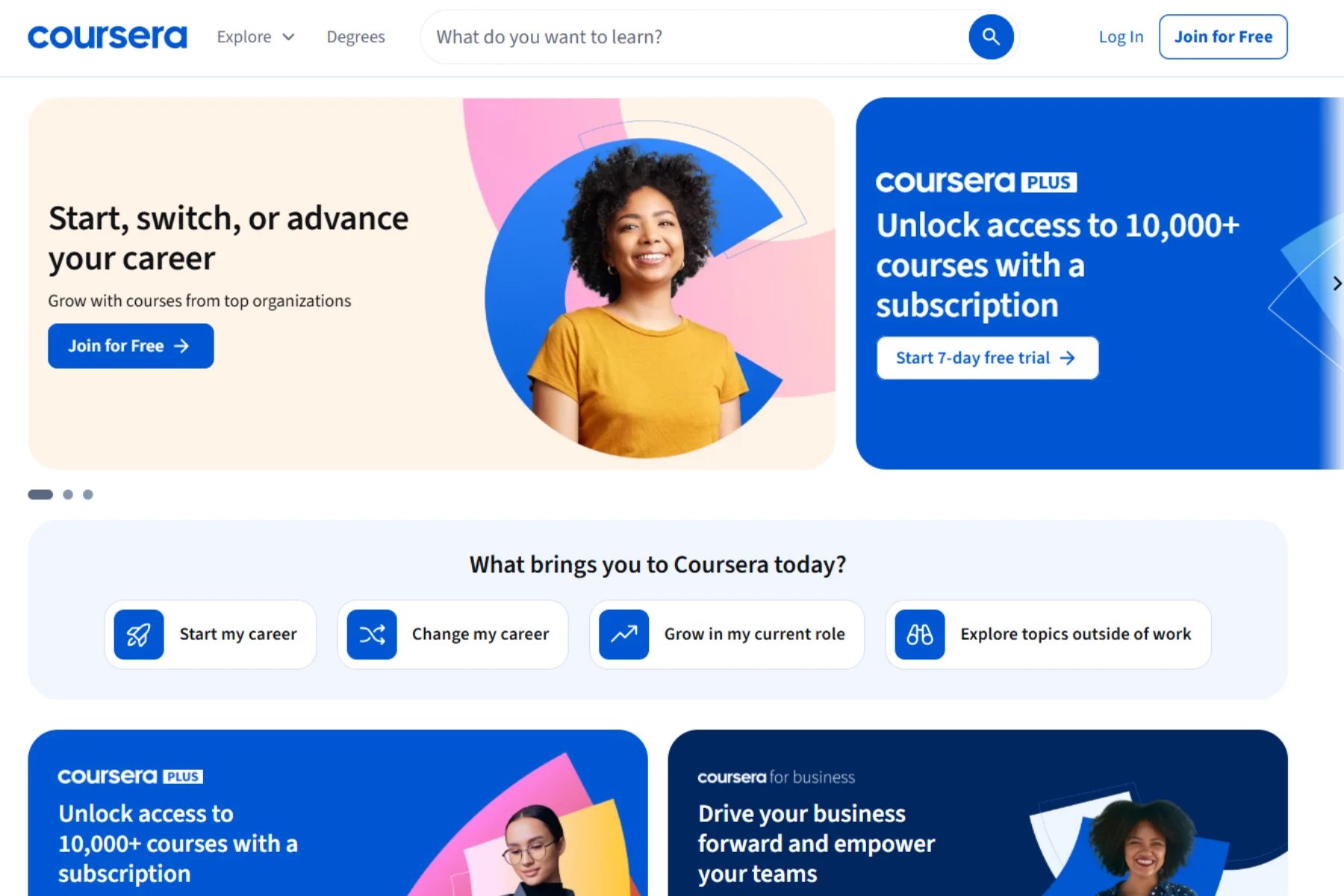
Coursera is a major online learning platform. It focuses on courses, certificates, and degrees rather than 1:1 tutoring.
This guide helps students and parents compare Coursera for Physics and nearby subjects. It also lists practical alternatives, including options for homework help and live tutoring.
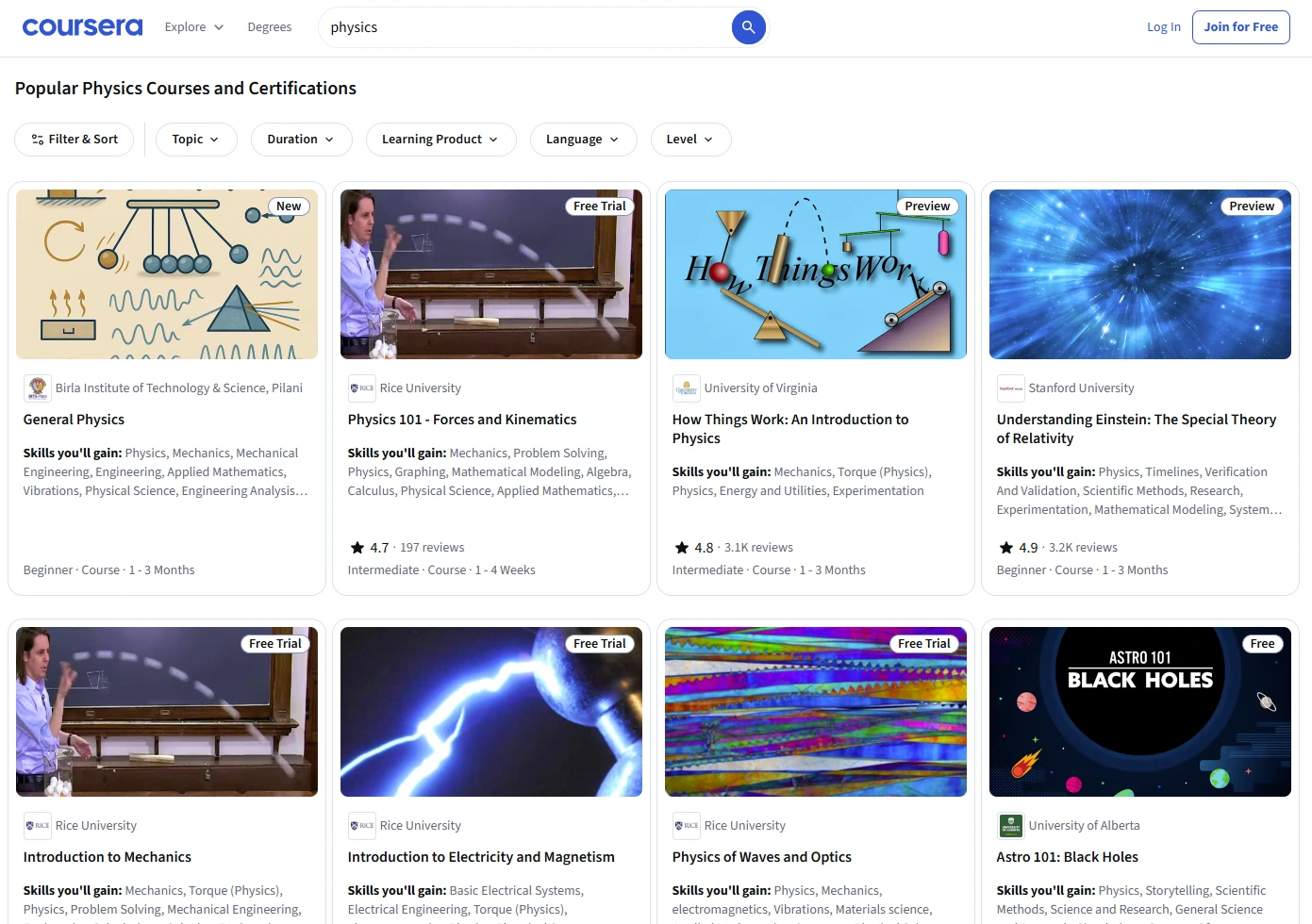
Coursera physics catalog page listing popular courses with university partners, ratings, and filters for topic, duration, language, and level.
Reviews & User Feedback for Coursera in 2026
Across public review sites, Coursera feedback often splits in two. Many users praise course variety and recognized partners. Many others complain about billing, cancellations, refunds, and slow support.
Physics tutor and service quality note: Coursera is built around courses, not private tutoring. Its Physics and Astronomy catalog includes lecture-driven learning and assessments. Some Physics courses include homework-style problems (example: Physics 101: Forces and Kinematics). But if you need fast, personal feedback, you may rely on forums or peer grading. Peer-graded work can be common on Coursera, based on independent analysis of the catalog by Class Central’s peer-review report.
Trustpilot
On Trustpilot, Coursera has a low public score and a large set of complaints. The common themes include subscription renewals, refund friction, and support delays.
At the time of review, Trustpilot shows a rating around 1.4/5 with about 1,100+ reviews on the Coursera domain page. See the live listing on Trustpilot’s Coursera review page.
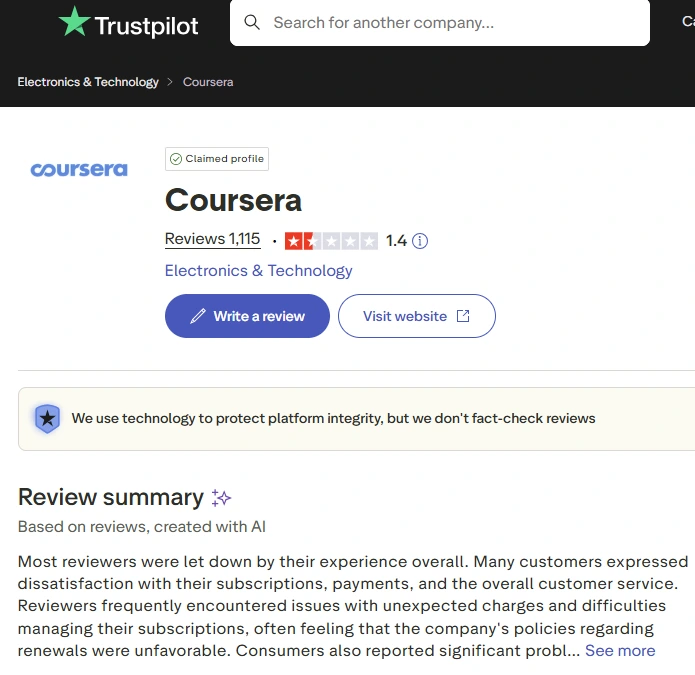
Trustpilot listing for Coursera with 1,115 reviews, a 1.4 score, and an AI-created review summary highlighting common customer complaints.
G2 (Coursera product family)
On G2, Coursera’s ratings are much stronger than consumer complaint sites. Reviewers often praise course breadth, learning flow, and well-known institutions.
G2 shows Coursera at about 4.5/5 with 460+ reviews on its vendor listing. See details on G2’s Coursera profile.
Sitejabber
Sitejabber trends negative. Complaints often focus on free trial confusion, credit card billing, and customer service response.
At the time of review, Sitejabber shows Coursera around 1.8/5 with under 100 reviews on its listing. See the current stats on Sitejabber’s Coursera reviews page.
BBB (Better Business Bureau)
BBB data is complaint-driven, not a measure of course quality. Still, it can signal how a company handles disputes. Coursera’s BBB profile shows a low rating and lists reasons tied to complaint handling.
See the current BBB profile and rating notes on Coursera’s BBB Business Profile.
Glassdoor (employee sentiment)
Employee reviews do not measure the learner experience directly. But they can hint at internal stability and workplace health.
Glassdoor’s Coursera overview shows a “would recommend” percentage and category ratings for work-life balance and culture (as shown on Glassdoor’s Coursera overview).
Gartner Peer Insights (enterprise-focused)
Gartner Peer Insights reviews skew toward organizations and workplace learning. Many reviewers praise content quality and flexibility. Some mention cost concerns, uneven depth between courses, and peer review frustration.
Gartner shows Coursera at about 4.4/5 with 320 ratings on one market view. See the live listing at Gartner Peer Insights for Coursera.
Is Coursera legit (evidence-based)?
Evidence supports that Coursera is a legitimate company and service. Coursera is a public company, and leadership changes have been disclosed in SEC filings (see Coursera’s SEC Exhibit 99.1 on leadership transition).
Coursera also publishes platform terms that describe payments, refunds, and fee changes. See the service terms at Coursera Terms of Use. Coursera’s partner-facing pages also show it operates a formal content ecosystem with institutions (see Coursera Partnerships).
Is Coursera legit?
Yes. Coursera is legit as a course platform. Public filings and formal terms support that it is a real company. But user complaints about billing and support are common, so read policies before you pay.
Coursera Pricing, Refunds & Policies in 2026
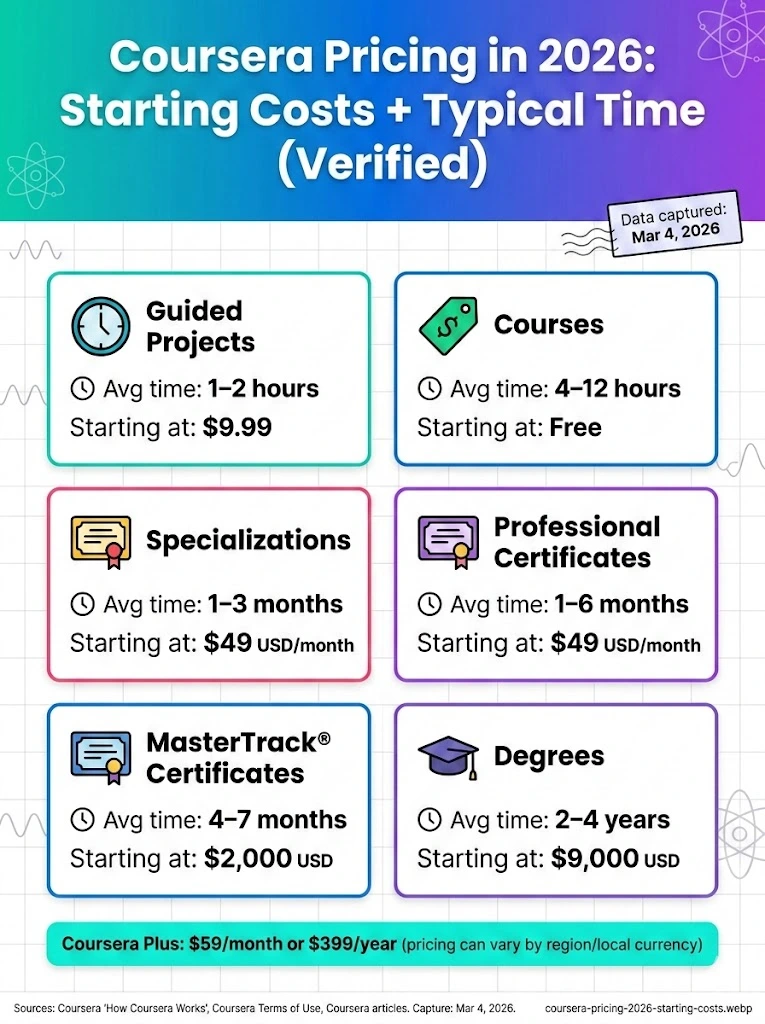
Coursera pricing depends on what you buy. It offers free/low-cost entry points, paid subscriptions, and higher-cost degree paths. Coursera explains its main learning formats and starting price points on How Coursera Works.
Coursera promotes world-class, flexible online learning with courses from universities and companies, focused on job-relevant skills and recognized credentials.
User feedback on pricing (public sentiment): Pricing complaints often focus on renewals and cancellation timing. BBB’s complaint log is one place where billing disputes appear (see BBB complaints for Coursera). You can also find learner discussions about refund expectations and confusion (example thread: Reddit discussion on “misleading refund policy”).
Trials
Many Coursera subscriptions start with a trial, but the exact offer can change. Coursera Plus commonly promotes a trial and a monthly/annual subscription structure on Coursera Plus. Coursera’s help article also notes that monthly prices can vary based on promotions (see Coursera Plus help page).
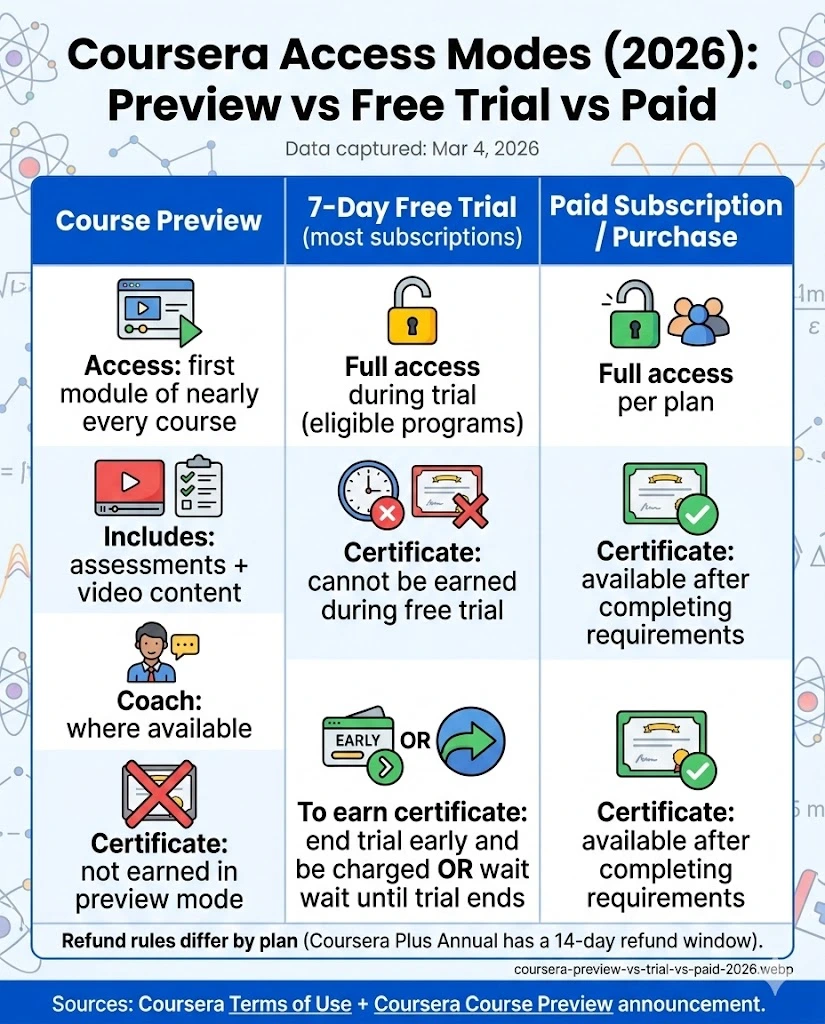
Coursera access comparison: preview the first module, get full access during a 7-day trial (no certificate), or earn certificates with a paid plan after completing requirements.
Refunds
Coursera publishes separate refund rules for different products. The main policy summary is in Coursera’s refund policies. The practical “how to” steps for requesting a refund are listed in Coursera’s refund request article. Refund eligibility can depend on product type, timing, and completion/certificate status.
Hidden fees & billing details
Coursera notes that fees can vary by location and other factors, and it can change fees upon posting. This is stated in Coursera Terms of Use. If you buy inside the mobile app, Coursera also explains how app payments are processed through app stores on Payments on the Coursera app.
Cancellations
Coursera cancellations depend on the plan type. Some subscriptions stop future charges but do not refund past payments. Coursera documents cancellation effects and access changes in Cancel a subscription. Always cancel before renewal if you do not want another billing cycle.
Business / team pricing (quick note)
Coursera also sells team plans for organizations. Coursera lists a Team plan price and notes Enterprise pricing as custom on Coursera for Business plan comparison.
Fast pricing safety check:
Before you buy, read the refund and cancellation rules. Most billing problems in Coursera reviews come from timing, renewals, and plan confusion.
Alternatives to Coursera
If you want Physics help, “Coursera alternatives” depend on your goal. Use courses for structured learning. Use tutoring for fast feedback. You can also mix options: a course plus live help plus practice. This list includes “Coursera vs My Physics Buddy” style choices, plus local and free options.
My Physics Buddy
My Physics Buddy positions itself as 1:1 online tutoring and homework help for Physics and related subjects. This can fit students who need real-time problem solving, exam practice, or support on weak topics.
Physics tutor quality and service fit: A 1:1 model can be useful when you need step-by-step guidance, error checking, and quick clarification. It can also help when your course moves faster than self-paced videos. The tradeoff is that it is not a massive course library like Coursera.
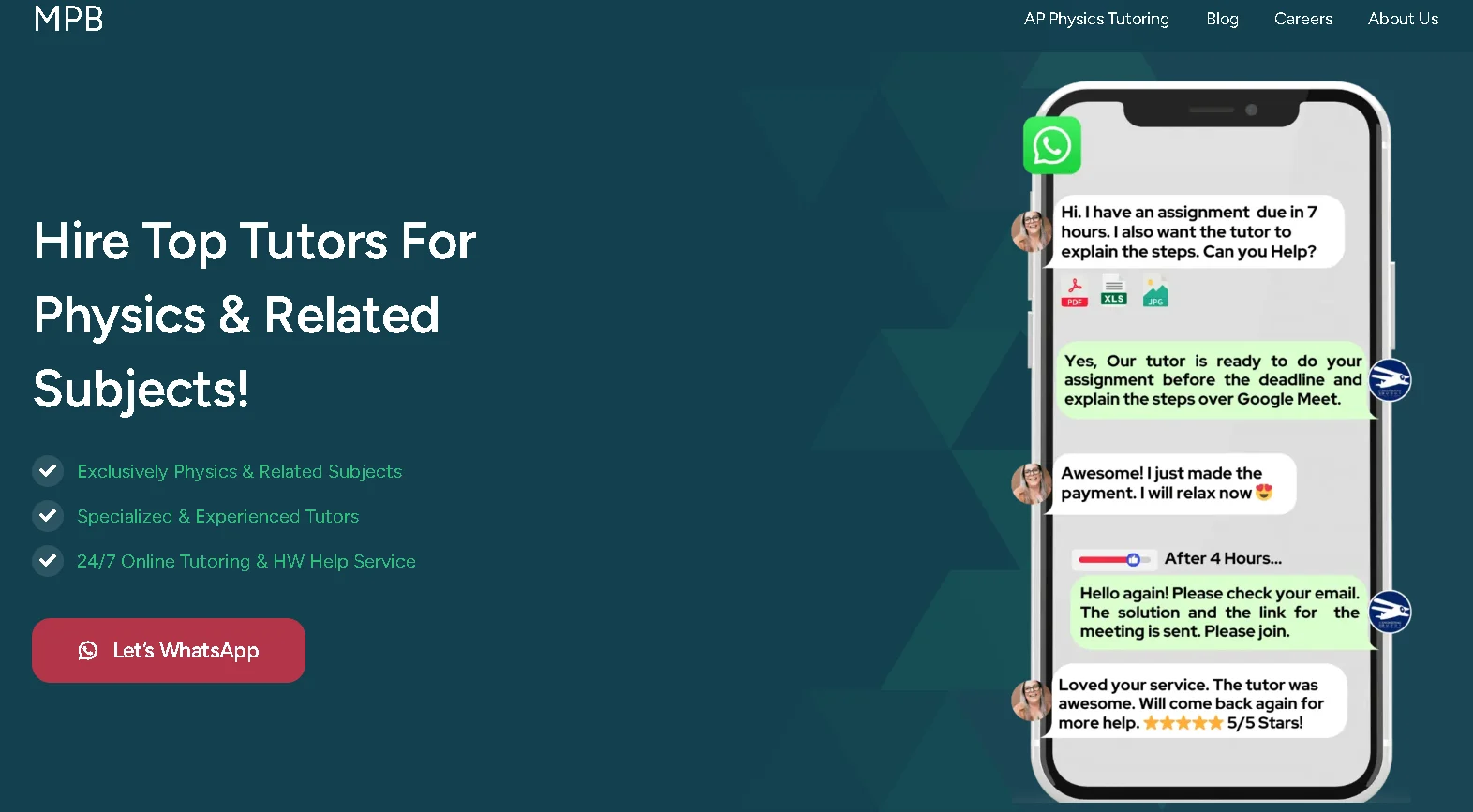
My Physics Buddy’s homepage highlights 1:1 physics tutoring and homework help with a WhatsApp-first start.
Tutor.com
Tutor.com is a tutoring-focused alternative. It offers on-demand academic help across many subjects.
Physics tutor quality and service fit: Tutor.com promotes Physics homework help and test prep support on its subject page (see Tutor.com Physics). This style can work better than a course platform when you are stuck on a problem set and need fast feedback.
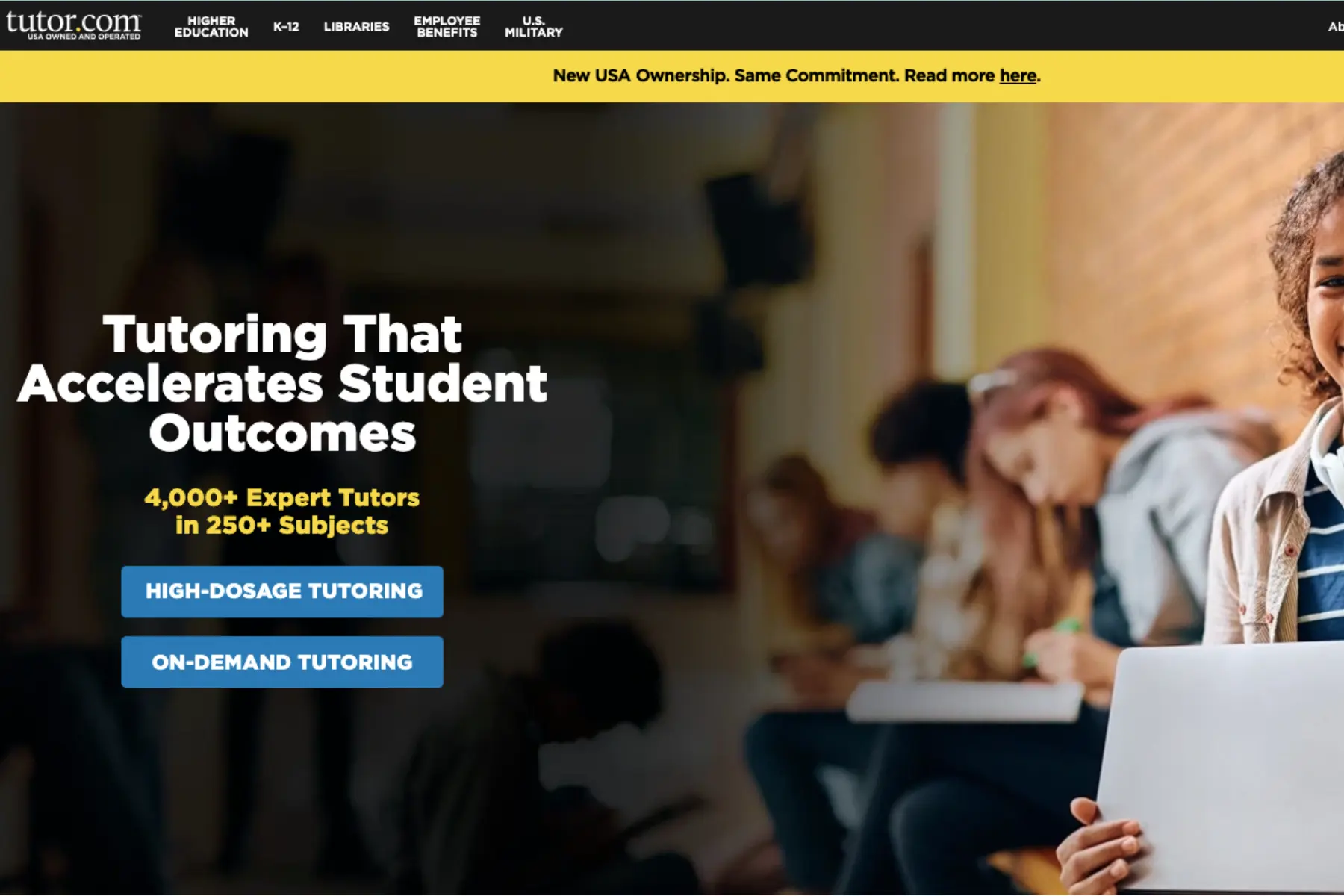
Tutor.com provides on-demand and high-dosage tutoring across 250+ subjects to support improved student outcomes.
Wyzant
Wyzant is a tutor marketplace. It supports online and local tutoring, depending on tutor availability.
Physics tutor quality and service fit: Wyzant’s Physics tutor listings describe support from basics through advanced topics and offer both online and in-person options (see Wyzant Physics tutors). This can fit families who want to choose a tutor by profile, rate, and schedule.
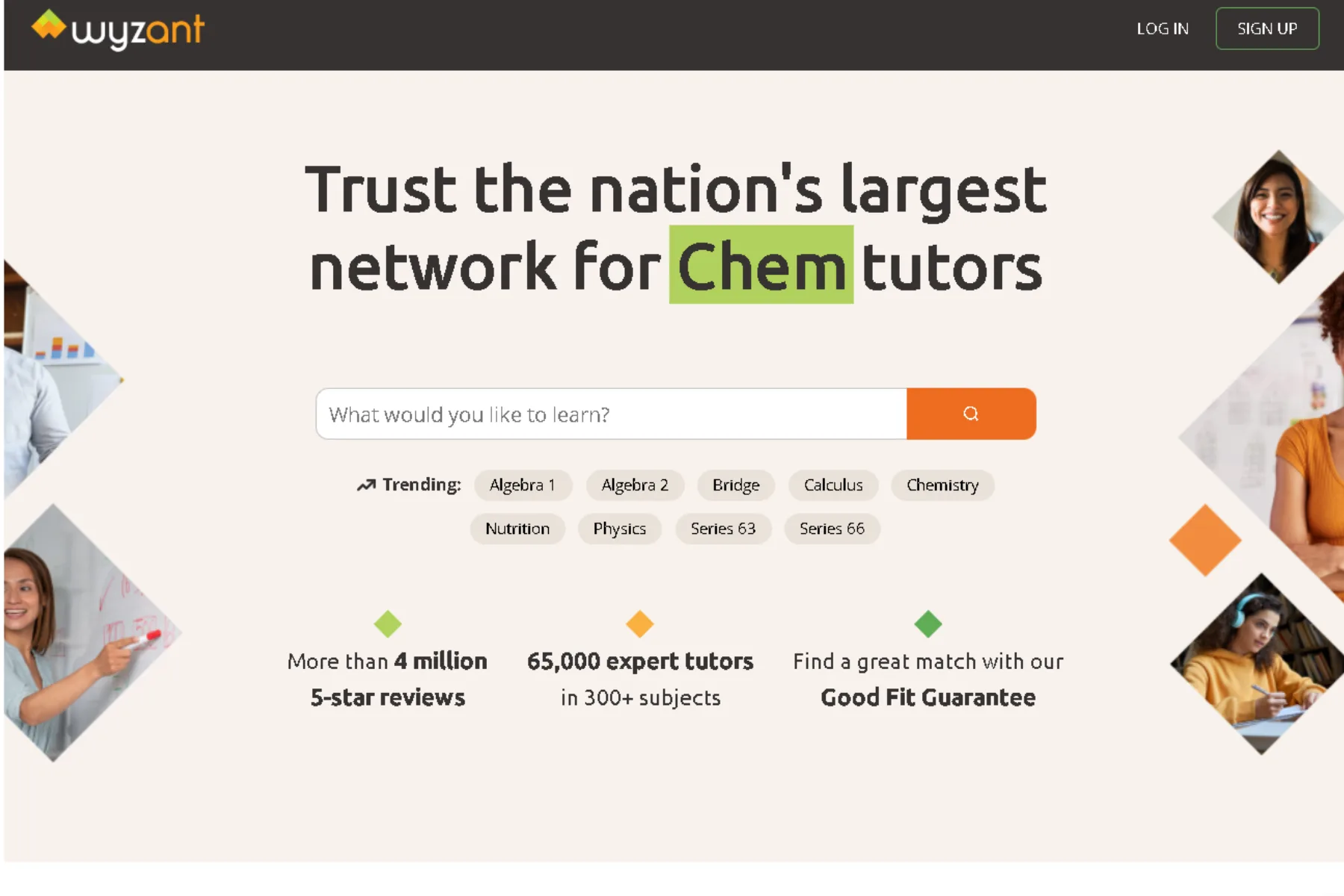
Wyzant’s homepage promotes its tutor network with a subject search bar and trending topics like Physics and Calculus.
edX
edX is a course-based alternative. It offers online courses and programs from partner institutions.
Physics tutor quality and service fit: edX’s Physics category shows structured learning paths that look closer to Coursera than to tutoring (see edX Physics programs). Like Coursera, the “help” is usually course-led, not 1:1 homework rescue.
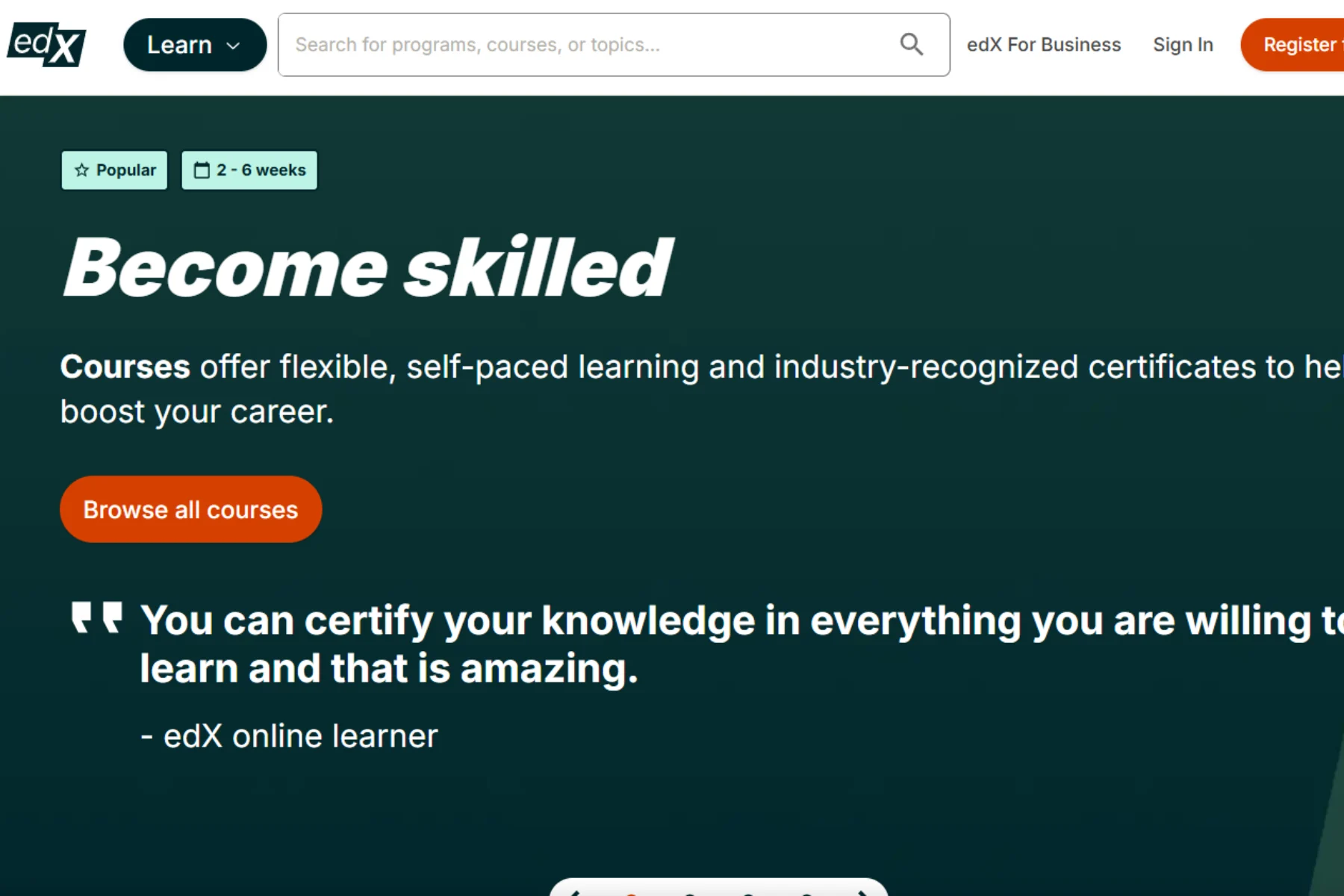
edX homepage highlighting flexible, self-paced online courses with industry-recognized certificates.
Khan Academy
Khan Academy is a free learning option. Many families use it for concept building and practice.
Physics tutor quality and service fit: Khan Academy’s Physics content is organized as units and practice-focused lessons (see Khan Academy Physics). It is not private tutoring, but it can be strong for basics, review, and steady practice at no cost.
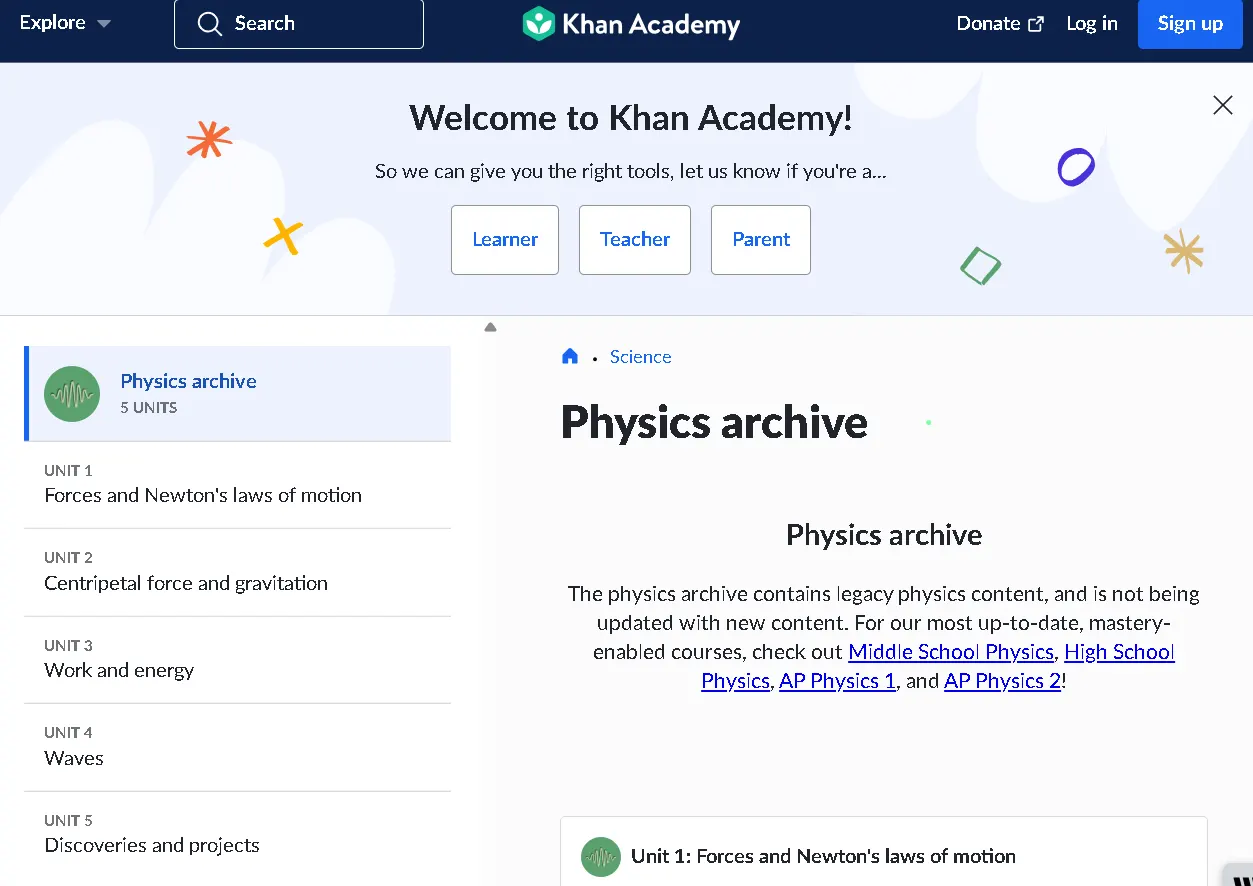
Khan Academy’s homepage invites learners, teachers, and parents to sign up for free learning content and practice.
MIT OpenCourseWare (YouTube)
For free university-style lectures, MIT OpenCourseWare’s videos can help. One access point is the MIT OpenCourseWare YouTube channel.
Physics tutor quality and service fit: Video lectures can be great for exposure and re-learning. But you still need your own practice and feedback loop. This works best when combined with problem sets, study groups, or a tutor who can check your work.
Local support (non-platform option)
Local options can include your college library, office hours, study groups, or a nearby tutor. Data not publicly available. The upside is live help and accountability. The downside is uneven quality and limited time slots.
Physics tutor quality and service fit: If you can meet a consistent mentor, you can fix gaps faster than self-study alone. If not, a structured online tutor or course may be more reliable.
Winners
Quality of Tutors: My Physics Buddy
Pricing: Khan Academy
Quality of Customer care: Tutor.com
Ease of use: Coursera
How It Works
For students (2026)
Pick a goal. Then choose a learning path. On Coursera, you usually browse a catalog and enroll in a course or program (see Coursera’s course catalog browse page). Some items are free to start, while others need payment or subscription. If you get stuck, Coursera routes help through its Learner Help Center (see Coursera Learner Help Center).
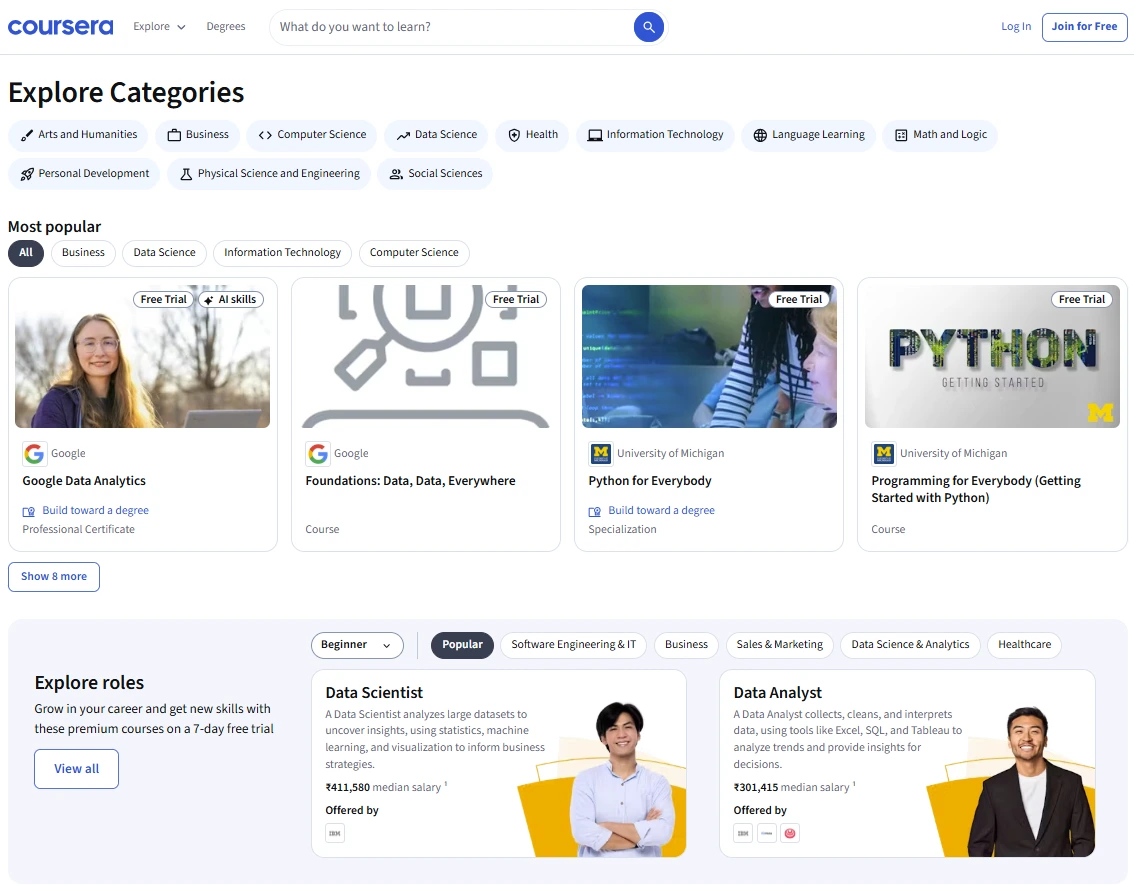
Coursera category browse page featuring popular courses and career role pathways, including data analytics and Python learning options.
For tutors / instructors
Coursera is not a “join and tutor” marketplace. Most teaching on Coursera is done through partners, like universities or companies. Coursera promotes partner onboarding through its partner pages (see Coursera University Partnerships and Coursera Industry Partnerships). A community response also notes that instructors typically teach via their university’s Coursera relationship (see “Join as instructor” Q&A).
Below is a simple illustration of how Coursera works for students.
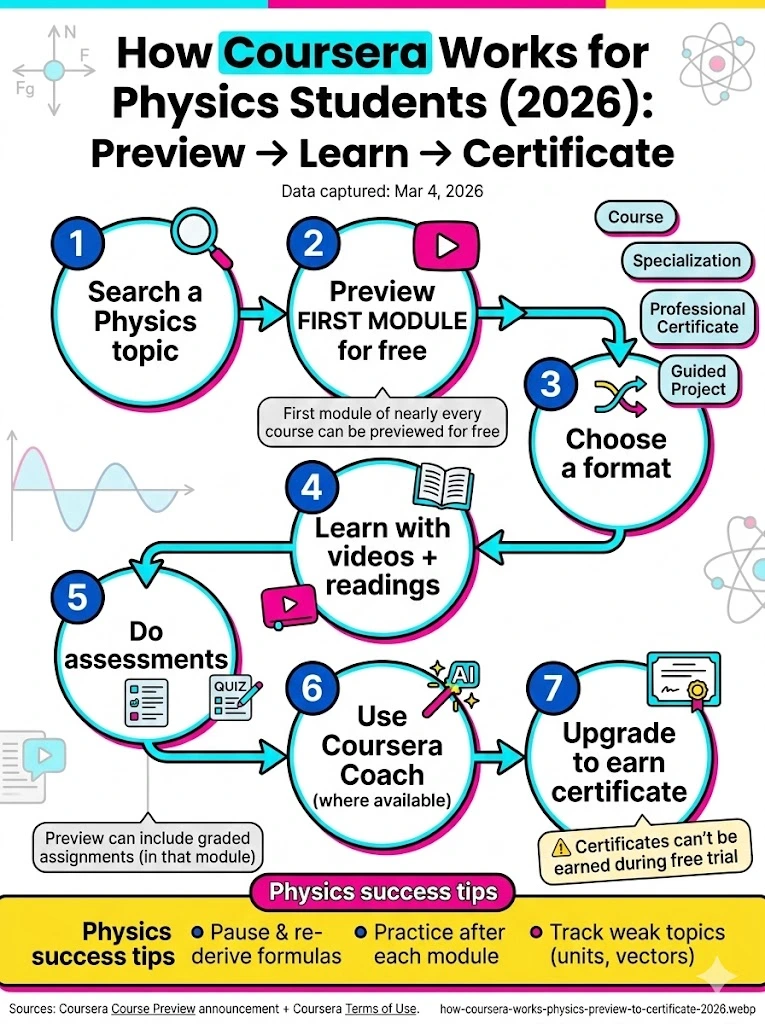
Coursera workflow for physics learners: preview a course module for free, pick a learning format, complete lessons and assessments, use coaching tools, then upgrade to earn a certificate.
Coursera Company Information
Coursera describes a mission-led platform with large global scale. On its About page, Coursera states it was founded in 2012 by Andrew Ng and Daphne Koller. Coursera also states it has more than 350 partners and reports “162 million learners,” plus “more than 7,000 campuses, businesses, and governments” using the platform (see About Coursera).
“Anyone, anywhere has the power to transform their lives through learning.”
Source: Coursera About page
Coursera is publicly traded (NYSE: COUR) and reports financial results through major disclosure channels. In its February 5, 2026 release, Coursera reported full-year 2025 revenue of $757 million and discussed 2026 revenue guidance (see Business Wire: Coursera full-year 2025 results).
Misc (USP, drawbacks, support, reach): Coursera’s USP is its partner-based catalog and self-paced format. A Coursera outcomes page cites survey results across 179 countries and highlights reported benefits and Coach satisfaction (see Coursera Learner Outcomes report page). For learner support, Coursera points users to official support routes on Coursera Contact. Drawbacks reported by users commonly center on billing and support, as reflected in consumer review and complaint sites (see earlier Coursera reviews section).
Future plans (AI and product direction): Coursera markets AI help through Coursera Coach on Coursera Coach and AI-assisted authoring for enterprises through Course Builder. Coursera also announced an AI content partnership with Anthropic (see Business Wire: Coursera + Anthropic). Separately, Reuters reported a planned Coursera-Udemy combination expected in the second half of 2026, pending approvals (see Reuters coverage of the Coursera-Udemy deal).
“Deliver more impactful, AI-powered experiences for learners.”
FAQs
Is Coursera legit for Physics learning?
Coursera is legit for Physics courses. It is not built for 1:1 tutoring. For live problem help, consider a tutor instead of only videos.
Does Coursera offer Physics tutors for homework help?
Coursera mainly offers courses, not private tutors. If you need homework help, use a tutoring service or a 1:1 tutor option.
How does Coursera pricing work in 2026?
Coursera pricing varies by product and region. Coursera Plus and many certificates run on subscriptions, while some items are one-time purchases. See Coursera discounts and pricing notes.
Can I cancel Coursera without paying again?
Usually, canceling stops future charges, but it may not refund past payments. Always check plan rules before canceling. See Coursera cancellation policy.
Does Coursera have financial aid?
Coursera states that eligible learners can apply for financial aid on some courses. The process is described here: Apply for financial aid.
Conclusion
Coursera can be a strong fit when you want a structured Physics course, clear modules, and a certificate path in 2026. But Coursera reviews show recurring frustration around billing, cancellations, and support on some sites.
Physics tutor and service quality note: Coursera is not a tutoring marketplace. It works best for learning concepts through courses. If your main need is fast homework feedback or step-by-step coaching, a 1:1 tutoring option may fit better than a course-only platform.
TRUST & TRANSPARENCY NOTE
This article is based on publicly available data, reviews, and official sources, last verified in 2026.
My Physics Buddy is listed as an alternative and reviewed using the same criteria as competitors.
Disclaimer: This article provides general educational guidance only. It is NOT official exam policy, professional academic advice, or guaranteed results. Always verify information with your school, official exam boards (College Board, Cambridge, IB), or qualified professionals before making decisions. Read Full Policies & Disclaimer , Contact Us To Report An Error.

By Ashish PM